
Reviewed · HISTORICAL TOURS
Discover Kiruna: A Walk Through History and Nature
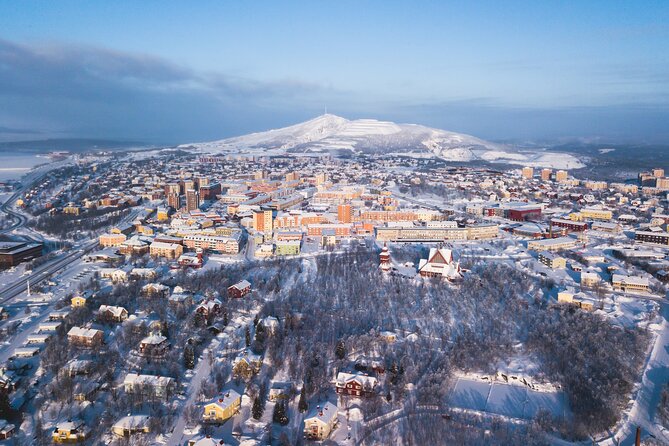
Kiruna rewards curious walkers. This two-hour private tour links LKAB’s mining story with the town’s Stone Circle and its remarkable wooden church, giving you a quick way to understand why Kiruna feels unlike any other Swedish town. I especially like the clear route from industry to old beliefs to sacred architecture, and I like that only your own group takes part. The main drawback is the price: at $290.89 per person, this is a costly outing when all four listed stops have free admission.
You will cover a lot in a short time, including a winter setting that one review praised as a memorable wonderland. The tour also brings you to Kiruna Church, often described here as Sweden’s largest wooden building. The two-hour limit keeps the experience manageable, but it may feel rushed if you want long pauses, detailed photography, or a full mine visit.
In This Review
- Key points to know before you book
- Why this short Kiruna tour works
- Starting at LKAB’s Visitor Centre
- Meeting the Monument of Ancient Iron Miners
- Reading the Stone Circle’s older story
- Finding calm at Kiruna Church
- What the route says about Kiruna
- Price, timing, and practical value
- Who will get the most from it
- Should you book Discover Kiruna?
- FAQ
- Where does the tour begin?
- Where does the tour end?
- How long does the experience last?
- Is this a private tour?
- What are the main stops?
- Are admission tickets included?
- Is the tour available with a mobile ticket?
- Is the meeting point near public transportation?
- Can the booking be canceled or changed?
Key points to know before you book
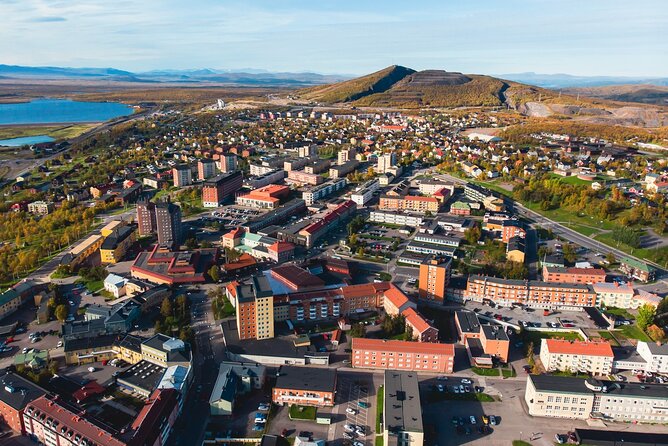
- Mining comes first: You begin at LKAB’s Visitor Centre, where Kiruna’s growth is explained through exhibits about technology and iron mining.
- A private format: Only your group participates, which makes it easier to ask questions and set the pace within the scheduled stops.
- A free-admission route: The listed admission cost is free at every stop, so the price pays mainly for the private guiding and organized experience.
- Four very different stops: You move from mining displays to a miners’ monument, an ancient Stone Circle, and a Gothic Revival church.
- A short walk with cultural range: In about two hours, you see Kiruna through industrial, historical, spiritual, and architectural lenses.
- Plan for the price: Group discounts are available, and the tour is booked with a mobile ticket, but the individual cost remains high.
Why this short Kiruna tour works

Kiruna can be hard to read at first. It is a northern Swedish town shaped by iron ore, changing buildings, strong local identity, and a setting far above the usual southern routes. A casual stroll may show you attractive streets and open views, but it may not explain why the town developed where it did or why mining remains so important.
This tour gives you a useful framework. You begin with LKAB, the company closely tied to Kiruna’s development, then move toward public memory, older traditions, and religious architecture. I like that progression because it tells a story without trying to cover every corner of town.
The experience is private, so you are not sharing the walk with a large mixed group. That matters in a two-hour tour. You can ask for clarification when a mining term or local reference is unfamiliar, and you can make better use of the limited time than you might in a large group.
Still, you should keep your expectations in check. The advertised stops add up to 120 minutes exactly: 20 minutes at the Visitor Centre, 40 minutes at the mining monument area, 30 minutes at the Stone Circle, and 30 minutes at the church. That leaves little room for delays, long photo stops, or an extended visit inside any one place.
More history and heritage:
- Stockholm: Ghost Walk and Historical Tour
★ 4.7 · 2,206 reviews - The Original Stockholm Ghost Walk and Historical Tour – Gamla Stan
★ 4.5 · 1,165 reviews - Stockholm: Old Town Historical Walking Tour
★ 4.9 · 344 reviews
Starting at LKAB’s Visitor Centre
The tour begins at LKAB’s Visitor Centre on Malmvägen 9B. This is the right opening point because mining is not a side note in Kiruna. It is central to the town’s development and helps explain the identity you will encounter during the rest of the walk.
You have about 20 minutes here. Interactive exhibits focus on the mining industry, the technology used in this demanding work, and the effort behind the sector. For you, the main value is context. Instead of seeing Kiruna as a remote northern settlement with an unusual name and climate, you begin to understand the economic force that helped shape it.
I would treat this as an introduction rather than a full museum visit. Twenty minutes is enough to grasp the basic story, but not enough for a slow examination of every display. If mining technology interests you, the short stop may leave you wanting more.
The admission is listed as free, which is useful when weighing the overall price. You are not paying for a collection of separate entry tickets here. You are paying for the private route, the guide’s explanation, and the convenience of having the main points connected for you.
Meeting the Monument of Ancient Iron Miners
The second stop is listed as Kiruna Mine and described as the Monument of Ancient Iron Miners. You have 40 minutes here, making it the longest part of the tour. That extra time suggests the mining story receives the greatest attention.
The monument honors generations of iron miners. Its purpose is not simply decorative. It gives a human face to an industry that can otherwise be discussed only through machines, production, and engineering. You can pause here to think about the people who worked below ground and the physical demands behind Kiruna’s prosperity.
This is also where a good guide can make the difference. The supplied details do not give a guide’s name or specific commentary, so you should ask at booking if you want to know who will lead your group. The private format should help if you want more explanation about the sculpture, the mining community, or the relationship between the town and the mine.
The wording around this stop could cause a little confusion. The itinerary uses Kiruna Mine as the stop name, while the description focuses on a miners’ monument. If you expect an underground mine tour, clarify that before paying. Based on the information provided, this experience takes you to the monument and mining-related sights, not into a mine.
Reading the Stone Circle’s older story
The Stone Circle receives 30 minutes. After the very practical world of mining, this stop changes the mood. Here, the focus turns to an ancient site associated with legends, rituals, and mysterious rites.
You are encouraged to approach the stones as a place connected to Kiruna’s older past. The appeal is less about a long list of proven facts and more about the feeling of being near a site whose meaning has been carried through stories. I like this part of the route because it prevents the tour from becoming a narrow industrial history lesson.
At the same time, you should know what kind of stop this is. The supplied information does not identify the circle’s date, exact archaeological background, or the specific legends attached to it. Do not book this expecting a fully documented archaeological lecture. Its value lies in the contrast with the mining sites and in the chance to consider cultural memory and local lore.
Thirty minutes gives you time to look around and ask questions without turning the visit into a major expedition. If the Stone Circle is your main reason for booking, ask how much walking and explanation it normally receives. The description presents it as an atmospheric historical site, but it does not promise a large archaeological complex.
More walks:
- Walking Tour of Stockholm Old Town
★ 5.0 · 1,175 reviews - Stockholm: Old Town Walking Tour with Local Guide
★ 4.7 · 719 reviews - Best of Stockholm Walking Tour-3 Hours, Small Group max 10 people
★ 5.0 · 645 reviews - The Nordic Food Walk Stockholm
★ 4.5 · 642 reviews
Finding calm at Kiruna Church
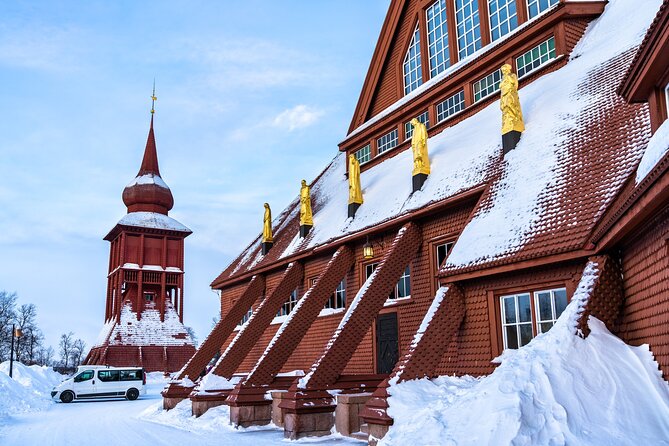
The final stop is Kiruna Church on Finngatan 1. You have about 30 minutes to see the building and its interior, including the altar. The church is described as a wooden Gothic Revival structure and as the largest wooden building in Sweden, an architectural detail that makes this more than a quick religious visit.
I would save a little energy for this stop. The church provides a quiet finish after the industrial and ancient sites. Its wooden construction, unusual design, and altar give you something to look at closely, while the calm interior offers a pause before the tour ends.
One review especially praised the church after seeing Kiruna in winter, calling the snowy setting memorable and noting surprise at the building’s size. That is a useful clue about the church’s appeal. Even if you are not religious, the building offers a strong visual link to the town’s identity.
The 30-minute visit is enough for a focused look, but it is not a long architectural study. You may want to return later if the church is open and you would like more time for photographs or quiet reflection. The tour ends here, so you finish near Finngatan rather than returning to the Visitor Centre.
What the route says about Kiruna
The best feature of this experience is its range. In only two hours, you move through four ways of understanding Kiruna:
- Mining explains the town’s modern development.
- The monument honors the workers behind that development.
- The Stone Circle points toward older beliefs and local legend.
- The church expresses artistic and spiritual identity through timber architecture.
That combination is why the tour can help you get your bearings fast. You are not seeing random attractions. Each stop adds a different layer to the place.
The route also reflects Kiruna’s contrasts. It is a town tied to heavy industry, yet surrounded by a northern setting that can feel quiet and remote. It has modern technical achievements alongside old stones and a historic wooden church. A short walk cannot explain every part of Kiruna, but this one gives you several strong starting points.
Price, timing, and practical value

The listed cost is $290.89 per person. For a two-hour experience with free admission at each stop, that is a serious price. I would consider it only if you place a high value on a private guide and want a compact introduction arranged around your group.
The private format improves the value. You are not joining a large crowd, and you can direct questions toward your own interests. A couple or small family may appreciate that privacy, especially if people in the group have different levels of interest in mining, architecture, or local culture.
Group discounts may help reduce the cost when several people book together. Even so, compare the final total carefully. The price makes more sense for visitors who have limited time in Kiruna and want a structured overview without planning the route themselves.
The tour is usually booked 34 days in advance, according to the supplied booking pattern. That does not guarantee a required lead time, but it suggests you should not leave planning until the last minute if your dates are fixed.
You receive confirmation at booking and can use a mobile ticket. The starting point is near public transportation, and most people can participate. Because the activity is a walk between several locations, you should still consider your own comfort with walking and the conditions on the day. No exact distance or terrain details are provided.
The experience is non-refundable and cannot be changed for any reason. That makes date selection important. Do not book until you are confident about your schedule.
Who will get the most from it
I would recommend this tour most strongly to you if:
- You have only a short time in Kiruna.
- You want a private experience rather than a large group outing.
- You like connecting industrial history with architecture and local traditions.
- You want a guide to link several sites instead of visiting them as separate stops.
- You are interested in seeing Kiruna in a winter setting and want the major cultural points explained.
It may be less suitable if you want a long underground mine visit, extensive time inside the church, or a specialist archaeological explanation of the Stone Circle. The supplied details do not promise any of those things.
The price may also rule it out for budget-focused visitors. Since each admission is free, you should ask yourself whether the private format and guide are worth nearly $291 per person. If you are traveling with a group and can use the discount, the calculation may look better.
Should you book Discover Kiruna?
Book it if you want a short, private introduction to Kiruna and value a guide’s help in connecting mining, local memory, ancient tradition, and church architecture. The strongest parts are the tour’s variety, the miners’ monument, and the visit to Kiruna Church, especially if you see it against a snowy northern setting.
Skip it if you expect an underground mine tour or feel the cost is too high for two hours of free-entry sightseeing. Before booking, confirm exactly what happens at the Kiruna Mine stop, ask who will guide your group, and check whether the timing suits your walking pace. For the right visitor, this is a neat, focused way to understand Kiruna. For a budget visitor, the price demands careful thought.
FAQ
Where does the tour begin?
The tour begins at LKAB’s Visitor Centre, Malmvägen 9B, 981 30 Kiruna, Sweden.
Where does the tour end?
The tour ends at Kiruna Church, Finngatan 1, 981 31 Kiruna, Sweden.
How long does the experience last?
The tour lasts approximately two hours.
Is this a private tour?
Yes. Only your group participates in the activity.
What are the main stops?
The route includes LKAB’s Visitor Centre, the Kiruna Mine area and Monument of Ancient Iron Miners, the Stone Circle, and Kiruna Church.
Are admission tickets included?
Admission is listed as free at all four stops.
Is the tour available with a mobile ticket?
Yes. A mobile ticket is available, and confirmation is received at the time of booking.
Is the meeting point near public transportation?
Yes. The starting point at LKAB’s Visitor Centre is near public transportation.
Can the booking be canceled or changed?
No. The experience is non-refundable and cannot be changed for any reason.
Recently added around Kiruna
- Kiruna: Cross-Country Skiing Tour with a Guide★ 5.0 · 3 reviews
- Kiruna: Northern Lights Minivan Chase with Warm Drink★ 4.8 · 4 reviews
- Half day Wildlife and Nature Photography★ 5.0 · 6 reviews
- Snowmobile Safari to Lapland viewpoint★ 5.0 · 7 reviews
- Polar Nature Tour on Snowmobile★ 4.4 · 12 reviews
- Northern Lights tour with Reindeer★ 4.5 · 13 reviews
- Aurora Tour with Dinner in Abisko★ 5.0 · 15 reviews
- Enjoy the Aurora show on top of the mountain inc tipi dinner★ 4.5 · 18 reviews
Historical Tours, compared.
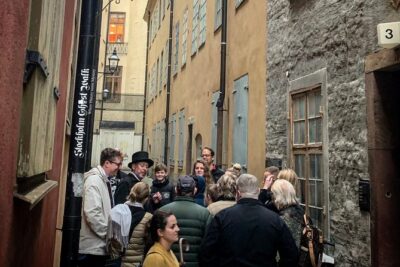
The Original Stockholm Ghost Walk and Historical Tour – Gamla Stan
Read our review →
Viking History, Runes & Countryside 9h Tour to Sigtuna & Uppsala
Read our review →
Stockholm Viking History Full Day Tour to Sigtuna + Uppsala
Read our review →
Viking History and Swedish Countryside Tour to Sigtuna & Uppsala
Read our review →
Viking History Small Group Tour from Stockholm: Half Day Including Sigtuna
Read our review →
Stockholm Old Town Gamla Stan, Historic Walking Tour, Small group
Read our review →Browse the lists this tour appears in