
Reviewed · CITY TOURS
Uppsala Must See 2h city walk – 2h tour of all big attractions!
Uppsala packs centuries into a short walk. This English-language tour brings you to Viking runestones, the great cathedral, Uppsala Castle, the university, and botanical gardens in about two hours. I like the clear focus on Uppsala’s major sights, and I also like the guide’s flexible pace, which can suit your interests and walking speed.
The main drawback is that several important interiors are only visited if they are open. You may see the cathedral, castle, Gustavianum, and parts of the university from outside, so this works best as a city introduction rather than a full museum tour.
In This Review
- Key points to know before booking
- Starting at Riddartorget beside Uppsala Cathedral
- Viking runestones near the cathedral
- Uppsala University and the main building
- Dekanhuset and a difficult chapter in Swedish history
- Carolina Rediviva and the Silver Bible
- The botanical garden in a short ten-minute visit
- Uppsala Castle and stories of murder
- The old square, Dombron, and the river
- The old mill and Upplandsmuseet
- Gustavianum’s anatomical theater from outside
- Saint Erik’s spring and the final story
- What the $110.15 price gives you
- Who will get the most from this walk
- Should you book the Uppsala city walk?
- FAQ
- How long is the Uppsala Must See city walk?
- What time does the tour begin?
- Where does the tour start?
- Where does the tour end?
- What language is the tour offered in?
- How many people can join the tour?
- Is the cathedral interior included?
- Can you enter Uppsala Castle?
- Are admission fees included?
- Can I cancel for a full refund?
Key points to know before booking
- A compact route through Uppsala’s biggest sights: The walk covers the cathedral, runestones, university, library, gardens, castle, river, old square, and Saint Erik’s spring.
- Viking history is built into the opening minutes: You see runestones close to the cathedral and hear how they connect Uppsala with Sweden’s Viking Age.
- Several stops depend on opening hours: The university main building, Carolina Rediviva, and botanical garden may be visited inside or explored from outside.
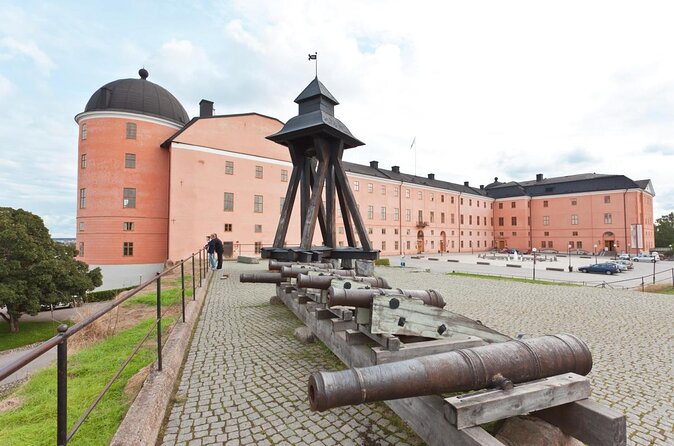
- Uppsala Castle is an outdoor stop: You enter the courtyard and hear about its murders, but the castle itself is closed to visitors.
- The guide can adjust the pace: One particularly strong experience involved a guide finding a lost participant and adapting the walk to that person’s needs and interests.
- The group can include up to 20 people: The $110.15 per-person price buys a guided overview, but the value depends partly on group size and how much indoor access is available.
Starting at Riddartorget beside Uppsala Cathedral
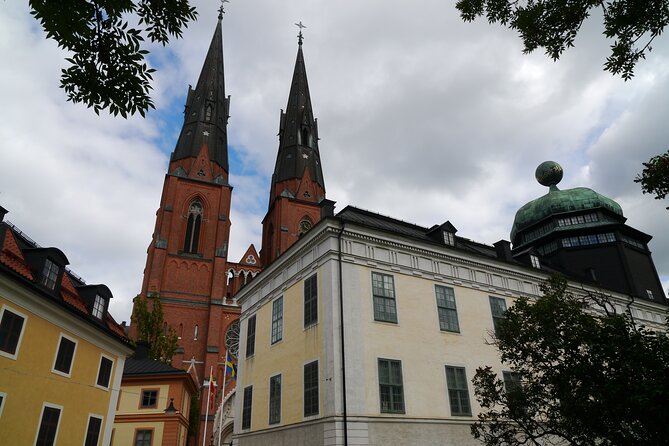
The walk begins at Riddartorget, or Knights’ Square, on Biskopsgatan. The start time is 5:30 pm, and the tour ends back at the same meeting point. That makes the route easy to fit into an afternoon in Uppsala, though you should allow enough time to reach the square before the guide sets off.
The cathedral is experienced from the outside. Even without an interior visit, this is an important first stop because the building gives you an immediate sense of Uppsala’s religious and civic importance. The tour uses the cathedral as a gateway into the city’s older stories rather than treating it as a quick photo stop.
You should expect a walking tour, not a sightseeing bus or a series of long museum visits. The pace moves from one location to the next, with the guide providing context along the way. A moderate level of physical fitness is recommended, so comfortable shoes are a sensible choice.
More walks:
- Stockholm: Ghost Walk and Historical Tour
★ 4.7 · 2,206 reviews - Walking Tour of Stockholm Old Town
★ 5.0 · 1,175 reviews - The Original Stockholm Ghost Walk and Historical Tour – Gamla Stan
★ 4.5 · 1,165 reviews
Viking runestones near the cathedral
One of the most appealing parts of the route comes early. Close to the cathedral, you see Viking Age runestones and spend about 20 minutes learning how to read this part of Uppsala’s past through carved stone.
Runestones give the tour a more personal feel than a general lecture about Vikings. They connect names, beliefs, journeys, and memorials to the streets you are walking through. You are not just hearing that Sweden had a Viking past. You are looking at surviving evidence of it beside one of the country’s most important churches.
This stop should suit you if you want local history with a physical link to the past. It also helps place later stops in context. Uppsala is not only a university city and a royal city. Its story reaches much further back.
Uppsala University and the main building
The university main building receives about 10 minutes. If it is open, you may visit inside. If not, the guide explains the building from the outside.
That condition matters. The building is part of Uppsala’s identity, but your experience will depend on access at the time of the walk. You should not book this tour expecting a guaranteed indoor university visit.
Still, the stop earns its place because the university shapes so much of the city’s character. The tour shows how education, religion, government, and science have shared the same compact center. A short explanation here can help you understand why Uppsala feels different from a city focused only on monuments.
Dekanhuset and a difficult chapter in Swedish history
Dekanhuset is one of the more unusual stops. The guide discusses the Swedish race biology institute and its history from 1920 to 1958, with roughly 10 minutes devoted to the site.
This is not a cheerful sightseeing stop, and that is precisely why it matters. A good city walk should not smooth away uncomfortable subjects. The building points to a period when state-backed racial theories affected Swedish institutions and public life.
The brief visit will not provide a full academic treatment, but it introduces a serious subject that many casual city tours would skip. I would pay close attention here, especially if you value tours that explain both the admirable and troubling parts of a place’s past.
A few more ways to spend a day in Sweden
- Stockholm: 2-Hour RIB Speed Boat Tour of the Archipelago
★ 4.9 · 396 reviews - Stockholm Speed Boat 2 Hour Archipelago Tour
★ 5.0 · 139 reviews - Södermalm: 2-Hour Sightseeing Tour
★ 4.0 · 46 reviews - Luleå : Snowmobile – Forest and Ice Nature Tour 2h
★ 4.9 · 34 reviews
Carolina Rediviva and the Silver Bible
Carolina Rediviva, Uppsala University’s library, receives about 20 minutes. If the building is open, you may enter to see the historical museum and the famous Silver Bible, written in Gothic language. If access is not available, the guide covers the site from outside.
This is potentially one of the strongest stops on the walk. The Silver Bible gives the tour a rare object with a direct connection to early European religious and literary history. It also adds variety after the outdoor cathedral, runestones, and university stops.
The key word is if open. Opening conditions can affect how much you see, so treat the library as a possible highlight rather than a guaranteed indoor attraction. The outside explanation still helps, but it cannot replace seeing the collection itself.
The botanical garden in a short ten-minute visit
The tour then reaches Botaniska Trädgården, Uppsala’s botanical garden. The visit lasts about 10 minutes, and the guide explores it with you if it is open.
The garden brings a change of pace. After stones, churches, academic buildings, and political history, you get a look at Uppsala through plants and natural science. The stop is short, but it shows another side of the university’s role in the city.
Do not expect a long garden visit at this pace. Ten minutes is enough for an introduction, not enough for a slow stroll through every section. If gardens are central to your interests, you may want to return on your own at another time. For this tour, the garden works as a brief but welcome pause.
Uppsala Castle and stories of murder
Uppsala Castle receives about 20 minutes, making it one of the longer stops. You visit the courtyard and hear about murders connected with the castle. The castle itself is closed to visitors, and admission is not included.
This stop is likely to hold your attention because the subject is direct and memorable. Royal buildings can blur together after a while, but stories of murder give the castle a sharper human edge. The guide uses the courtyard as a setting for political and personal drama rather than simply pointing out architecture.
You should be clear about what you are buying. This is not an interior castle tour. You will see the courtyard and hear the story, but you will not explore the closed rooms. For many people, that will be enough for a first visit. If you want a full castle experience, plan a separate visit if access becomes available.
The old square, Dombron, and the river
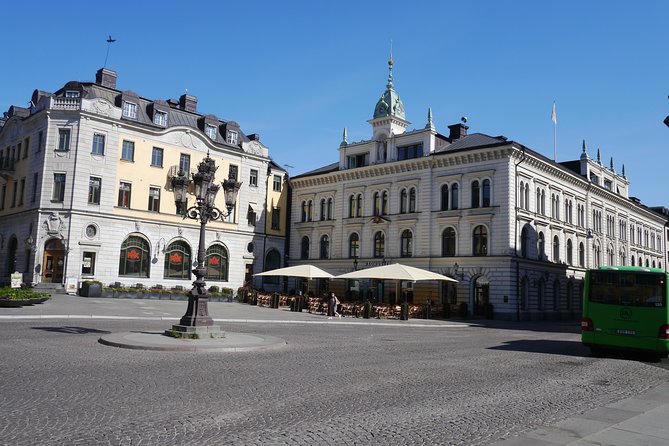
The route continues to Uppsala’s old main square and Dombron, the bridge over the river. This part lasts about five minutes, so it is a quick orientation stop rather than a long explanation.
The guide discusses the river and the merchants who helped shape Uppsala. That detail is useful because it shifts attention away from famous institutions and toward everyday urban life. Rivers explain why towns grow where they do, and merchants explain how those towns functioned.
The short timing is the main limitation. You will get an overview, not a detailed study of trade or city planning. Even so, this stop helps tie the separate monuments together. Uppsala becomes a working town, not just a collection of impressive buildings.
The old mill and Upplandsmuseet
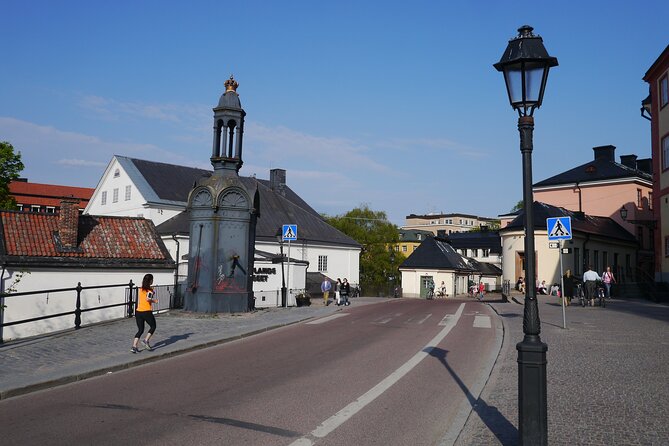
The walk passes the old mill that houses Upplandsmuseet. The information provided does not promise entry to the museum, so expect to see the exterior and hear about the building as part of the route.
This is a nice example of the tour’s broader approach. It points out places that might otherwise pass unnoticed, including buildings whose original purpose still helps explain the city. The mill adds an industrial and practical note to a route otherwise dominated by religion, royalty, and learning.
If you want to visit Upplandsmuseet inside, check its opening arrangements separately. This tour is designed to introduce the building, not to replace a museum visit.
Gustavianum’s anatomical theater from outside
At Museum Gustavianum, the guide walks by and explains the anatomical theater from outside. The stop takes about 10 minutes, and admission is not included.
The anatomical theater is an unusual subject for a city walk. It reflects the university’s history of teaching and scientific study, while also offering a glimpse into older methods of medical education. The attraction is especially suited to people who prefer specific, slightly strange details over broad generalities.
Again, the outdoor-only format sets a limit. You will not tour the theater as part of this experience. Think of the stop as a useful introduction that can help you decide if you want to return to the museum separately.
Saint Erik’s spring and the final story
The final named stop is Sankt Eriks Källa, or Saint Erik’s spring. The walk past the spring lasts only about three minutes, but the guide connects it with the battle and Saint Erik’s sainthood.
This is a brief ending, yet it brings the tour back to medieval religious history. After Viking memorials, academic institutions, royal violence, trade, and science, the spring adds another layer to Uppsala’s old traditions.
Because the stop is so short, you should expect a concise explanation rather than a full religious history lesson. Its value comes from its place in the route and the way it rounds out the city’s older stories.
What the $110.15 price gives you
At $110.15 per person, this is not a cheap orientation walk. The price makes the most sense if you value a private-feeling guided route through many major locations, especially when you want someone to connect the sights into one story.
The group can have a maximum of 20 people. A smaller group would likely make it easier to hear the guide and ask questions, while a full group could feel less personal. The guide’s ability to adjust pace is an important part of the value. One highly praised experience involved a guide finding someone who had become lost and adapting the walk to the person’s pace and wishes.
All fees and taxes are included, but gratuities are not. Entry costs are not a major part of the experience because several stops are free, while the castle and Gustavianum do not include admission. Since the castle is closed and several interiors depend on opening hours, you are mainly paying for the guide’s time, route planning, and interpretation.
I would consider the price reasonable for a first afternoon in Uppsala if you want a broad orientation and do not have time to research each sight yourself. I would be more hesitant if your priority is extended indoor access. In that case, you may get better value by choosing individual museum visits and using this walk only if the guided context matters to you.
Who will get the most from this walk
I would recommend this experience to you if you have only a short stay in Uppsala and want to cover the major sights without arranging a route yourself. It also suits history-minded visitors who enjoy moving from Viking stones to university buildings, a royal castle, and a medieval spring in one compact outing.
The tour may suit families and mixed-interest groups because it changes subject often. You get religion, archaeology, science, politics, botany, trade, and local legends rather than two hours focused on one theme.
You should think twice if you need guaranteed interior access or prefer a slow pace at each attraction. The schedule is full, and some stops are very short. People with limited mobility should also consider the moderate fitness requirement before booking.
The tour is offered in English, uses a mobile ticket, allows service animals, and is near public transportation. Confirmation arrives at booking. You can cancel for a full refund up to 24 hours before the local start time, but late cancellations and changes are not accepted. A minimum number of participants is required, and if that minimum is not reached, you are offered another date or experience, or a full refund.
Should you book the Uppsala city walk?
Book it if you want a brisk, story-led introduction to Uppsala and value a guide who can adjust the pace. The route covers an impressive range of subjects in two hours, with Viking runestones, the cathedral, university life, the botanical garden, the castle, and Saint Erik’s spring all included.
Skip it if your main goal is to spend time inside museums or explore Uppsala Castle. Indoor access is limited and sometimes dependent on opening hours. For a first look at the city, though, this is a well-focused option, especially if you want the difficult parts of Swedish history included alongside the grand buildings and old legends.
FAQ
How long is the Uppsala Must See city walk?
The tour lasts approximately two hours.
What time does the tour begin?
The tour starts at 5:30 pm.
Where does the tour start?
The meeting point is Riddartorget, or Knights’ Square, on Biskopsgatan in Uppsala.
Where does the tour end?
The walk ends back at the meeting point.
What language is the tour offered in?
The tour is offered in English.
How many people can join the tour?
The maximum group size is 20 people.
Is the cathedral interior included?
No. The experience of Uppsala Cathedral is described as an outside visit.
Can you enter Uppsala Castle?
No. The tour visits the castle courtyard, but the castle is closed to visitors.
Are admission fees included?
All fees and taxes are included, but admission is not included for the castle or Museum Gustavianum. Several other stops are listed as free.
Can I cancel for a full refund?
Yes. You can cancel at least 24 hours before the local start time for a full refund. Late cancellations and changes are not accepted.
Recently added around Sweden
- ROYAL Castle Skokloster and Viking Sigtuna (private tour)★ 4.5 · 3 reviews
- Stockholm Ghost Hunt: Self-Guided Tour and Puzzle Adventure★ 4.5 · 3 reviews
- Stockholm Port to Stockholm Arlanda Airport (ARN) – Departure Private Transfer★ 3.5 · 3 reviews
- Ghosts of Stockholm: A Guided Tour of Horror and Dark Folklore★ 4.5 · 3 reviews
- Private Photography workshop in Stockholm★ 5.0 · 3 reviews
- Private blood, ghosts and folklore Old Town 2h Stockholm tour★ 4.0 · 3 reviews
- Family Packraft tour in Sälen★ 5.0 · 3 reviews
- Stockholm- Private transfer to/from Arlanda Airport and city★ 5.0 · 3 reviews
City Tours, compared.

City Archipelago Sightseeing Cruise with Guide
Read our review →
Guided City Sightseeing Open Electric Boat Tour
Read our review →

Guided Kayak City Tour & Optional Midsummer Meal
Read our review →Browse the lists this tour appears in