
Reviewed · OLD TOWN WALKING TOURS
Private blood, ghosts and folklore Old Town 2h Stockholm tour
Dark stories give Stockholm a different face. This private walking tour turns the city’s Old Town into a route through executions, restless spirits, protective charms, water creatures, and Swedish folklore. I like the way the experience uses real places, from Stortorget to Saint Jacob’s Church, rather than keeping the tales in a lecture room.
I also like the private format, since you can ask questions and set the pace for your own group. The walk covers unusual local beliefs, including the Swedish Tomte, Näcken, the Skogsrå, and the undead Myrling. The main drawback is that the tour may feel lighter on gruesome history than its title suggests, depending on how fully the guide develops each story.
The advertised duration is approximately 1 hour 30 minutes, although the title refers to a two-hour tour. It begins at the Nobel Prize Museum in Stortorget and ends outside Saint Jacob’s Church, close to Kungsträdgården. You will need to walk back toward the Old Town afterward, about 10 minutes to the starting area.
In This Review
- Key Points Before You Book
- A Darker Introduction at Stortorget
- Prästgatan and the Street Called Hell
- Iron, Doorways, and the Swedish Tomte
- Water Spirits at Logårdstrappan
- Kungsträdgården and Sweden’s More Dangerous Creatures
- Saint Jacob’s Church and Sacred Weak Points
- What the Private Format Adds
- Is $188.16 Per Person Good Value?
- Who Will Enjoy This Stockholm Walk?
- Booking, Timing, and Cancellation Advice
- Should You Book the Blood, Ghosts and Folklore Tour?
- FAQ
- Where does the tour start?
- Where does the tour end?
- How long does the tour last?
- Is this a private tour?
- What locations are included?
- What does the tour focus on?
- Are attraction tickets included?
- Is the tour accessible by public transportation?
- Can I cancel for a full refund?
Key Points Before You Book
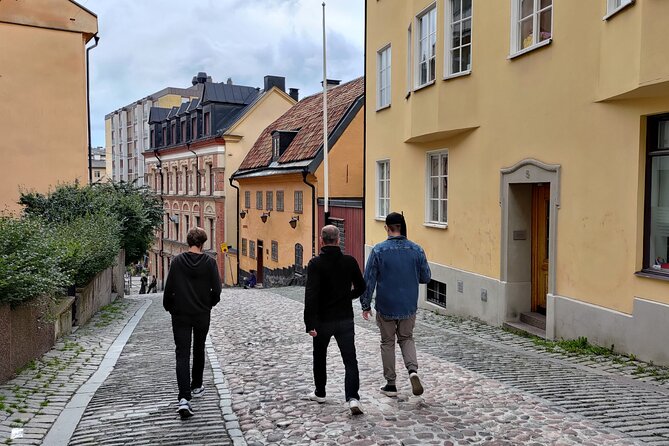
- A private walk through six historic locations: You visit Stortorget, Prästgatan, Old Town doorways, Logårdstrappan, Kungsträdgården, and Saint Jacob’s Church.
- Folklore goes beyond ghost stories: The guide discusses Näcken, the bäckahästen, the Skogsrå, the Tomte, and other beings from Swedish tradition.
- The darkest stop is Stortorget: Expect stories about executions, the Stockholm Bloodbath era, curses, and the supposed magical use of body parts.
- The route ends outside the Old Town: Saint Jacob’s Church is beside Kungsträdgården, not back at the meeting point.
- Private means personal attention: Your group is the only group on the activity, giving you room to ask about history, customs, and local legends.
- The price favors small groups: At $188.16 per person, the cost is high for one person but easier to justify when split among a private group.
A Darker Introduction at Stortorget
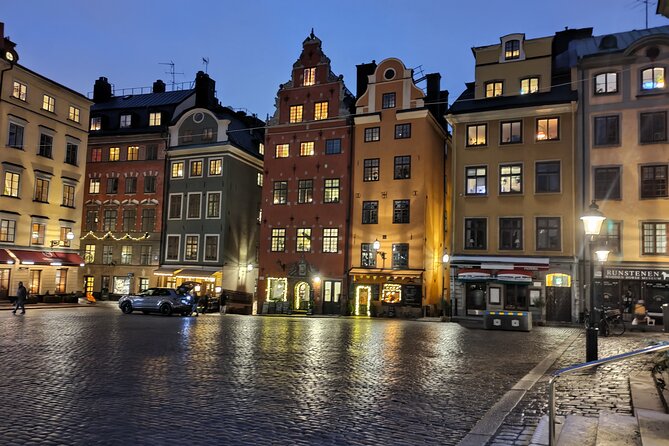
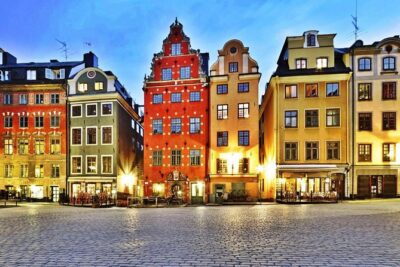
The tour starts at the Nobel Prize Museum, at Stortorget, the Old Town’s famous central square. This is a useful meeting point because it is easy to locate and puts you at the heart of Stockholm’s oldest streets from the first minute.
The square also provides the tour’s strongest historical setting. Here, the focus turns to death and the strange magical uses once assigned to human body parts in folklore. You hear about the execution of roughly 90 people around the period when the Danish King Kristian took Stockholm.
This section is meant to mix documented violence with old beliefs. The guide discusses the blood of the dead as a possible ingredient in curses, parts of the gallows used in magical brewing, and other supposed uses for the remains of the dead. It is grim material, but it helps explain how fear, religion, medicine, and superstition often overlapped in earlier Swedish culture.
I would pay close attention here. If you want a tour based mainly on famous ghost sightings, this opening may feel more historical than supernatural. If you enjoy the uncomfortable side of the past, Stortorget is likely to be the most memorable stop.
The tour provider has also indicated that the wider subject includes stories connected with the Stockholm Bloodbath, the killing of King Gustav III, a lynch mob, a nobleman’s death, and the executioner. Those stories are not all listed as separate stops, so you may want to ask the guide about them directly. A private tour gives you a good chance to steer the conversation toward the bloodier parts of Stockholm’s past.
More walks through the old town:
- Walking Tour of Stockholm Old Town
★ 5.0 · 1,175 reviews - The Original Stockholm Ghost Walk and Historical Tour – Gamla Stan
★ 4.5 · 1,165 reviews - Stockholm: Old Town Walking Tour with Local Guide
★ 4.7 · 719 reviews
Prästgatan and the Street Called Hell
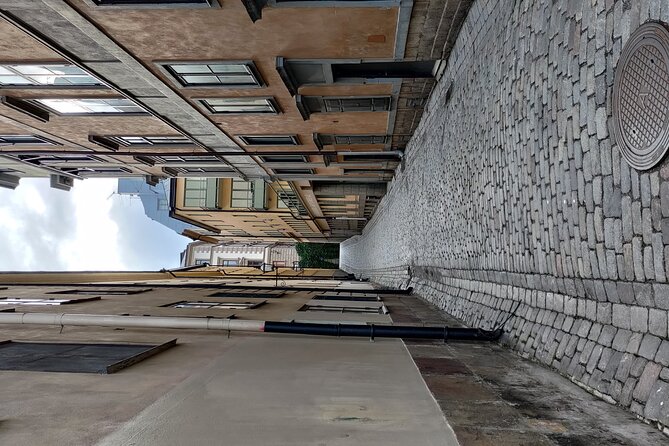
From Stortorget, the walk continues along Prästgatan. This narrow Old Town street is used to introduce an area once known as Hell, a name linked to the people who lived there.
The point of this stop is less about a single dramatic event and more about the way place names preserve old fears and social attitudes. A street with such a name gives the folklore a physical setting. You are not only hearing about supernatural danger in the abstract. You are standing in a part of town once associated with an ominous identity.
This is a short stop, listed at about 10 minutes. That means the guide will probably keep the story focused. I would not expect a long account of every building or resident along the street. The value lies in connecting the name Hell with the local imagination and with the darker reputation of the Old Town.
Because the route is private, you can ask what the name referred to, how people understood it, and how much of the story is historical fact versus later folklore. Those questions matter on a tour like this. The best moments come when the guide makes the boundary between record and legend clear.
Iron, Doorways, and the Swedish Tomte
The next Old Town stop centers on a house door and the protective role of iron. Swedish folklore includes many beliefs about beings called vaesen, a broad term for supernatural or otherworldly creatures. Here, the guide explains how iron was used to guard against them.
The stories include elves arriving with mist, which was associated with souls that had not found rest. You also learn about the Swedish Tomte. This figure is often linked to homes and farms, but the tour places the Tomte within a wider system of household protection and supernatural caution.
The discussion then turns to doors and newborn children. Before a baby’s baptism, the child was considered especially vulnerable to trolls and the Devil, so protective measures were important. That detail gives this stop a strong social angle. Folklore was not simply entertainment. It could shape how families treated a doorway, protected a child, or explained sickness and misfortune.
I like this part because it shows how ordinary objects carried serious meaning. A door is no longer just an entrance. In the old stories, it can be a weak point in the home. Iron becomes more than a material. It becomes a safeguard.
The stop lasts about 10 minutes, so you should expect a compact explanation rather than a full survey of Swedish household customs. Still, it is one of the better sections for anyone interested in folklore as part of daily life.
Water Spirits at Logårdstrappan
At Logårdstrappan, the subject shifts from houses to water. The guide introduces several beings connected with lakes, rivers, seas, and boats, including Näcken, the bäckahästen, the Sjörå, and the skepps-rå.
Näcken is one of the best-known water figures in Scandinavian folklore. The bäckahästen is described as the Swedish version of the Kelpie, a dangerous creature associated with water and deception. The Sjörå is linked to the sea, while the skepps-rå is connected with ships and sailing.
The common thread is danger. These beings could lure people toward deep water, drown them, or exploit the fear of places that were difficult to control. Before modern safety equipment, reliable weather reports, or clear scientific explanations, folklore gave people a way to talk about accidents and risk.
This stop adds variety to the route. Without it, the walk could become a simple series of stories about ghosts and executions. Water folklore broadens the subject and shows how Swedish supernatural traditions responded to different environments.
Logårdstrappan is also a place where the setting matters. The guide can connect the stories to the water nearby, making the tale easier to picture. Still, the available information does not specify the exact view or how long the group stays at the steps, so you should treat this as a short storytelling stop rather than a scenic viewpoint visit.
More ghost walks:
- Stockholm: Ghost Walk and Historical Tour
★ 4.7 · 2,206 reviews - Bloody Stockholm 2h – ghosts, horror and Dark Folklore Tour
★ 5.0 · 14 reviews - Bloody Stockholm: ghosts, horror and dark folklore 2h
★ 4.8 · 12 reviews - Guided Ghost Tours with Actors From Stockholm
★ 4.5 · 8 reviews
Kungsträdgården and Sweden’s More Dangerous Creatures
The route then reaches Kungsträdgården, where the guide moves into a wider collection of Swedish folklore beings. The central figure is the Skogsrå, also called the Huldra in related traditions.
The Skogsrå is associated with the forest and is presented here as dangerous. The stories also include the Myrling, an undead child, along with other creatures said to suck blood or spread death. These tales are darker than the friendly household image often connected with the Tomte.
This section lasts about 20 minutes, making it the longest stop on the route. That extra time should allow the guide to explain several creatures instead of rushing through a list of names. I would expect this to be the most folklore-heavy part of the walk.
The Myrling is especially unsettling because it ties supernatural fear to childhood and death. Stories about undead children often reflect grief, guilt, and the fear that a death has not been properly settled. That gives the folklore more weight than a simple monster story.
Kungsträdgården also marks a practical change in the tour. You are moving out of the Old Town toward the area beside Saint Jacob’s Church. If you are tired of standing on narrow cobbled streets, this part of the route may feel more open. The tour remains a walking experience, though, so comfortable shoes are sensible.
Saint Jacob’s Church and Sacred Weak Points
The final stop is outside Saint Jacob’s Church on Västra Trädgårdsgatan. The guide discusses the church door, weak points in the church, baptism, exorcism, and ways an enemy might be punished.
This is a striking final theme because churches are usually treated as places of safety. The tour turns that idea around by asking how evil might enter and what protections people believed were needed. The subject of a child at baptism and possible exorcism also returns to the earlier concern about newborns lacking protection before baptism.
The discussion of punishing a worst enemy takes the tour back to curses and practical magic. It links the church stop with the opening stories at Stortorget. Across the route, death is not treated as a single subject. It appears through executions, restless souls, dangerous creatures, unprotected children, and acts of revenge.
The church is visited from the outside. You should not book this expecting an interior church tour or a religious service visit. The listed stop lasts about 15 minutes, so the guide has time to explain the themes but not to provide a full architectural tour.
The ending is convenient if you plan to continue around Kungsträdgården. It is less convenient if you left belongings or expected to finish at Stortorget. The walk back to the starting area is about 10 minutes.
What the Private Format Adds
The private setup is one of the clearest strengths. Only your group takes part, so you do not have to compete with a large crowd for the guide’s attention. That matters when the subject includes unfamiliar names and ideas such as the skepps-rå or Myrling.
You can also ask for more history or more folklore. If the guide spends too much time on a story that does not interest you, you can redirect the conversation. If you want more on executions, Gustav III, the Stockholm Bloodbath, or the executioner, ask directly.
The guide handles navigation through the Old Town and the route toward Kungsträdgården. That removes the nuisance of stopping to check a map while trying to follow a story. The walk is also near public transportation, which makes the start and finish fairly easy to reach.
The tour is described as suitable for most people, and service animals are allowed. No special physical requirements are provided, so you should still be prepared for a walking route through central Stockholm and for standing at several outdoor stops.
Is $188.16 Per Person Good Value?
At $188.16 per person, this is not a cheap casual walk. The price needs to be judged against the private format, not against the cost of a standard group sightseeing tour.
For one person, the value is difficult to defend unless you place a high priority on a private guide and specialized folklore. For a couple or a small group sharing the booking, the cost becomes easier to accept because the guide’s time is reserved for you.
The tour lasts approximately 1 hour 30 minutes, although the title suggests two hours. That difference is important. At the shorter duration, you are paying for a concentrated walk through six stops rather than a long evening program.
The free admission at each stop keeps the focus on the guide and the public streets. There are no attraction tickets or extra admissions included beyond the guide service. I would book this for the personal conversation and unusual subject matter, not for included sights.
Group discounts are available, which may improve the price for larger private parties. Check the final total for your group before booking, since the per-person figure can look very different once the cost is shared.
Who Will Enjoy This Stockholm Walk?
I would recommend this experience to you if you like local legends, unsettling history, and short walking tours built around a clear theme. It suits people who have already seen Stockholm’s main sights and want a different way to understand the Old Town.
It also works well for a private family group with older children, provided the subjects of death, blood, curses, and undead children are suitable for everyone. The private setting lets you ask the guide to explain difficult ideas at the right level.
You may be disappointed if you want a fast parade of famous ghost sightings. One account described the stories as too thin and expected more gruesome material from the title. That criticism is worth taking seriously. A ghost and folklore tour depends heavily on how much detail the guide provides and how well the storytelling matches the group.
The tour provider has acknowledged that several bloody Stockholm stories may not have come through clearly on one occasion. That suggests a practical solution: tell the guide at the start that you want the full darker history, including the Bloodbath, Gustav III, executions, lynch mobs, and the city’s executioner.
Booking, Timing, and Cancellation Advice
Confirmation is provided when you book, and the activity is usually booked about 14 days ahead. That does not guarantee a sellout, but it suggests you should reserve early if your Stockholm dates are fixed.
The tour begins at the Nobel Prize Museum, Stortorget 2, and ends at Saint Jacob’s Church, Västra Trädgårdsgatan 2A. Plan your day around a point-to-point walk, not a round trip. The final location is just outside the Old Town beside Kungsträdgården.
Free cancellation is available if you cancel at least 24 hours before the local start time. Cancellations made within 24 hours are not refunded, and changes during that period are not accepted. The tour also requires a minimum number of participants. If that minimum is not reached and the operator cancels, you will be offered another date or experience, or a full refund.
Should You Book the Blood, Ghosts and Folklore Tour?
Book it if you want a private, guide-led walk through Swedish supernatural traditions and the darker side of Stockholm’s past. The strongest material covers executions at Stortorget, protective iron and baptism customs, water spirits, the Skogsrå, the Myrling, and the church’s supposed weak points.
Think twice if you want a long, theatrical ghost tour with a constant stream of shocking stories. The route is short, the stops are outdoors, and the quality of the experience depends on how fully the guide connects the legends with Stockholm’s documented history.
My best advice is to book this for a small group, ask at the start for the bloodiest historical stories, and allow time afterward to walk back from Saint Jacob’s Church. For the right audience, it offers a memorable alternative to standard palace and museum sightseeing. For a solo visitor at the full per-person price, the value is much harder to make work.
FAQ
Where does the tour start?
It starts at the Nobel Prize Museum, Stortorget 2, 103 16 Stockholm, Sweden.
Where does the tour end?
It ends outside Saint Jacob’s Church at Västra Trädgårdsgatan 2A, 111 53 Stockholm, beside Kungsträdgården.
How long does the tour last?
The experience is approximately 1 hour 30 minutes. The tour title refers to two hours, so confirm the expected duration when you book.
Is this a private tour?
Yes. Only your group participates, and a guide leads the activity.
What locations are included?
The route includes Stortorget, Prästgatan, Stockholm Old Town, Logårdstrappan, Kungsträdgården, and the exterior of Saint Jacob’s Church.
What does the tour focus on?
It covers Stockholm’s dark history, executions, ghosts, Swedish folklore, supernatural beings, protective customs, curses, baptism, and church-related beliefs.
Are attraction tickets included?
The stops have free admission, and the guide is included. No separate attraction admission is listed.
Is the tour accessible by public transportation?
Yes. The experience is near public transportation.
Can I cancel for a full refund?
Yes, if you cancel at least 24 hours before the experience’s local start time. Cancellations within 24 hours are not refunded.
More 2-Hour Experiences
- Stockholm: 2-Hour RIB Speed Boat Tour of the Archipelago
★ 4.9 · 396 reviews - Stockholm Speed Boat 2 Hour Archipelago Tour
★ 5.0 · 139 reviews - Södermalm: 2-Hour Sightseeing Tour
★ 4.0 · 46 reviews - Luleå : Snowmobile – Forest and Ice Nature Tour 2h
★ 4.9 · 34 reviews
Recently added around Stockholm
- ROYAL Castle Skokloster and Viking Sigtuna (private tour)★ 4.5 · 3 reviews
- Stockholm Port to Stockholm Arlanda Airport (ARN) – Departure Private Transfer★ 3.5 · 3 reviews
- Stockholm Ghost Hunt: Self-Guided Tour and Puzzle Adventure★ 4.5 · 3 reviews
- Private Photography workshop in Stockholm★ 5.0 · 3 reviews
- Ghosts of Stockholm: A Guided Tour of Horror and Dark Folklore★ 4.5 · 3 reviews
- Stockholm- Private transfer to/from Arlanda Airport and city★ 5.0 · 3 reviews
- Stockholm Arlanda airport to City center of Stockholm★ 3.3 · 3 reviews
- Cruise port VIP Transfer: Cruise port to Stockholm city center 1-6 Passangers★ 5.0 · 3 reviews
Old Town Walking Tours, compared.
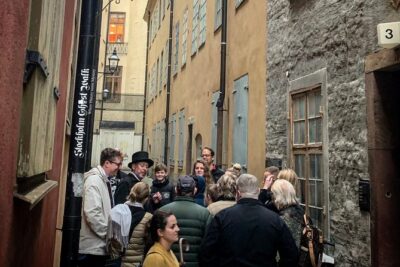
The Original Stockholm Ghost Walk and Historical Tour – Gamla Stan
Read our review →
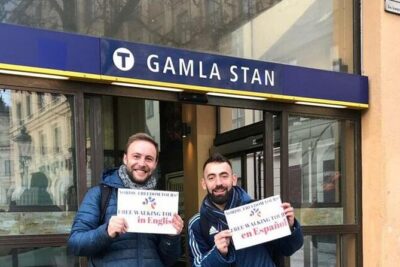
Walking Tour of Stockholm’s Old Town, Gamla Stan
Read our review →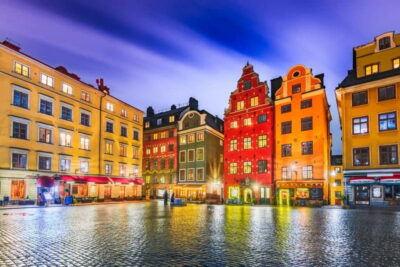
Old Town Guided Walking Tour (English / Deutsch)
Read our review →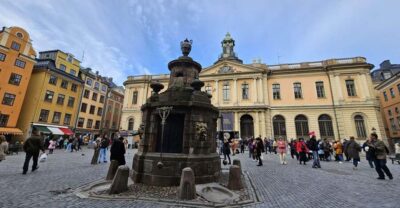
Secrets of Gamla Stan Guided Tour w/ Fika Option
Read our review →Browse the lists this tour appears in