
Reviewed · CITY TOURS
Uppsala’s biggest attractions – 1h city walk in Uppsala city.
Uppsala’s story is packed into a small area. This guided walk links the city’s university, cathedral, castle, and old civic quarters with lively tales about Celsius, Linné, Rudbeck, student life, plague, royal drama, and even a coronation that never happened here. I like the focus on major sights and the way the guide adds odd details that you might miss alone. I also like that the group is limited to 20 people, which should make questions easier.
The main drawback is that the tour may feel more like a series of talks than a continuous walk. One Swedish-language review described a knowledgeable guide but too much time spent standing still, while two others praised the guides, especially Anette and Jonathan, for their engaging stories and strong answers. Also note that the listed stop times add up to about 75 minutes, although the experience is advertised as approximately one hour.
In This Review
- Key Points Before You Book
- Why Uppsala Works So Well on Foot
- University House and Rune Stones: A Complicated Beginning
- Gustavianum and the Anatomical Theater
- Uppsala Cathedral and Medieval Gossip
- St. Erik’s Square and the University City Within the City
- Uppsala Castle and the View Across the Botanical Garden
- The Coronation That Moved to Stockholm
- Guide Style and the Shape of the Experience
- Price, Timing, and What You Get for $91.75
- Who Will Get the Most From This Walk?
- Should You Book Uppsala’s Biggest Attractions Walk?
- FAQ
- Where does the Uppsala city walk begin?
- Where does the tour end?
- How long does the tour last?
- Is admission to Gustavianum included?
- Is admission to Uppsala Castle included?
- How many people can join the tour?
- Can I cancel for a full refund?
Key Points Before You Book
- University history with a competitive edge: Learn why Uppsala’s university was founded partly to give Sweden an institution better than the Danes had.
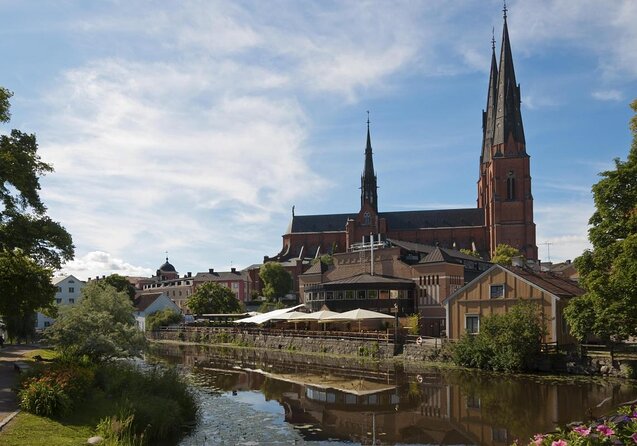
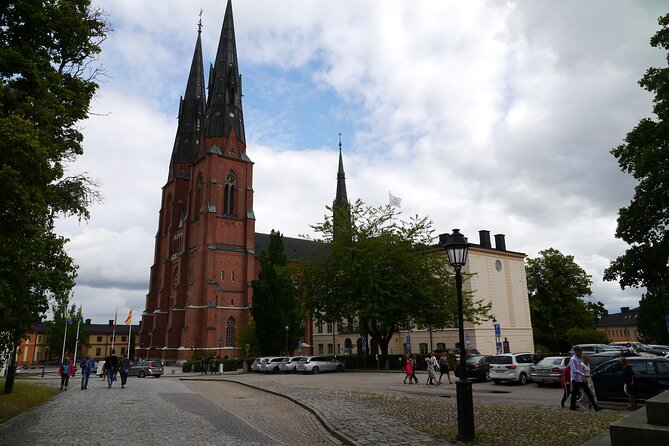
- A cathedral built over centuries: See Uppsala Domkyrka, built from the 1270s to the 1430s and described as the largest cathedral in the Nordic countries.
- Rudbeck’s ingenious theater: Hear about the anatomical theater at Gustavianum, including its clever design and its serious lack of ventilation.
- Royal scandal at Uppsala Castle: Visit the castle courtyard and hear about the murder connected with the building.
- A city cleared for a coronation: Discover how Uppsala was voluntarily demolished before Queen Kristina’s coronation, then failed to rebuild quickly enough.
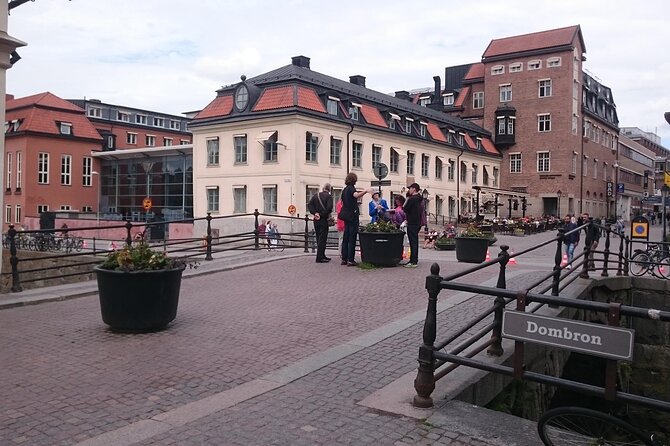
- Short, central, and manageable: The tour begins and ends at Riddartorget, uses a mobile ticket, and stays close to Uppsala’s key sights.
Why Uppsala Works So Well on Foot
Uppsala is one of Sweden’s best cities for a short orientation walk. The important sights sit close together, but their stories reach from the medieval period to the late 19th century. That gives this experience a useful job: it helps you see how the cathedral, university, castle, and town grew together rather than treating them as isolated photo stops.
You begin at Riddartorget and return there at the end. The route includes five main areas, with free admission listed for the University Main Building, the cathedral, the university park, and the historic civic quarter. Admission is not included for Gustavianum or Uppsala Castle, so check what access is planned on your date before assuming the tour includes indoor entry.
The walk is led by an authorized Uppsala guide. That matters here because the best parts are not simply dates and building names. The tour depends on local connections: why the university mattered to Swedish politics, how its buildings shaped the city, and how a royal event caused major disruption.
More walks:
- Stockholm: Ghost Walk and Historical Tour
★ 4.7 · 2,206 reviews - Walking Tour of Stockholm Old Town
★ 5.0 · 1,175 reviews - The Original Stockholm Ghost Walk and Historical Tour – Gamla Stan
★ 4.5 · 1,165 reviews
University House and Rune Stones: A Complicated Beginning
The first stop is Uppsala University’s Main Building, usually known as the University House. Around 15 minutes is allocated here, along with time in the university park to see its rune stones.
The building offers an early lesson in Uppsala’s mixture of ambition and financial trouble. Its builder went bankrupt because of the cost of the decorations. That small detail gives you something better than a standard architectural description. You can look at the ornament and understand that the building was not just designed to be useful. It was meant to project status, and that ambition had a price.
The university park adds a different layer. Rune stones connect the area with a much older Sweden, long before the university was founded. You get a quick visual reminder that Uppsala’s story did not begin with scholars, kings, or grand university halls.
I like this opening because it sets up the tour’s main habit: look at a familiar building, then ask what money, power, vanity, or conflict helped create it. The stop is brief, so you should not expect a full architectural lecture. It is more of a sharp introduction to the city’s academic center.
Gustavianum and the Anatomical Theater
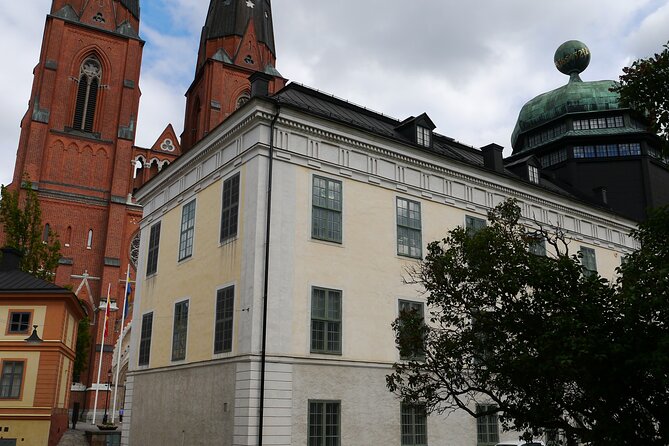
The Gustavianum section is scheduled for about 10 minutes. The museum itself charges an admission fee that is not included, so this part needs a little practical caution. The description focuses on the building and its stories, but it does not clearly promise that the tour price includes museum entry.
The star here is the anatomical theater built by Olof Rudbeck. Its design was considered brilliant, but the room had no ventilation system. That is a memorable detail, and it makes the story human. An impressive scientific idea could still have an unpleasant practical flaw.
You also hear about the party hall and university collections. The collections became so extensive that the party hall had to move on to two other buildings before everything could be accommodated. The story says a great deal about the university’s appetite for learning, collecting, and display.
This is also where the guide brings in several names important to Uppsala, including Anders Celsius, Carl Linnaeus, and Olof Rudbeck. You hear about different university buildings and the people connected with them, rather than treating the university as a single institution without personalities.
The university’s founding story has a competitive twist. It was established partly so Sweden could have an institution better than the Danish one. That rivalry gives the academic history a little spark. You are not just hearing about education; you are hearing about national pride and political competition.
The stop may feel short if you are especially interested in science or university history. Ten minutes is enough for a clear introduction, but not enough for an extended museum visit. If Gustavianum is high on your personal list, plan separate time for it.
Uppsala Cathedral and Medieval Gossip
The cathedral receives the longest single indoor or architectural focus, with about 20 minutes scheduled. Uppsala Domkyrka was built between the 1270s and the 1430s, so its construction crossed several generations. That long building period gives the guide plenty to discuss, from the scale of the project to the medieval buildings around it.
The cathedral is described as the largest in the Nordic countries. Even if you know little about medieval church architecture, its size helps explain Uppsala’s importance. This was not a minor provincial town building a modest parish church. It was a major religious and political center.
The surrounding area adds texture. You hear about the old canon houses, or kanikhus, and the buildings that once crowded around the cathedral. The guide also shares construction scandals, including a dispute in which limestone workers were paid more than soldiers, leading to strikes. That kind of story makes the building process easier to picture. Huge monuments were not created by abstract medieval society. They were built by workers who needed wages and were willing to stop when the pay was unfair.
I like the cathedral section because it combines scale with gossip. You get dates and architecture, but also quarrels, labor problems, and the everyday tensions behind a grand project. The cathedral is free to visit as part of the listed tour stops, though the exact amount of time inside may depend on conditions during your visit.
The university’s rivalry with Denmark returns here too. The cathedral and university were part of a larger effort to make Uppsala a center worthy of Sweden’s ambitions. The guide connects the religious buildings, academic institutions, and medieval town instead of presenting each one as a separate attraction.
A few more ways to spend a day in Sweden
- Malmö: Express Walk with a Local in 60 minutes
★ 5.0 · 8 reviews - Explore Gothenburg in 60 minutes with a Local
★ 3.5 · 7 reviews - Gothenburg: Express Walk with a Local in 60 minutes
★ 4.8 · 6 reviews - Explore Malmo in 60 minutes with a Local
★ 4.0 · 4 reviews
St. Erik’s Square and the University City Within the City
The fourth stop moves to St. Erik’s Square and the Consistory House, with about 10 minutes allocated. This is where the tour turns toward public health, food, law, and student administration.
You hear about the plague’s arrival in Uppsala and about Oxblodstorget, a square associated with meat sales. The cathedral’s sheds, built into the wall surrounding it, offer another practical glimpse of the old town. These details help you picture a city that was not only a place of worship and scholarship. It was also a working settlement with markets, smells, disease, storage, and crowded public spaces.
The Consistory House had a prison, police function, and administration for students during the 1750s. That is a useful clue to the university’s power. Uppsala was not simply a campus placed inside a city. The university had its own rules and institutions, creating what the tour describes as a city within the city.
The stop also covers the years 1709 to 1711, when the plague entered Uppsala. Because the time here is short, you should expect an overview rather than a detailed study of the epidemic. Still, the subject broadens the walk beyond famous scholars and grand buildings.
For me, this is the sort of stop that can make a city walk worthwhile. A building may look ordinary until you learn it once housed student discipline or public administration. A square may seem quiet until you discover its market role. The guide’s task is to make those connections quickly.
Uppsala Castle and the View Across the Botanical Garden
The final major stop is Uppsala Castle. The tour takes you into the courtyard and gives you a view over the Botanical Garden, described as one of the oldest botanical gardens in Europe. Castle admission is not included, so confirm whether the planned experience covers the courtyard only or includes any ticketed interior area.
The castle story centers on a murder. That gives the final stop a strong dramatic turn, especially after the tour has spent time on scholarship, religion, trade, and public administration. You hear about the crime and the people tied to it, then look out over the garden from the castle grounds.
The view also brings the earlier university stories back into focus. Uppsala’s academic world is not hidden away in one building. It reaches across the city, into the gardens, streets, cathedral precinct, and castle district. The guide uses the castle to show how power and learning shared the same compact urban setting.
This is likely to be one of the more memorable places for photographs, although the supplied information does not promise a particular amount of free time for pictures. If you want a long castle visit or a detailed botanical garden tour, this one-hour experience will not replace those activities. It gives you context and a viewpoint, not a full exploration of either attraction.
The Coronation That Moved to Stockholm
One of the most unusual stories on the route concerns Queen Kristina’s coronation. Before the ceremony, the whole city was voluntarily demolished according to a plan for rebuilding. The problem was time. Uppsala could not be rebuilt quickly enough, so the coronation was moved to Stockholm.
This is a wonderful example of how grand plans collide with ordinary construction work. A city could be cleared for a royal event, yet still fail to produce the finished setting in time. The story also helps you see Uppsala as a place repeatedly reshaped by rulers, institutions, and ambitious building schemes.
It is the kind of anecdote I would want from a local guide. You can walk past an old street and never guess that the city once removed much of itself for a coronation that ultimately took place elsewhere. The detail gives the walk a memorable thread, even if the route moves quickly between several periods.
Guide Style and the Shape of the Experience
The strongest praise for this experience concerns the guides. Anette is described as answering questions with ease and adding amusing stories about Uppsala’s past. Jonathan is also singled out for explaining so much that even members of a local Uppsala group learned new things.
That is important because the route covers a lot in a short time. You need a guide who can keep the chronology clear while moving between architecture, science, royal history, plague, and student life. The positive experiences suggest that the personal quality of the guide can make a real difference.
There is one fair caution. One Swedish comment felt the group spent too much time standing while the guide pointed out sights, and that the route lacked a clear connecting thread. I would take that seriously if you want a brisk walking tour with constant movement. This experience is better suited to you if you enjoy stopping, listening, and asking questions.
The advertised maximum is 20 people. That is not a private tour, but it is a reasonable size for a central city walk. A smaller group would be easier for photographs and conversation, while a full group might make it harder to hear if you stand at the back.
Price, Timing, and What You Get for $91.75
At $91.75 per person, this is not a cheap orientation walk. The price includes all listed fees and taxes, but gratuities are not included. The key question is what you want from a one-hour experience.
The value is strongest if you want a local guide to connect several major sights quickly. You hear about the cathedral, university, castle, Botanical Garden, rune stones, university figures, medieval disputes, student administration, plague, and royal history. That is a lot of material for a first look at Uppsala.
The value is weaker if you mainly want admission to museums or castle interiors, since those fees are not included. It is also less attractive if you prefer to explore at your own pace. The walk gives you interpretation, but the short schedule limits independent time at each place.
There is a timing issue worth noting. The five listed stop durations are 15, 10, 20, 10, and 20 minutes, which totals 75 minutes. The headline duration says approximately one hour. Since walking between stops may be included differently, allow more than 60 minutes and confirm the expected length before scheduling a train or another timed activity.
The meeting point is Riddartorget, and the tour returns there. It is near public transportation, and confirmation arrives when you book. Service animals are allowed, but you should have a moderate level of physical fitness. The experience requires a minimum number of participants, so a cancellation for low enrollment is possible, with another date or a full refund offered.
Free cancellation is available if you cancel at least 24 hours before the local start time. Changes or cancellations made inside that period are not accepted for a refund.
Who Will Get the Most From This Walk?
I would choose this tour if you are visiting Uppsala for the first time and want a fast framework for the city. It should also suit you if you enjoy university history, unusual local anecdotes, old buildings, and stories about how institutions shaped daily life.
It can work well for people who already live in Uppsala, too. Jonathan’s experience with local participants shows that a resident may still learn new facts about familiar streets and buildings.
You may want a different plan if your main aim is a long, energetic walk with little time spent standing. You should also add separate time for Gustavianum, Uppsala Castle, the cathedral, or the Botanical Garden if you want to explore their interiors and collections in detail.
Should You Book Uppsala’s Biggest Attractions Walk?
Book it if you value stories and connections more than admission tickets. The best parts are the odd, human details: a builder ruined by decoration costs, an anatomical theater without ventilation, workers striking over pay, students governed through a house with a prison, and a city demolished for a coronation that moved elsewhere.
I would confirm the exact duration and entry arrangements for Gustavianum and the castle before paying $91.75. If those points suit your plans, this is a focused way to get your bearings in Uppsala and decide which sights deserve a longer visit. If you want constant walking or a low-cost introduction, the price and stop-and-talk format may not be the right fit.
FAQ
Where does the Uppsala city walk begin?
The tour begins at Riddartorget in Uppsala, Sweden.
Where does the tour end?
The activity ends back at the meeting point at Riddartorget.
How long does the tour last?
The experience is advertised as approximately one hour. The listed stop times total about 75 minutes, so it is sensible to allow extra time and confirm the schedule before booking another activity.
Is admission to Gustavianum included?
No. Admission to Gustavianum is listed as not included.
Is admission to Uppsala Castle included?
No. Admission to Uppsala Castle is listed as not included. The tour includes time in the courtyard and a view toward the Botanical Garden.
How many people can join the tour?
The activity has a maximum of 20 participants.
Can I cancel for a full refund?
Yes, if you cancel at least 24 hours before the experience start time. Cancellations or changes made less than 24 hours before the start are not accepted for a refund.
Recently added around Sweden
- ROYAL Castle Skokloster and Viking Sigtuna (private tour)★ 4.5 · 3 reviews
- Stockholm Port to Stockholm Arlanda Airport (ARN) – Departure Private Transfer★ 3.5 · 3 reviews
- Stockholm Ghost Hunt: Self-Guided Tour and Puzzle Adventure★ 4.5 · 3 reviews
- Ghosts of Stockholm: A Guided Tour of Horror and Dark Folklore★ 4.5 · 3 reviews
- Private Photography workshop in Stockholm★ 5.0 · 3 reviews
- Private blood, ghosts and folklore Old Town 2h Stockholm tour★ 4.0 · 3 reviews
- Stockholm- Private transfer to/from Arlanda Airport and city★ 5.0 · 3 reviews
- Family Packraft tour in Sälen★ 5.0 · 3 reviews
City Tours, compared.
City Archipelago Sightseeing Cruise with Guide
Read our review →
Guided City Sightseeing Open Electric Boat Tour
Read our review →
Guided Kayak City Tour & Optional Midsummer Meal
Read our review →Browse the lists this tour appears in