
Reviewed · 2-DAY EXPERIENCES
2-Day Small-Group Basic Skills Survival Course in Södermanland
The forest becomes your classroom. This two-day survival course near Stockholm turns basic outdoor skills into hands-on lessons, from building a fire and shelter to reading a map and finding useful plants. I especially like the small maximum group of eight and the fact that food, transport, and needed gear are included.
I also like the tone of the course. William, the instructor, mixes practical instruction with patience and humor, making the experience suitable for beginners rather than only hardened outdoor types. The main thing to consider is that two days can only cover the basics. You will gain useful skills and confidence, but not complete independence in every possible emergency.
In This Review
- Key Points to Know Before You Go
- From Stockholm Streets to Forest Skills
- Fire First, Because It Does So Much
- Shelter Building and a Night Outdoors
- Finding Water, Food, and Useful Plants
- Reading a Map Instead of Relying on Your Phone
- Wildlife Tracking and Group Survival
- William’s Teaching Style
- What the Meals and Included Gear Mean for Value
- When to Go and How Difficult It Feels
- Who Should Book This Experience
- Practical Booking Advice
- Should You Book the Södermanland Survival Course?
- FAQ
- Where does the survival course start?
- What time does the course begin?
- How long does the experience last?
- How many people can join the course?
- Is private transportation included?
- Are meals included?
- What happens if the minimum number of participants is not reached?
Key Points to Know Before You Go
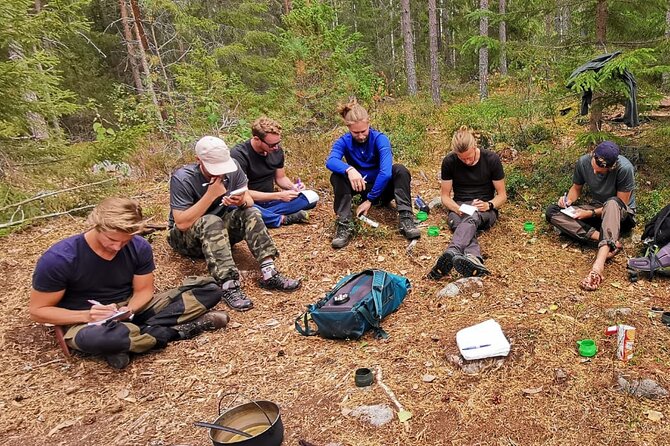
- Sleep in the Södermanland wilderness: The entire course takes place outdoors, with an overnight stay in the forest.
- Learn the three survival fundamentals: Fire, shelter, and food are central, with water collection and prioritizing basic needs added to the mix.
- Practice instead of just watching: You can build, collect, identify, navigate, and prepare food during the course.
- Small groups make a difference: The group is capped at eight people, giving you more room to ask questions and try each skill.
- Meals and transport are included: Breakfast, lunch, dinner, private transportation, and needed gear are part of the listed price.
- Seasonal minimums apply: At least three participants are needed from early October through late April, and five from early May through late September.
From Stockholm Streets to Forest Skills
The meeting point is True Nature Sweden AB at Tideliusgatan 62 in Stockholm. You meet at 9:00 a.m., then use the included private transportation to reach the wilderness area in Södermanland.
That transfer matters. You do not need to arrange a rental car or work out a route into the countryside before the course begins. The experience ends back at the same meeting point, making it easier to fit into a Stockholm visit.
Once in the forest, the focus shifts quickly from city convenience to basic priorities. The course is built around a simple question: if you suddenly had to manage outdoors, what would you need first? You learn to think through those priorities rather than rush into random tasks.
That approach is more useful than a string of party tricks. In a real emergency, staying calm and deciding what matters first can be as important as knowing how to light a fire. The course aims to give you both the practical tools and the confidence to use them.
A few more ways to spend a day in Stockholm
- 2-Day Small-Group Stockholm Archipelago Kayak Tour
★ 5.0 · 25 reviews - 2-Day Kayak Tour in the Stockholm Archipelago
★ 5.0 · 13 reviews - 2-Day Small-Group Stockholm Hiking Tours
★ 5.0 · 6 reviews
Fire First, Because It Does So Much
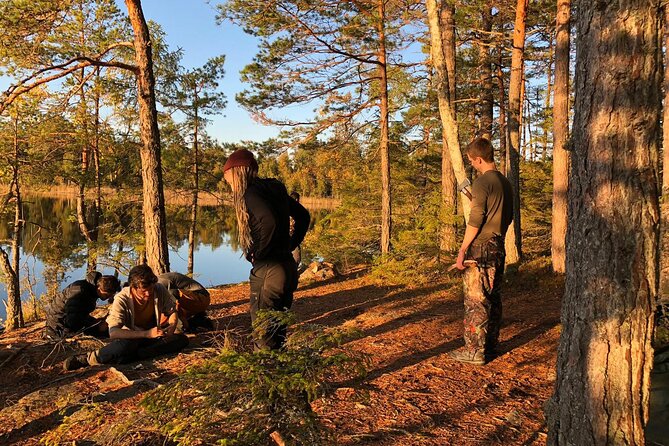
Fire is one of the main foundations of the course. You learn how to build one and what materials around you can help make it possible.
The value of this lesson goes beyond warmth. A fire can support cooking, make a camp feel more manageable, and give structure to an overnight stay. You also learn how to cook over the fire, which adds a satisfying practical element to the course.
The cooking receives especially warm praise in the available feedback. One participant with professional experience in high-end cooking singled out the food as a highlight, while another described fire cooking as one of the coolest parts of the weekend. That is useful context: meals are not treated as an afterthought simply because the course is about survival.
Do not expect a restaurant menu in the forest, of course. The point is learning how food can be prepared outdoors, while also enjoying breakfast, lunch, and dinner supplied as part of the experience. You get the practical lesson without having to go hungry for the sake of authenticity.
Shelter Building and a Night Outdoors
The shelter lesson asks you to work with what the forest provides. You learn how to make a basic shelter and which materials can be used.
This is one of the most memorable parts for beginners because the result is visible. You begin with a collection of natural materials and finish with a place that can offer protection during an overnight stay. The shelter does not need to be elegant. It needs to be useful, and the course helps you understand that difference.
Sleeping in the forest is a central part of the experience. It gives the lessons more weight than a short demonstration in a park. After dark, your fire, shelter, food, and planning are no longer abstract exercises. They become part of how you spend the night.
You should be prepared for a basic outdoor experience, not a hotel with trees around it. The supplied information confirms an overnight camp, but it does not specify the exact sleeping setup or bedding. Ask True Nature Sweden what personal camping equipment you need for your chosen date, especially if you do not already own suitable gear.
A camping gear rental is available for 450 Swedish kronor per person, and a backpack can be rented for 100 kronor per person. Those are optional charges. The listed course package includes all needed gear, so clarify what that covers before paying for rentals. This is one of the few details worth checking carefully.
Finding Water, Food, and Useful Plants
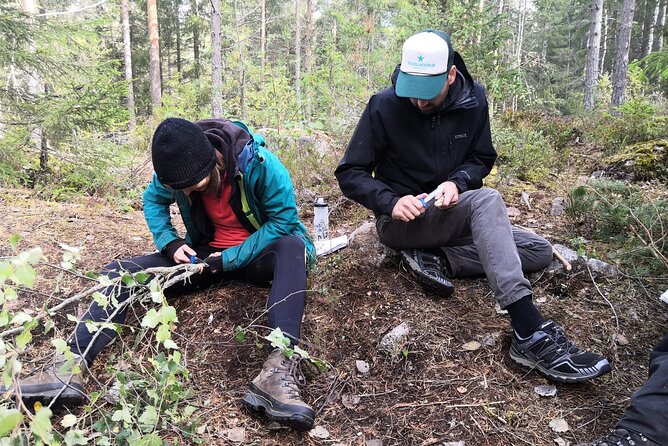
Food and water receive their own lessons, with an emphasis on finding resources rather than carrying every comfort into the woods.
You learn where water may be found and how to collect it. The information does not state the exact purification method or equipment used, so do not assume that every water source is ready to drink. The useful takeaway is learning how to locate and gather water, then asking the instructor how the course handles treatment and safety.
For food, the course covers what to eat, where to find it, and how to prepare it. You also receive an introduction to edible, toxic, and medicinal plants. This can change the way you look at the forest, but it demands care.
Plant identification should never be based on a quick resemblance or a photograph seen online. The value here is learning from an instructor in the actual setting, with clear attention to the difference between useful, harmful, and potentially medicinal species. Take notes if you can, and treat the course as an introduction rather than a license to forage without further study.
The lessons also include trapping and fishing. The supplied details do not promise a catch, and it would be unwise to book expecting one. Think of these activities as an introduction to methods and decision-making within a survival setting.
A completely different kind of day out around Stockholm:
- Stockholm: City Archipelago Sightseeing Cruise with Guide
★ 4.3 · 10,798 reviews - Stockholm: Skansen Open-Air Museum Admission Ticket
★ 4.5 · 3,427 reviews - Stockholm: Archipelago Boat Tour
★ 4.4 · 3,110 reviews - Stockholm: Highlights Boat Tour
★ 4.3 · 2,542 reviews
Reading a Map Instead of Relying on Your Phone
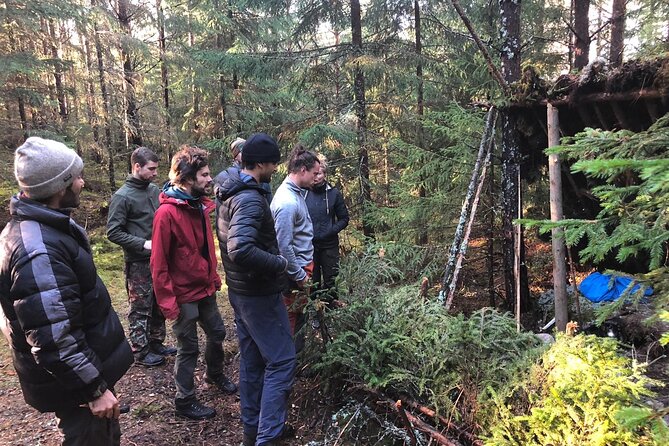
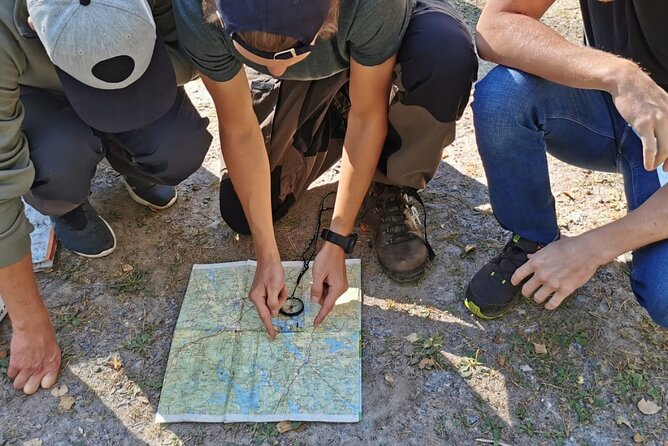
Orientation and map reading are part of the program. You learn to use a compass and find your way through the forest.
This is a highly practical skill for anyone who spends time outdoors. Phones are useful, but batteries fail, signals can be unreliable, and screens are awkward in poor conditions. A map and compass give you another way to understand where you are and how to move safely.
The instruction combines theory with practice. That combination is important. It is easy to nod along while someone explains a compass. It is harder, and far more useful, to take a bearing yourself and connect the map with the ground around you.
One mother and daughter who took the course as beginners specifically learned compass use, fire building, foraging, and shelter making. Their experience points to an important strength: you do not need prior survival training to take part.
Wildlife Tracking and Group Survival
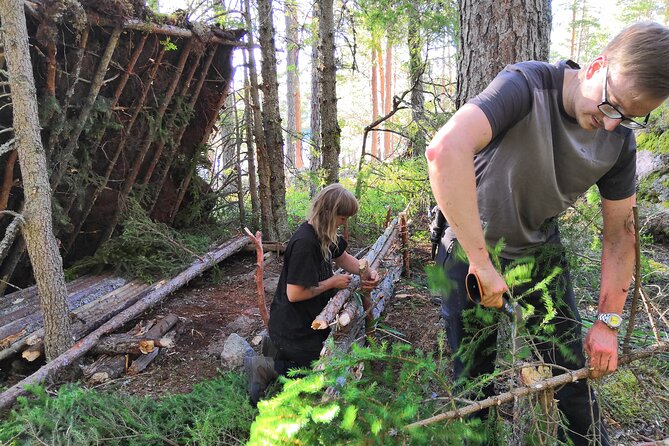
The course introduces wildlife tracking and discusses dangers connected with animals. It also covers survival in a group, including leadership.
The tracking lesson is not just about spotting footprints. It encourages you to pay attention to signs, movement, and the way wildlife uses the forest. At the same time, the course places animal dangers in context rather than turning the woods into a horror story.
Group survival adds a social layer that many short outdoor courses skip. You may need to share tasks, decide what to do first, and communicate when people have different ideas. Leadership here is not about acting like a commander. It is about helping a group function when conditions are tiring or uncertain.
The small group limit of eight supports this kind of teaching. With fewer people, you should have more opportunity to participate instead of watching from the edge. The minimum group rules are worth checking before booking: at least three people are required from early October to late April, and at least five from early May to late September.
If the minimum is not reached, the experience may be cancelled. You will then be offered another date or experience, or a full refund. That policy is fair, but it means you should avoid building an inflexible itinerary around this course until the booking is secure.
William’s Teaching Style

William is the named instructor, and his approach is one of the strongest reasons to choose this course.
The feedback describes him as patient, enthusiastic, funny, and generous with practical information. That matters because survival instruction can easily become theatrical or overly macho. This course appears to take a more welcoming path, with beginners and mixed groups feeling comfortable taking part.
One participant expected a tough weekend dominated by macho attitudes, but instead found a friendly group and a course that was less punishing than imagined. That is a good sign for anyone who wants a serious introduction without a boot-camp atmosphere.
Another participant described learning both practical and theoretical steps. That balance helps you understand not only what to do, but why. A good instructor can also adjust the pace when one person has outdoor experience and another has never built a fire.
Still, this is a group activity. You will share time, food, tasks, and instruction with other people. If you want a private course tailored entirely to your own pace, a group of up to eight may feel less personal. If you enjoy working with others, the group format is part of the appeal.
What the Meals and Included Gear Mean for Value
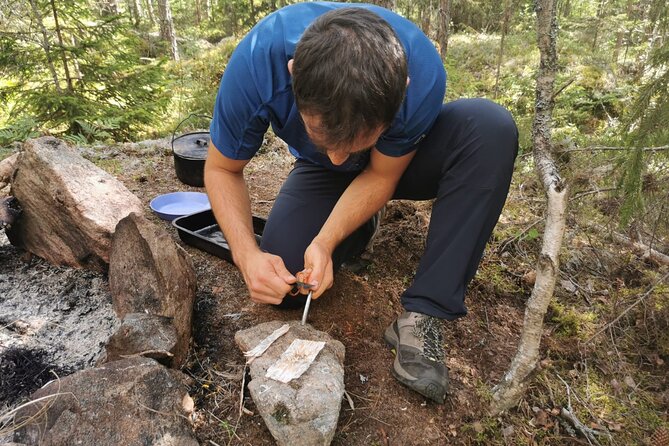
The price is $480.71 per person. That is a serious outlay for a two-day activity, but the value depends on what you would otherwise need to arrange.
The package includes breakfast, lunch, dinner, private transportation, and all needed gear. It also includes a full wilderness setting and overnight instruction, not just a few hours of demonstrations. Add the cost of transport from Stockholm, meals, equipment, and a guided outdoor course separately, and the price becomes easier to understand.
The optional rental fees may affect your final budget. Camping gear costs 450 Swedish kronor per person, and a backpack costs 100 Swedish kronor per person. Since the listing also says needed gear is included, confirm whether the rental refers to particular sleeping or carrying equipment that is not part of the standard package.
Alcoholic drinks are not included, and bringing alcohol would not fit the purpose of the course. Travel insurance is also your responsibility. Those are small points, but they belong in your planning.
For someone curious about survival skills, the course offers more value than a one-hour forest activity because you have time to practice and sleep outdoors. For an experienced camper, the price may feel high if you already own the equipment and know the basics. The strongest match is a beginner who wants organized instruction and a low-stress way to start.
When to Go and How Difficult It Feels
The course runs across the year, but the season will shape your experience.
From early October through late April, the minimum group is three participants. This cooler period can make fire, shelter, and clothing choices feel especially relevant, though the provided details do not promise any particular weather conditions.
From early May through late September, at least five participants are needed. The warmer months may feel easier for sleeping outdoors, but the course still asks you to work in the forest and manage an overnight camp.
The activity is presented as a basic course, and most people can participate. That does not mean it is a soft indoor workshop. You will spend the full course in the wilderness, build things, collect materials, practice navigation, and sleep outside.
Pack for changing outdoor conditions and ask the provider for the exact packing list. The supplied information does not specify clothing requirements, footwear, sleeping arrangements, or weather cancellation rules. Good preparation will make the lessons more enjoyable and reduce avoidable discomfort.
Who Should Book This Experience
I would recommend this course to you if you:
- Want a first serious introduction to Swedish forest survival
- Prefer practical lessons over a sightseeing tour
- Are curious about fire, shelter, plants, water, and navigation
- Enjoy learning in a small group
- Want private transport from Stockholm
- Like the idea of sleeping outdoors but do not want to plan a wilderness trip alone
It also suits families with adult participants, pairs of friends, and solo visitors who enjoy meeting people through a shared challenge. The mother and daughter experience shows that beginners can take part together without needing an outdoors background.
I would think twice if you want luxury, guaranteed fishing or trapping results, a highly technical wilderness qualification, or a private guide. Two days give you a strong introduction, but the course itself points toward longer training for deeper independence.
Practical Booking Advice
You receive confirmation when booking, and the activity uses a mobile ticket. Meet at Tideliusgatan 62 at 9:00 a.m. The course returns to that same meeting point.
Free cancellation is available up to 24 hours before the local start time for a full refund. Cancellations or changes made less than 24 hours before the start are not accepted for a refund, so leave some room in your plans.
The maximum group size is eight. Confirm the seasonal minimum and ask what the included gear covers before you reserve. Those two questions will give you the clearest picture of the final cost and how much you need to bring.
Should You Book the Södermanland Survival Course?
Book it if you want skills you can practice immediately, not just a dramatic forest story. The course combines fire making, shelter building, plant awareness, water collection, food preparation, map reading, tracking, and group leadership in a compact two-day format.
The best reasons to choose it are William’s patient teaching, the welcoming group atmosphere, the overnight setting, and the amount of practice packed into a short course. The main limits are the price, the basic rather than advanced level, and the need to confirm equipment details and seasonal minimums.
For a beginner visiting Stockholm, this is an unusual and useful way to spend two days. You return with more than photographs. You return with a better sense of how to prioritize, observe, and make practical use of the forest around you.
FAQ
Where does the survival course start?
It starts at True Nature Sweden AB, Tideliusgatan 62, 118 69 Stockholm, Sweden.
What time does the course begin?
The stated start time is 9:00 a.m.
How long does the experience last?
The course lasts approximately two days and includes an overnight stay in the forest.
How many people can join the course?
The maximum group size is eight participants.
Is private transportation included?
Yes. Private transportation from the Stockholm meeting point is included, and the activity ends back at the same meeting point.
Are meals included?
Yes. Breakfast, lunch, and dinner are included. Alcoholic beverages are not included.
What happens if the minimum number of participants is not reached?
The minimum is three participants from early October to late April and five from early May to late September. If the course is cancelled because the minimum is not reached, you will be offered another date or experience, or receive a full refund.
Recently added around Stockholm
- ROYAL Castle Skokloster and Viking Sigtuna (private tour)★ 4.5 · 3 reviews
- Stockholm Ghost Hunt: Self-Guided Tour and Puzzle Adventure★ 4.5 · 3 reviews
- Stockholm Port to Stockholm Arlanda Airport (ARN) – Departure Private Transfer★ 3.5 · 3 reviews
- Private Photography workshop in Stockholm★ 5.0 · 3 reviews
- Ghosts of Stockholm: A Guided Tour of Horror and Dark Folklore★ 4.5 · 3 reviews
- Private blood, ghosts and folklore Old Town 2h Stockholm tour★ 4.0 · 3 reviews
- Stockholm- Private transfer to/from Arlanda Airport and city★ 5.0 · 3 reviews
- Stockholm Arlanda airport to City center of Stockholm★ 3.3 · 3 reviews
2-Day Experiences, compared.
2-Day Small-Group Stockholm Archipelago Kayak Tour
Read our review →

2-day kayaking adventure around Vaxholm in Stockholm Archipelago – self guided
Read our review →Browse the lists this tour appears in