
Reviewed · MUSEUMS
Skip the Line: Disgusting Food Museum Entrance Ticket
Prepare your stomach for a clever food lesson. Malmö’s Disgusting Food Museum turns food taboo into a playful exhibit, with 80 notorious foods from around the world and the chance to smell or taste some of them. It is less about shock for shock’s sake than asking why one culture’s favorite dish can be another culture’s nightmare.
I like the hands-on tasting and the staff’s interactive approach. I also like that the museum works for both children and adults, giving families something unusual to talk about together. The main drawback is size: you may finish sooner than expected, and the lack of German text can frustrate some German-speaking visitors.
In This Review
- Key points to know before you go
- What the Disgusting Food Museum is really about
- Smelling the world’s stinkiest cheese
- The tasting bar tests your nerve
- A compact museum, not a half-day attraction
- Why the interactive staff matter
- Is it really suitable for families?
- Language and presentation considerations
- Getting there and planning your time
- Is $25.25 per person good value?
- Who should book this Malmö experience?
- Cancellation and booking flexibility
- Should you book the Disgusting Food Museum?
- FAQ
- Where is the Disgusting Food Museum located?
- How much does admission cost?
- How long does the museum visit take?
- How many foods are displayed?
- Can I smell or taste the foods?
- Is the museum suitable for children?
- Should I book in advance?
- Is the museum near public transportation?
- Can I cancel for a full refund?
- What happens if the experience is canceled?
Key points to know before you go
- Eighty foods create the main exhibit: Expect a compact collection built around strange, notorious, and challenging dishes.
- Smell and taste are part of the visit: The experience is more active than a standard museum, but you can decide how brave to be.
- The tasting bar is a major draw: It includes unusual samples, though the final run of six hot sauces may feel like an anticlimax.
- The museum is family-friendly: Kids and adults can take part, making this a good choice for a light, unusual outing.
- Plan on one to two hours: The museum is boutique-sized, so do not expect a full-day attraction.
- Advance booking protects your plans: Tickets cost $25.25 per person, and booking ahead helps guarantee admission.
What the Disgusting Food Museum is really about
The name tells you the tone. This is not a hushed museum where you study paintings from behind a rope. It is a playful, slightly wicked look at the foods people reject, fear, or find revolting.
The central exhibit presents 80 of the world’s most disgusting foods. That phrase sounds broad, and the collection uses it broadly. You can expect foods chosen for their smell, texture, ingredients, cultural reputation, or ability to make the average diner pause before taking a bite.
The useful idea behind the museum is simple: disgust is learned. A food that seems impossible to eat in one country can be ordinary, festive, or even prized somewhere else. The exhibit gives you a chance to question your own reactions without requiring a lecture or a long academic explanation.
I like that balance. The museum is silly enough for a quick family outing, but it also gives you a reason to think about food customs, cultural habits, and personal limits. You may laugh at another person’s odd food choice, then realize your own everyday meals might look just as strange to someone else.
More museums:
- Malmö: Disgusting Food Museum Entrance Ticket
★ 4.5 · 234 reviews - Stockholm: Skansen Open-Air Museum Admission Ticket
★ 4.5 · 3,427 reviews - Stockholm Pass: Save up to 50% – Includes Vasa Museum Ticket
★ 4.1 · 2,392 reviews
Smelling the world’s stinkiest cheese
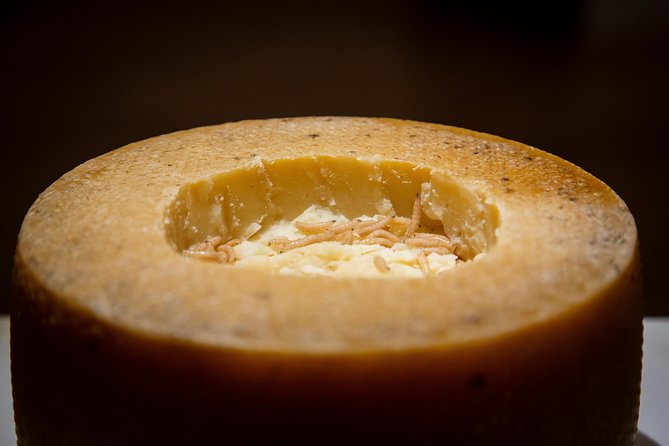
The smell section is likely to be one of the most memorable parts of the visit. The museum invites you to smell notorious foods, including the world’s stinkiest cheese. This is a small detail with a big effect: scent reaches you before taste does, and it can create a much stronger reaction than simply reading a label.
You do not need to be a fearless eater to enjoy this part. Smelling is enough for many samples, and you can choose your limits. That makes the museum easier to visit with a mixed group, since the person who refuses to taste can still take part in the main joke.
I would suggest moving slowly here. Do not rush past the smells just to reach the tasting bar. The exhibit’s point is partly to notice how your body reacts, and the unusual aromas give you plenty to discuss with your companions.
Some visitors may find the smells overpowering. That is not a flaw in the museum’s basic concept, but it is worth knowing before you arrive. If strong food odors bother you, the tasting and smell stations may be more interesting from a cautious distance.
The tasting bar tests your nerve
The tasting bar turns the museum from a display into an active challenge. Adventurous visitors can taste a range of unusual foods, including sweets made with metal cleansing chemicals. That is the sort of detail that makes this attraction different from a normal food museum.
The tasting is not designed as a refined meal. You are there to sample strange ingredients and compare reactions. Some foods may surprise you by being less awful than expected. Others may confirm your worst fears after one small bite.
I like the way this gives you control. You can smell, taste, or simply observe. Nobody needs to prove anything, and the museum remains enjoyable even if your brave moment ends after one sample.
One practical warning: the tasting bar reportedly finishes with six hot sauces. If you expect the final tasting to build toward one unforgettable specialty, that ending may feel flat. Six hot sauces can become more of a heat test than a clever finale, especially after the more unusual samples earlier in the visit.
Still, the tasting bar is the museum’s strongest feature for many people. It creates a shared memory, and it gives children and adults a simple way to compare their reactions. Just keep in mind that disgusting does not always mean dangerous, delicious, or carefully paced like a conventional tasting menu.
A compact museum, not a half-day attraction
Plan for about one to two hours. That timing matters because the museum is smaller than some first-time visitors expect. It has a boutique feel rather than the scale of a major city museum.
I see the compact size as both a strength and a weakness. You can fit it into a Malmö sightseeing day without giving up half your afternoon. It also works well when the weather is uncertain, your children have limited patience, or you want one unusual stop between larger attractions.
The tradeoff is value. At $25.25 per person, you are paying for a focused experience rather than a large number of galleries or several hours of entertainment. If you judge admission by square footage, the price may feel high. If you judge it by the hands-on tasting, the unusual subject, and the chance to do something you cannot easily repeat elsewhere, the cost makes more sense.
I would not book this as your only major activity in Malmö. I would pair it with other sights, meals, or walks in the city. The museum works best as a memorable one to two-hour stop, not as a destination that fills an entire day.
A few more ways to spend a day in Malmö
- Malmö: Self-Guided Food Tour
★ 4.5 · 18 reviews - The Nordic Food Walk Stockholm
★ 4.5 · 642 reviews - Stockholm Food Tour
★ 4.5 · 404 reviews - Kiruna: Northern Lights Tour with Stejk Street Food Dinner
★ 4.9 · 231 reviews
Why the interactive staff matter
The staff help set the mood. A playful exhibit can fall flat if the people working there simply point at the displays and watch you leave. Here, the staff are described as highly interactive and good at engaging with the tasting process.
That matters more than it may seem. Visitors often need a little encouragement before smelling or tasting something unfamiliar. Friendly staff can explain what you are looking at, keep the mood light, and help a nervous child decide how to participate.
No guide names or formal guided-tour details are provided, so you should think of this as a museum visit with staff interaction rather than a scheduled guided tour. The personal contact appears to be part of the appeal, but your visit will still center on the exhibits and tasting stations.
The strongest praise is aimed at this human side of the experience. The food may be gross by design, but the staff keep the outing welcoming instead of turning it into a dare contest.
Is it really suitable for families?
Yes, for most families who enjoy playful gross-out humor. The museum is aimed at both children and adults, and the tasting format gives everyone a role. One child may want to taste everything, while another may prefer to inspect the displays and watch a parent take the risk.
I would set expectations before arriving. This is not a gentle food education center built around familiar flavors. The exhibit deals in strong smells, strange ingredients, and foods selected because many people find them disgusting. A child who is sensitive to odors or easily upset by food talk may not enjoy it.
For older children and teenagers, the museum can be an easy conversation starter. You can talk about why people eat certain foods, how taste develops, and why one person’s delicacy is another person’s nightmare. That gives the visit more lasting value than a simple gross-out attraction.
For adults without children, the museum works just as well. Friends can turn the tasting bar into a lighthearted challenge, while couples can use it as an unusual break from standard sightseeing. The attraction does not require a special interest in science or food culture. Curiosity and a willingness to laugh at your own reactions are enough.
Language and presentation considerations
The information provided does not specify every language available inside the museum. German text has been a concern for at least some German-speaking visitors, so you should not assume that all exhibit material will be available in German.
That does not automatically ruin the visit. Much of the experience is visual, and the smell and tasting stations do not require long explanations. Still, if you want to read every label or learn the full background of each food, language support may affect how much you get from the displays.
English-language visitors should check the current presentation details when booking if language is important to them. The available information confirms the German-language concern, but it does not give a complete list of exhibit languages.
Getting there and planning your time
The museum is near public transportation, which makes it easy to add to a day in Malmö. The available information does not identify a specific station, route, or walking time, so check the current directions after booking rather than relying on a general city map.
Admission confirmation is received at the time of booking. The experience is commonly booked about nine days in advance, which suggests that planning ahead is sensible, particularly if your Malmö schedule is tight.
Booking in advance also helps guarantee admission and avoids the hassle of arriving without a place. This matters more for a compact attraction, where capacity may be limited at a particular time.
The museum is listed as suitable for most people to participate. No detailed accessibility information is provided, so contact the provider directly if you need specific information about mobility, sensory needs, or other access requirements.
The stated duration is approximate. You might spend closer to an hour if you move quickly, or nearer two hours if you read carefully, discuss the samples, and take your time at the tasting bar.
Is $25.25 per person good value?
The admission price is reasonable only if you want the active part of the experience. At $25.25 per person, the museum costs more than a quick stop where you simply look at displays. The price includes admission, and the main appeal is the chance to smell and taste unusual foods.
I would call it fair value for people who enjoy participatory attractions. The museum offers a story to tell afterward, which is often what makes a short city activity worthwhile. You are not just looking at a collection. You are testing your senses and comparing reactions with the people beside you.
The value is weaker if you dislike tasting challenges or expect a large museum. The smaller size means you should not judge the ticket by how long you remain inside. You are paying for an unusual idea, a compact presentation, staff interaction, and the tasting opportunity.
Its 4.8 out of 5 rating from 359 ratings, along with a 96 percent recommendation rate, suggests that the format works well for most people. It does not remove the clear limitations: the museum is small, language options may not suit everyone, and the hot sauce finish may disappoint.
Who should book this Malmö experience?
I would recommend it to:
- Families with children who enjoy unusual, hands-on attractions
- Couples looking for a playful break from standard sightseeing
- Friends who like food challenges and strong reactions
- Curious eaters who want to question their own ideas about disgust
- Visitors with one to two spare hours in Malmö
- Anyone who wants a memorable story rather than another conventional museum
I would think twice if you dislike strong smells, refuse all unfamiliar foods, or expect a large cultural institution. The museum still offers an exhibit without tasting, but the sensory stations are a major part of what you pay for.
If German-language text is essential, confirm the current language arrangements before booking. That one check may determine whether the museum feels complete or frustrating.
Cancellation and booking flexibility
You can cancel for a full refund up to 24 hours before the experience start time. Inside that 24-hour window, you will not receive a refund, and changes made during that period are not accepted.
The cut-off uses Malmö’s local time. The experience also requires good weather and a minimum number of participants. If poor weather causes cancellation, you can receive a different date or a full refund. If the minimum number is not met, you can choose a different date or experience, or receive a full refund.
That policy gives you useful protection when you book ahead, but you should still keep the 24-hour deadline in mind. Since the museum is indoors, the weather requirement may seem unusual, so avoid assuming every cancellation decision will be in your control.
Should you book the Disgusting Food Museum?
Book it if you want a short, funny, hands-on Malmö experience and the idea of smelling or tasting notorious foods sounds entertaining rather than unpleasant. The interactive staff, family-friendly format, and 80-food exhibit give the museum more substance than its gross-out name suggests.
Skip it if you need a large museum, detailed German-language information, or a polished food tasting built around flavor. At $25.25, the price makes sense for curiosity and participation, not for a long visit.
For most people, I would book ahead and allow one to two hours. Go with an open mind, taste only what you want, and save enough appetite for your next Malmö meal.
FAQ
Where is the Disgusting Food Museum located?
The Disgusting Food Museum is located in Malmö, Sweden.
How much does admission cost?
Admission costs $25.25 per person.
How long does the museum visit take?
The visit takes approximately one to two hours.
How many foods are displayed?
The exhibit includes 80 of the world’s most disgusting foods.
Can I smell or taste the foods?
Yes. Adventurous visitors can smell and taste a range of the foods, including notorious cheeses and unusual sweets.
Is the museum suitable for children?
Yes. The museum is described as family-friendly and is aimed at both children and adults.
Should I book in advance?
Booking in advance is recommended to guarantee admission and avoid hassle. The experience is booked about nine days ahead on average.
Is the museum near public transportation?
Yes. The museum is near public transportation.
Can I cancel for a full refund?
Yes. You can cancel at least 24 hours before the start time for a full refund. Cancellations made less than 24 hours before the start time are not refunded.
What happens if the experience is canceled?
If poor weather causes cancellation, you can receive a different date or a full refund. If the minimum number of participants is not met, you can receive a different date or experience, or a full refund.
More Skip the Line
- Stockholm: Avicii Experience Skip-the-Line Entrance Ticket
★ 4.8 · 763 reviews - Stockholm Royal Palace Museums Gamla Stan Skip-the-line Tour
★ 4.8 · 18 reviews - Stockholm Royal Palace Museums Gamla Stan Skip-the-line Tour
★ 5.0 · 7 reviews
More Food
- Stockholm Small Group Food Tour with 7 Classic Food Tastings
★ 5.0 · 168 reviews - Stockholm Christmas Tour and Food Tasting Experience
★ 4.5 · 17 reviews - Stockholm Private Food Tour with a Local: Tastiest Treats 100% Personalized
★ 4.0 · 12 reviews - Secret Walking Food Tour Stockholm Old Town
★ 4.9 · 11 reviews
Recently added around Malmö
- Explore Malmo in 60 minutes with a Local★ 4.0 · 4 reviews
- Daytrip Bike Tour on the Swedish Countryside Private★ 5.0 · 4 reviews
- Malmö: Sightseeing and Landmarks tour by bike★ 4.3 · 6 reviews
- Copenhagen: Malmö Tour in Spanish★ 4.8 · 7 reviews
- Malmö: Express Walk with a Local in 60 minutes★ 5.0 · 8 reviews
- Surprise Walk of Malmö with a Local★ 4.0 · 9 reviews
- Lund’s Medieval and Modern History: A Self-Guided Audio Tour★ 4.5 · 11 reviews
- Self-Guided Audio Walking Tour Through Kurt Wallander’s Ystad★ 3.5 · 12 reviews
Museums, compared.





Vasa Museum Guided Tour, Including Ticket & Guide
Read our review →

Stockholm Old Town and the Vasa Museum, a Small Group Walking Tour.
Read our review →Browse the lists this tour appears in