
Reviewed · STOCKHOLM TOURS
Stockholm: Underground Metro Art Ride with a Local
The best art may be underground. Stockholm’s metro turns an ordinary subway ride into a compact public-art tour, and this 90-minute experience gives you a practical way to see several of its most unusual stations with a local guide. I like the small groups of up to eight, which allow room for questions, and I like that the subway ticket is included in the advertised tour package. The main caution is value: at $131.12 per person, this is costly for a short outing, especially if your guide cannot answer detailed art questions.
You begin at T-Centralen and finish at Tekniska högskolan, moving through a selection of stations rather than trying to cover Stockholm’s entire metro system. The pace and exact stops can change with the group’s interests, walking speed, and weather. Several stations include steps, so this is not a good choice if stairs or extended walking are difficult for you.
In This Review
- Key things to know before booking
- Why Stockholm’s subway makes a good art tour
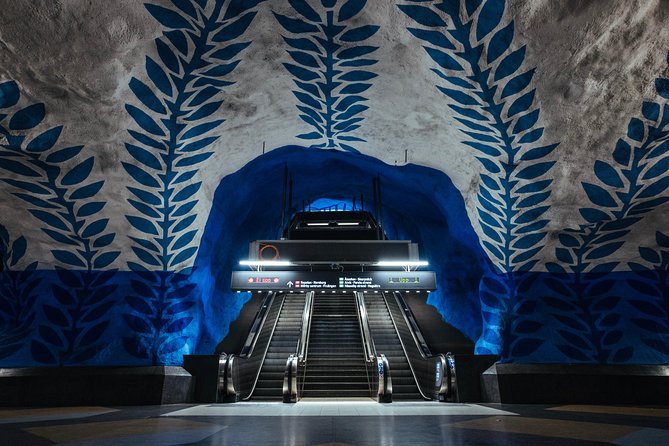
- Starting at T-Centralen and finding the first works
- Ulrik Samuelson’s underground garden
- Siri Derkert’s station and the tour’s strongest art focus
- An Olympic tribute underground
- The four elements and the value of seeing art in place
- What the 90-minute format feels like
- Small groups, local hosts, and guide quality
- Is $131.12 a fair price?
- Who should book this Stockholm metro experience?
- Practical tips for getting more from the outing
- Should you book it?
- FAQ
- Where does the Stockholm metro art tour begin?
- Where does the tour end?
- How long does the experience last?
- How many people can join the tour?
- Is the tour offered in English?
- Is a subway ticket included?
- Which artists are included along the route?
- Does the route visit every Stockholm metro art station?
- Is the tour suitable for people with impaired mobility?
- Can I cancel for a full refund?
Key things to know before booking
- You see several stations in 90 minutes: The format gives you a fast, organized introduction to Stockholm’s underground art instead of leaving you to work out a route alone.
- The group is limited to eight people: A small party makes it easier to hear explanations and ask about details.
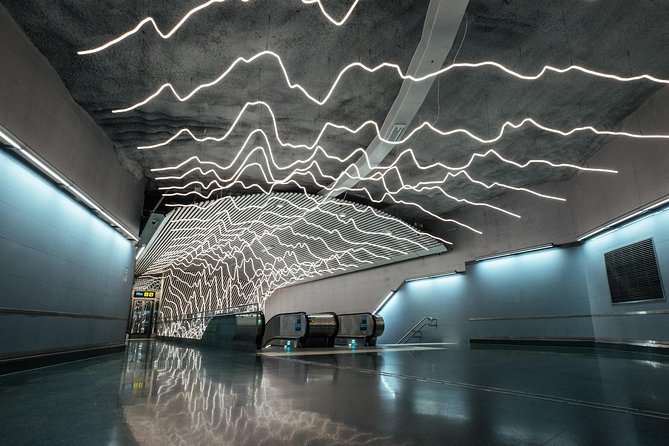
- The art is made for the setting: Works by Per Olof Ultvedt, Signe Persson-Melin, Anders Österlin, Ulrik Samuelson, and Siri Derkert are part of the route.
- You learn how to use the metro: One guide, Fayez, helped a participant gain confidence using the system for the rest of the visit.
- Expect stairs and station walking: One account specifically describes several steps and suggests extra care for anyone with knee trouble.
- The price demands strong guiding: At $131.12, the experience makes the most sense if you value explanation and local context, not just a quick look at decorated stations.
Why Stockholm’s subway makes a good art tour
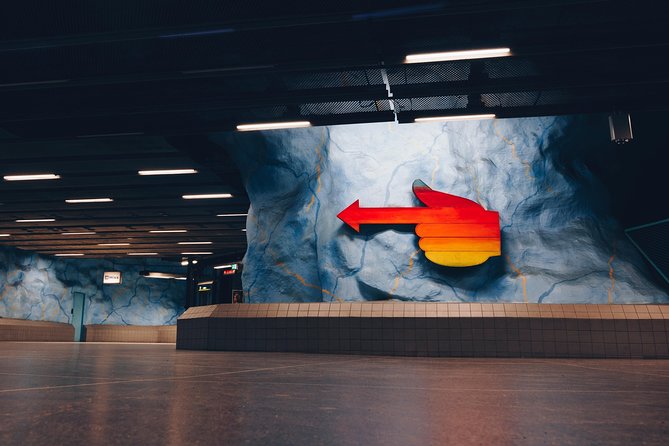
Stockholm’s metro is useful transportation first, but parts of it also work like public galleries. The art is not placed behind a museum ticket desk. It appears along platforms, in passageways, and in station spaces you might otherwise rush through while changing trains.
That setting gives the experience its appeal. You are not only looking at isolated paintings or sculptures. You are seeing how artists shaped spaces used every day by people going to work, school, and home. The tour also shows you how to pay attention underground, where a plain commute can hide large-scale installations and carefully designed environments.
I like this kind of introduction because it fits neatly into a city break. You do not need to give up a full morning or afternoon. In about an hour and a half, you can visit several stations and learn enough about the metro to continue exploring independently.
The limitation is just as clear. Ninety minutes only allows for a selection. If you want to study every station slowly, take many photographs, or follow each artist in detail, you will need to return on your own. One participant specifically advised allowing extra time for additional stations, and that is sensible advice.
A few more ways to spend a day in Stockholm
- Stockholm: City Archipelago Sightseeing Cruise with Guide
★ 4.3 · 10,798 reviews - Stockholm: Skansen Open-Air Museum Admission Ticket
★ 4.5 · 3,427 reviews - Stockholm: Archipelago Boat Tour
★ 4.4 · 3,110 reviews
Starting at T-Centralen and finding the first works
The meeting point is T-Centralen, Stockholm, 111 20. This is a practical starting place because the tour begins at one of the city’s key metro stations and then moves through the system toward Tekniska högskolan.
At the start, your guide should help you understand the basic shape of the outing: which stations you will visit, how the route works, and what kinds of art to watch for. That orientation matters if you are not already comfortable with Stockholm’s metro. A good part of this tour is learning the system well enough to return later without assistance.
The opening section includes work connected with Per Olof Ultvedt, Signe Persson-Melin, and Anders Österlin. The supplied details do not identify one particular piece at each station, so you should expect the guide to point out selected works rather than present a complete catalogue.
This is also where the small group helps. With no more than eight people, you have a better chance of hearing the explanation in a working subway station. You can ask why a work was made, what to look for, or how the art relates to the station around it.
The quality of this part depends heavily on your local host. Dan received especially strong praise for explaining station details and helping people notice elements they might have missed. Fayez was also singled out for explaining the metro’s background and giving useful guidance on using the system. Those examples show what the tour can offer at its best, but they also point to the main risk: guiding quality may vary.
Ulrik Samuelson’s underground garden
One of the planned highlights is an underground garden by Ulrik Samuelson. The name alone suggests a shift in mood from the more expected rock, concrete, or painted station surfaces.
You should not expect a traditional botanical garden underground. The important point is the contrast between a transit environment and an installation that suggests nature or cultivated space. The guide’s explanation can help you notice how color, form, and the station’s architecture work together.
This stop is a good example of why photographs may not tell the full story. One participant noted that pictures do not do justice to seeing the art in person. Underground lighting, scale, the movement of trains, and the surrounding architecture all affect how the work feels.
You may also find that the station experience is less quiet than a normal gallery visit. The metro remains an active public system. Trains arrive, announcements sound, and people move around you. That is part of the character, but it can make it harder to listen or take your time.
Siri Derkert’s station and the tour’s strongest art focus
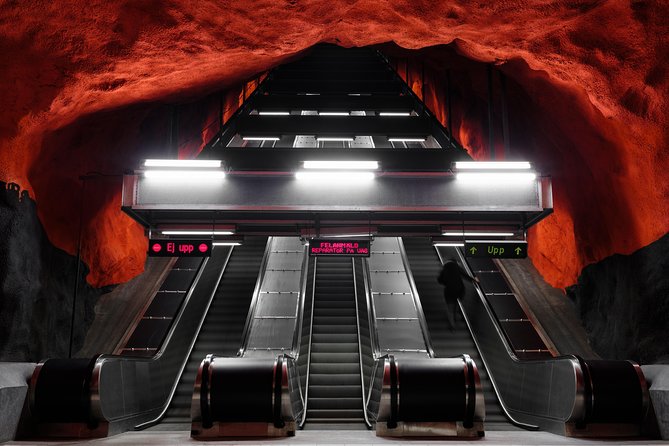
The route also includes work by Siri Derkert, one of Sweden’s best-known artists. This stop should appeal most to visitors who want a direct connection to Swedish art rather than only a pleasant subway ride.
The useful role of the guide here is interpretation. A station can contain names, forms, symbols, and details that are easy to overlook when you are trying to catch a train. A guide can direct your eyes and explain the ideas behind the work. Dan was praised for knowing what each station represented and for drawing attention to details that made the art easier to appreciate.
That kind of explanation is the difference between this tour and a self-guided metro outing. You can certainly visit the stations independently, but you may not know which surfaces deserve a closer look or how the works fit into the station design.
Still, you should keep expectations reasonable. The tour description promises local insight, not a university-level art lecture. One participant found the guide unable to answer several questions about the art and considered the tour overpriced as a result. If you are an art specialist who wants exact information about materials, dates, symbolism, and artistic influences, ask your guide questions early and judge the depth for yourself.
A completely different kind of day out around Stockholm:
- Stockholm: Highlights Boat Tour
★ 4.3 · 2,542 reviews - Stockholm Pass: Save up to 50% – Includes Vasa Museum Ticket
★ 4.1 · 2,392 reviews - Stockholm: Ghost Walk and Historical Tour
★ 4.7 · 2,206 reviews - Walking Tour of Stockholm Old Town
★ 5.0 · 1,175 reviews
An Olympic tribute underground
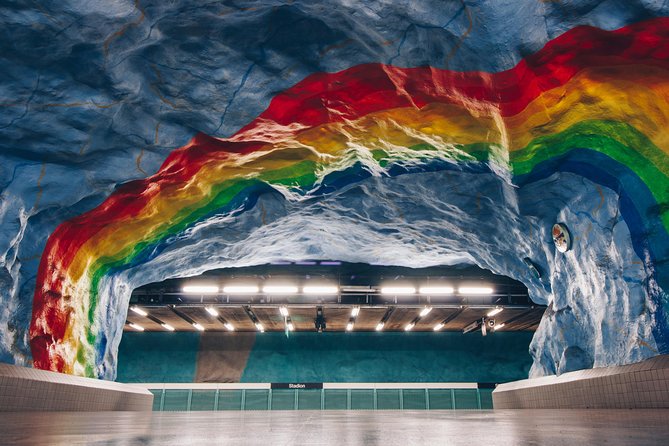
Another stop offers a tribute to the Olympic Games. This gives the tour a different subject from the artist-focused stations. Instead of looking only at abstract forms or environmental design, you encounter a work tied to sport, competition, and an international event.
The Olympic reference also shows how varied Stockholm’s metro art can be. The stations are not presented as one uniform style. One stop may feel like an underground garden, another may focus on a major Swedish artist, and another may honor a global sporting tradition.
Because the tour moves quickly, listen for the guide’s explanation of what the tribute represents and why it appears in that station. The supplied information does not provide the exact Olympic year, artist, or medium, so I would not book this experience expecting a detailed account of those points unless your guide supplies them.
The four elements and the value of seeing art in place
The itinerary includes a station where the four elements take center stage. That theme gives you another chance to see how an artist can turn a functional transit space into an idea expressed through architecture and decoration.
The phrase four elements can be interpreted in different ways, but the available information does not specify the exact design or medium. Your guide is important here because the visual details may not be obvious during a quick walk through the station.
This stop also reinforces the tour’s central lesson: do not look only at the obvious wall or ceiling. Pay attention to transitions, repeated shapes, colors, and the way the work fits around the platforms. A guide who knows the station can help you see those choices instead of simply taking a quick photo and moving on.
If you enjoy visual art, this should be one of the more rewarding parts of the outing. If you mainly want transportation tips, it may feel like more interpretation than you need.
What the 90-minute format feels like
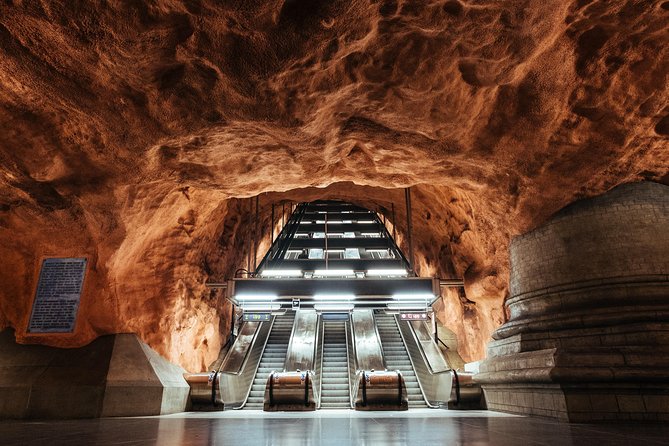
The experience lasts about an hour and a half. That is long enough to cover several stations, but not long enough for a slow museum-style visit.
The route is designed to adapt to the group. The itinerary may change according to your interests, walking speed, and weather conditions. That flexibility is useful when the group has mixed priorities. You might spend more time on a station that catches everyone’s attention, or move along when the group wants to see more of the metro.
The tradeoff is predictability. You may not see every named artist or every possible station in equal detail. If there is one particular work you care about, ask about it at the beginning rather than assuming it will receive a long stop.
The experience is also more active than the word ride might suggest. You will use the subway, but you will likely spend time walking between areas and dealing with station steps. One participant described several steps and recommended a walking stick for anyone with knee problems. The tour is not recommended for people with impaired mobility.
Service animals are allowed, and the route is near public transportation. Most people can participate, but the combination of stairs, platform walking, and a moving group deserves attention when you are deciding.
Small groups, local hosts, and guide quality
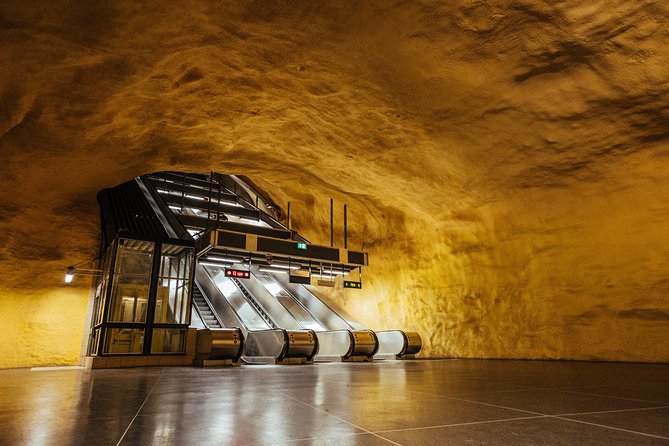
The maximum group size is eight. That is a strong feature for an activity built around explanations. You should be able to stay close to the guide, hear station details, and ask questions without competing with a large crowd.
The experience is hosted by an independent local. That can make the conversation feel more personal and less scripted. It also means the tone and depth may vary from one host to another.
Dan received praise for knowing the stations well and explaining what their art represented. Fayez helped someone understand the metro well enough to use it for the rest of the visit. Those are exactly the kinds of benefits I would want from this outing: art explanation plus practical confidence.
But one serious service failure was also reported. A guide did not appear despite calls and messages, leaving the participant asking for a refund. This appears to be an isolated but important warning. Keep your booking confirmation and provider contact details available on the day. If the guide is late, contact the operator promptly rather than waiting through the entire start time.
The overall rating is 4.3 from 18 ratings. That points to a generally positive experience, but the sample is not large, and the range runs from enthusiastic praise to strong disappointment.
Is $131.12 a fair price?
At $131.12 per person, this is not a cheap way to ride Stockholm’s metro. The price must be judged against what you receive: a 90-minute small-group experience, a local host, organized movement between stations, and an advertised subway ticket.
The fare itself is only one part of the value. You are paying for the time saved in planning, the ability to identify art you might miss, and the chance to ask questions while standing in the stations. If your guide is as effective as Dan or Fayez was described, the cost may feel reasonable for visitors who want structure and context.
It is harder to justify if you are comfortable using public transportation and happy to explore independently. You will see only a selection of stations, and you may want to spend more time at each one than the schedule allows.
Group discounts are available, which could improve the calculation for people booking together. Personal expenses are not included. The supplied details say a subway ticket is included, but a separate general note says transportation entry tickets may be excluded. Because those statements conflict, confirm exactly what your booking covers before paying.
Who should book this Stockholm metro experience?
I would recommend it most strongly to first-time visitors who want an introduction to Stockholm’s metro and public art at the same time. It also suits art lovers who appreciate seeing work in an active public setting rather than only in a formal museum.
Railway enthusiasts may enjoy the combination of stations, trains, architecture, and art. The tour is also useful for anyone who feels uncertain about navigating the metro during the rest of a Stockholm stay.
You may want to skip it if you have limited mobility, dislike stairs, or prefer a slow and quiet art visit. It is also a weak value for independent explorers who already know the metro and can visit stations without help.
Practical tips for getting more from the outing
Arrive ready to walk, not just sit on a train. Comfortable shoes will matter more than dressing for a conventional museum visit.
Keep your questions specific. Ask what an artwork represents, why it was placed in that station, and what details are easiest to miss. This will help you make better use of the short tour and quickly reveal how much depth your guide can offer.
Do not plan a tight appointment immediately afterward. The advertised duration is approximately 90 minutes, and the route can adapt to the group. Finish at Tekniska högskolan, Stockholm, 114 28, but allow a little breathing room if your day depends on an exact connection.
If you enjoy the route, set aside extra time later to revisit one or more stations. The tour is an introduction, not a complete survey. A second visit lets you look without keeping up with the group.
Should you book it?
Book this tour if you want a structured introduction to Stockholm’s underground art, need help getting comfortable with the metro, and value a small group with room for questions. The best guides can turn a quick station visit into a memorable lesson in art, architecture, and daily city life.
Think twice at $131.12 if you are mainly seeking transportation or can explore the stations on your own. The limited route, possible guide variation, and reported no-show mean you should book for the personal explanation, not simply for access to the metro.
For the right visitor, this is a smart short activity, especially early in your stay. It shows you how much Stockholm has placed below street level, then leaves you with a useful way to keep exploring.
FAQ
Where does the Stockholm metro art tour begin?
It begins at T-Centralen, Stockholm, 111 20, Sweden.
Where does the tour end?
The tour ends at Tekniska högskolan, Stockholm, 114 28, Sweden.
How long does the experience last?
It lasts approximately 1 hour and 30 minutes.
How many people can join the tour?
The group is limited to a maximum of eight travelers.
Is the tour offered in English?
Yes. The experience is offered in English.
Is a subway ticket included?
The tour information lists a subway ticket as included. A separate note says transportation tickets may be excluded, so confirm this point when booking.
Which artists are included along the route?
The route includes works connected with Per Olof Ultvedt, Signe Persson-Melin, Anders Österlin, Ulrik Samuelson, and Siri Derkert.
Does the route visit every Stockholm metro art station?
No. The 90-minute format covers a selection of stations. You may need extra time to visit additional stations independently.
Is the tour suitable for people with impaired mobility?
No. The experience is not recommended for people with impaired mobility, and one account specifically notes several steps along the walk.
Can I cancel for a full refund?
Yes, if you cancel at least 24 hours before the local start time. Cancellations made less than 24 hours in advance are not refunded, and changes within that period are not accepted.
Recently added around Stockholm
- ROYAL Castle Skokloster and Viking Sigtuna (private tour)★ 4.5 · 3 reviews
- Stockholm Ghost Hunt: Self-Guided Tour and Puzzle Adventure★ 4.5 · 3 reviews
- Stockholm Port to Stockholm Arlanda Airport (ARN) – Departure Private Transfer★ 3.5 · 3 reviews
- Ghosts of Stockholm: A Guided Tour of Horror and Dark Folklore★ 4.5 · 3 reviews
- Private blood, ghosts and folklore Old Town 2h Stockholm tour★ 4.0 · 3 reviews
- Private Photography workshop in Stockholm★ 5.0 · 3 reviews
- Stockholm- Private transfer to/from Arlanda Airport and city★ 5.0 · 3 reviews
- Stockholm Arlanda airport to City center of Stockholm★ 3.3 · 3 reviews
Stockholm Tours, compared.

City Archipelago Sightseeing Cruise with Guide
Read our review →




The Original Stockholm Ghost Walk and Historical Tour – Gamla Stan
Read our review →
Browse the lists this tour appears in