
Reviewed · NORTHERN LIGHTS TOURS
The Ultimate Aurora Photo Adventure
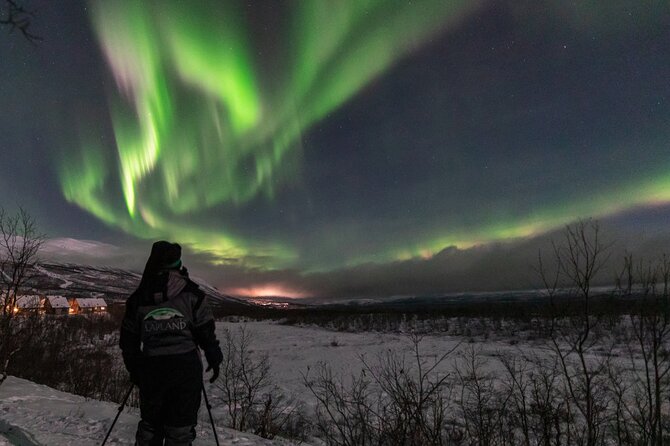
Look up, then learn to shoot. This four-hour outing combines a northern lights hunt with practical photography help in Abisko National Park, one of Sweden’s best-known aurora areas. I like the provided DSLR camera, tripod, and warm overalls, which save you from packing specialist gear, and I like the choice of three outing styles: walking to a nearby teepee, riding in a 4×4 van, or traveling by sleigh behind a snowmobile. The main catch is simple: the aurora is never guaranteed, and poor conditions can leave you paying for a polished night outdoors without the main show.
The small-group plan, capped at eight, should make it easier to get help with camera settings. Guides including Michelle, Fabian, Anna, Romy, Gavin, and Félix have been praised for their patience, stories, and determination. Still, one reported outing had 15 people, so I would confirm the group size before booking if personal instruction matters greatly to you.
In This Review
- Key points at a glance
- Why Abisko makes sense for an aurora hunt
- Meeting in Abisko between 7:15 and 7:45 PM
- Choosing between a teepee, 4×4, and snowmobile sleigh
- Learning the camera setup in the snow
- What the waiting time really feels like
- Abisko National Park under the stars
- The guides are a major part of the value
- Is $183.07 a fair price?
- Weather, cancellations, and the risk of no aurora
- Clothing and equipment you still need
- Who should book this Abisko photo outing?
- My final call on the Ultimate Aurora Photo Adventure
- FAQ
- Where does the Aurora Photo Adventure start?
- Is hotel pickup included?
- What time does the tour begin and end?
- Is a camera provided?
- Do I need to bring an SD card?
- What happens if poor weather cancels the tour?
Key points at a glance
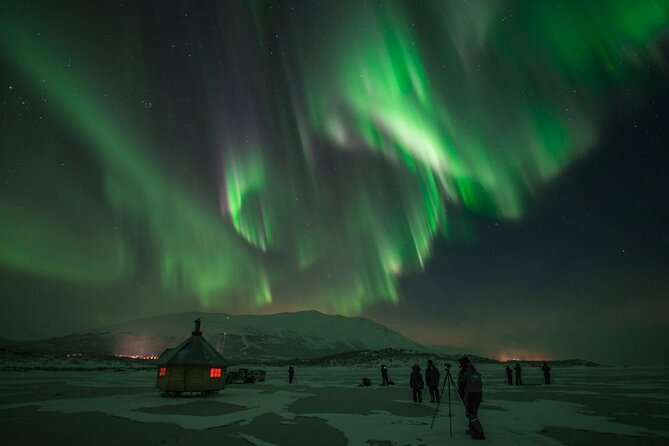
- Three ways to chase the lights: Walk near a teepee, ride in a 4×4 van, or take a snowmobile sleigh to a wilderness camp, depending on the forecast and weather.
- Camera gear is supplied: You receive a preset DSLR camera and lens, tripod, backpack, headlamp, and warm overalls.
- Abisko pickup is included: Round-trip transport is offered from hotels in Abisko and Björkliden.
- The group is meant to stay small: The stated maximum is eight people, although group size may be worth reconfirming.
- Warmth is part of the plan: Hot coffee, tea, lingonberry juice, snacks, and a fire at the teepee help make the wait more comfortable.
- Bring your own SD card: It is not included. A card of at least 4 GB is recommended, and a 32 GB card can be purchased for 250 SEK.
Why Abisko makes sense for an aurora hunt
Abisko sits in Swedish Lapland, close to Abisko National Park and the mountains around the Torneträsk area. The region is valued for its tendency toward clear skies, a major advantage when you are waiting for faint light in the northern sky.
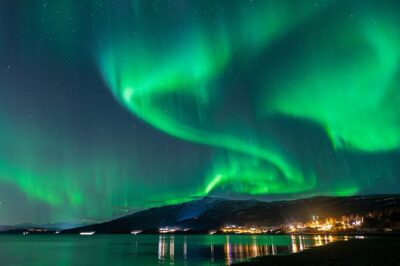
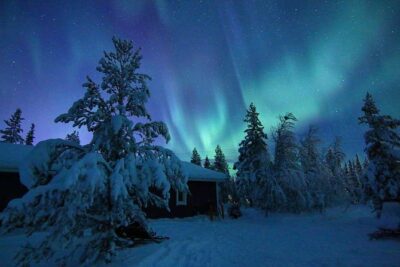
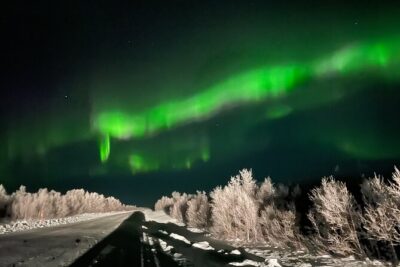
That advantage is not a promise. Clouds, wind, snow, and aurora activity can change quickly. Even on a good night, the lights may appear as a pale green glow rather than the strong curtains shown in photographs. A camera can record color that your eyes barely notice, but it cannot create an aurora that is not there.
This tour makes sense because it joins the wait with useful instruction. You are not simply taken outside and told to look north. A guide explains the basic camera controls, helps you set up the tripod, and gives you a chance to photograph the sky with equipment already prepared for the conditions.
More northern lights hunts:
- Kiruna Northern Lights Tour with Photographer
★ 5.0 · 735 reviews - Kiruna: Northern Lights Tour with Photos
★ 4.9 · 333 reviews - Northern Lights Tour from Kiruna to Abisko with Dinner
★ 5.0 · 311 reviews
Meeting in Abisko between 7:15 and 7:45 PM
The official start point is STF Abisko Turiststation, at Abisko Turiststation 2. If you stay in Abisko, pickup is scheduled between 7:30 and 7:45 PM, and you should be in your hotel lobby by 7:30. Pickup from Björkliden hotels is earlier, at 7:15 PM.
This included transport is a real convenience. Arctic evenings are cold, dark, and not ideal for wandering around looking for a meeting point with camera equipment and bulky winter clothing. The activity ends back at the meeting point, with the earliest return around 11:30 PM. It may finish later if the aurora becomes active.
That late finish matters when planning dinner, a train, or another morning activity. Keep the rest of your evening open. The tour is listed as about four hours, but aurora chasing does not work well with a stopwatch.
Choosing between a teepee, 4×4, and snowmobile sleigh
The tour offers three possible formats. The guide chooses among them based on weather and the aurora forecast, so you do not book a specific vehicle or camp experience in advance.
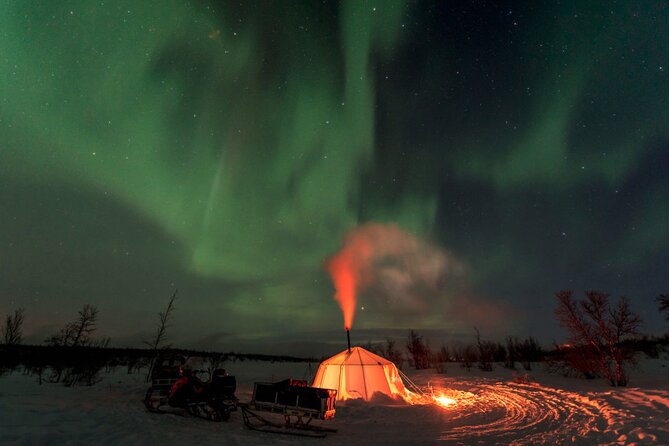
A walk to a nearby teepee is the simplest option. It provides a fixed base, a place to warm up, and a campfire atmosphere while you watch the sky. This can be pleasant when the aurora is active or when the group needs a warm shelter between photo attempts.
The tradeoff is that a nearby location may not feel like a major expedition. One account described staying close to the STF tourist station, which felt similar to stepping outside independently. If the sky is clear and the lights are strong, location matters less. If the sky is cloudy, you may wish the tour had traveled farther.
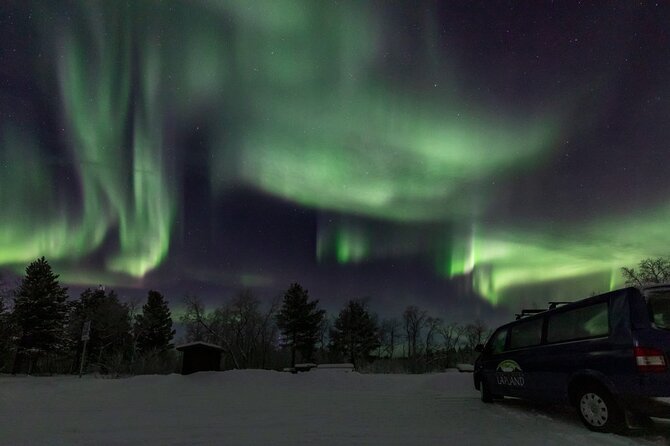
The 4×4 van gives the guide more freedom to search around Abisko. That sounds useful when clouds cover one area but leave another open. Still, the tour cannot promise a long chase or repeated stops. One outing included a drive to a frozen lake, followed by a return to Abisko and a wait near the teepee. That kind of changing plan is possible, but it depends on the night.
The snowmobile sleigh is the most distinctive option. You ride in a cozy sleigh to a darker wilderness camp, away from nearby lights. A dark location gives your camera a cleaner view and can make the night feel more remote. It also adds a memorable Lapland activity even if the aurora stays hidden.
The exact route and transport are not guaranteed. Think of the three choices as tools the guide can use, not three separate attractions you will definitely receive.
Learning the camera setup in the snow
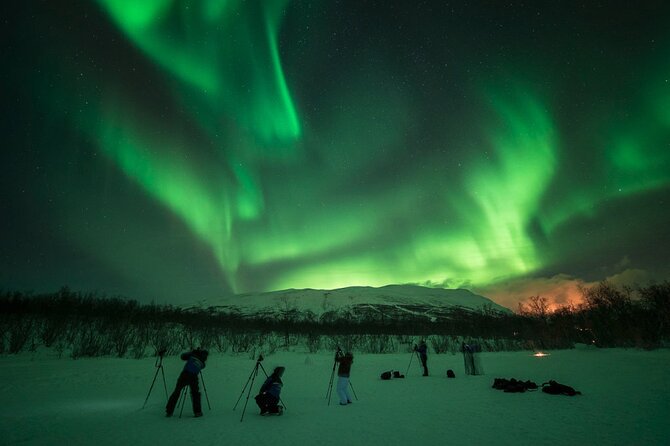
The photo side of the outing is aimed at ordinary visitors, not only experienced photographers. You receive a DSLR camera and lens preset for northern lights work, along with a tripod. The guide gives a quick lesson on the basic skills needed to find and photograph the aurora.
That setup removes much of the technical barrier. Night photography usually requires a steady tripod and carefully chosen settings. With the camera prepared in advance, you can spend less time guessing and more time watching the sky.
You should still bring patience. The lesson is described as a quick overview, not a full photography class. If you already use a DSLR, you may want more control than the preset arrangement offers. If you normally use a phone, the help with focus, framing, and tripod use can be the most valuable part of the evening.
The supplied backpack and headlamp are practical touches. The headlamp helps you handle a tripod in the dark, although you should use it carefully around other people who are making long exposures. Bright light can ruin another person’s photograph.
Bring an SD card. It is not included with the camera, and at least 4 GB of storage is recommended. A 32 GB card is available for purchase for 250 SEK, but carrying a compatible card from home is the simpler choice.
A completely different kind of day out around Sweden:
- Stockholm: City Archipelago Sightseeing Cruise with Guide
★ 4.3 · 10,798 reviews - Stockholm: Skansen Open-Air Museum Admission Ticket
★ 4.5 · 3,427 reviews - Stockholm: Archipelago Boat Tour
★ 4.4 · 3,110 reviews - Stockholm: Highlights Boat Tour
★ 4.3 · 2,542 reviews
What the waiting time really feels like
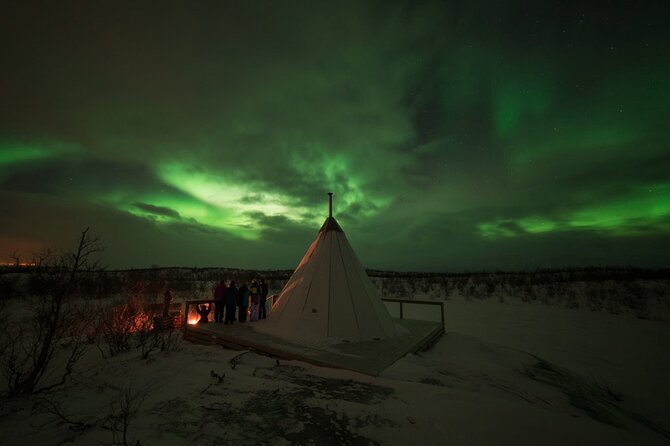
An aurora tour is partly a waiting game. You may spend long stretches standing outside, checking the sky, adjusting a camera, and hoping the cloud cover breaks. The supplied warm overalls, hot drinks, snacks, and headlamp make that wait easier, but they do not turn Arctic weather into mild weather.
The teepee and fire can be especially welcome. Romy was praised for keeping the fire going and looking after the group, while other guides were credited with helping people set up cameras and explaining aurora and Lapland traditions. These small acts matter when you are cold and uncertain about what to do next.
The drink service deserves a realistic reading. Coffee, tea, hot lingonberry juice, and snacks are included, but one account described the drinks and snacks as arriving mainly at the end for 10 or 15 minutes. I would not treat this as a full evening of refreshments. Eat beforehand, and bring any personal water or snack you need.
You may also spend time on simple activities while waiting. One successful outing included snowman building and light painting before the aurora appeared. These extras can help make a cloudy night less disappointing, though they are not the main reason to book.
Abisko National Park under the stars
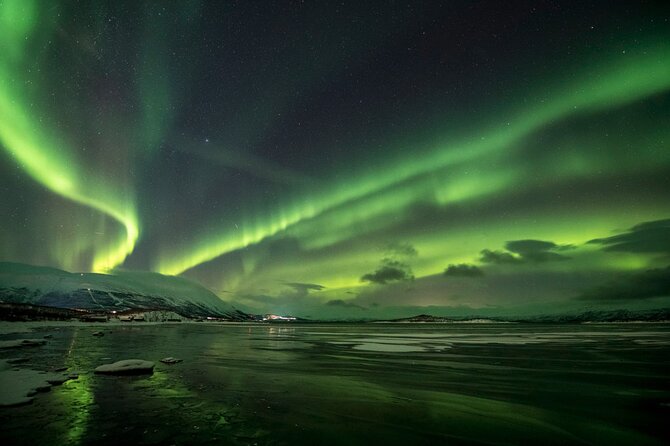
The tour takes place in and around Abisko National Park. The appeal is not only the aurora. You are also outside in Lapland, learning about local culture and the natural setting from a guide who works in the Arctic environment.
The national park gives the evening a stronger sense of place than a generic lights tour from a city hotel. The darkness, snow, fire, and quiet can be memorable even during a weak aurora forecast. A guide may explain stories connected with Lapland and the science behind the lights, as Fabian and Michelle did on praised outings.
Yet the setting alone does not guarantee a better view. A nearby spot can work perfectly on a clear night, while a remote camp can still have clouds. Do not judge the tour only by distance traveled. Judge it by the quality of the sky, the guide’s effort, and how much useful help you receive with the camera.
The guides are a major part of the value
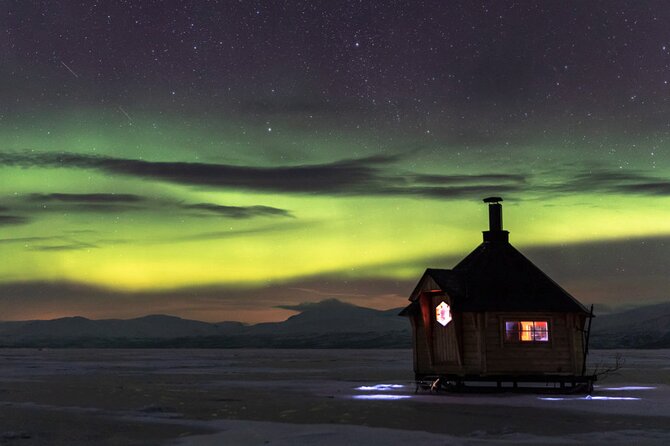
The strongest part of this experience is often the human touch. Guides such as Fabian and Ane have been praised for clear camera instruction and friendly help. Michelle received particular praise for assisting everyone with setup, explaining aurora stories, and creating playful light effects with photographs.
Anna, Romy, Gavin, and Félix also received warm comments for their energy and care. Félix and Gavin kept searching even after the lights failed to appear at first, eventually helping the group capture photographs when conditions improved. That determination cannot control the weather, but it can improve the evening.
The guide also manages safety and comfort. You are heading into a cold, dark environment with camera gear, winter clothing, and possibly a sleigh or van. A calm guide who keeps track of the group is worth paying for.
There is a limit to what any guide can do. If the weather is poor, even an excellent guide may have little to offer beyond information, warm drinks, and creative ways to pass the time. That is why the operator’s response to bad conditions matters so much.
Is $183.07 a fair price?
At $183.07 per person, this is not a cheap way to look at the northern lights. The sky itself is free. If you have warm clothing, a tripod, and a suitable camera, you can walk outside Abisko and try your luck without paying a tour fee.
The price becomes easier to defend if you need the equipment and instruction. You receive a DSLR camera, lens, tripod, backpack, warm overalls, and headlamp. You also get hotel pickup, a guide, hot drinks, snacks, and access to one of three planned ways to search for the lights.
The value is strongest for someone who wants photographs but does not own the right camera gear. It is also useful if you are uncomfortable making Arctic night plans alone. The price is weaker for an experienced photographer staying near STF Abisko Turiststation, especially if the tour remains nearby and the sky is cloudy.
This is an experience where the result can vary sharply. A night with a sleigh ride, clear skies, helpful instruction, and visible aurora may feel worth every krona. A cloudy night spent in one spot can feel expensive, particularly if you already have a camera and warm clothes.
The activity has a 4.9 rating from 517 ratings, and 98 percent of customers recommend it. Those numbers suggest a strong overall record, but they should not make you ignore the weather risk or the occasional concern about group size and location.
Weather, cancellations, and the risk of no aurora
The company requires good weather for the activity to run. If poor weather causes cancellation, you are offered another date or a full refund. That is useful protection, but it does not cover every disappointing night. A tour can operate in acceptable conditions while the aurora remains weak or hidden.
You can cancel for a full refund up to 24 hours before the start time. Changes or cancellations made inside that window are not accepted for a refund, so keep the local start time in mind.
The clearest practical issue is rescheduling after a low-activity night. Some people wanted the option to return on a later evening when clouds or wind made the outing unproductive. The stated policy specifically covers cancellation because of poor weather, not a personal guarantee of another attempt whenever the lights fail to appear.
If you have several nights in Abisko, booking early in your stay gives you more flexibility. You can then try again independently or book another outing if the first night is weak. If you have only one night, understand that you are buying a guided attempt, not a guaranteed display.
Clothing and equipment you still need
Warm overalls are included, but heavy-duty Arctic boots are not. You can rent them during the tour, which may be important if your own footwear is not made for standing in snow and cold for several hours.
Wear practical layers underneath the supplied outer clothing. Gloves, a hat, and warm socks are sensible choices, even though the exact clothing list is not specified. You should also plan for standing outside, handling a camera, and moving between transport, fire, and photo locations.
The camera, tripod, backpack, and headlamp are supplied. The SD card is your responsibility unless you buy one from the operator. A minimum of 4 GB is recommended, though more space gives you room for repeated attempts and light-painting photographs.
Who should book this Abisko photo outing?
I would recommend it most strongly to:
- First-time aurora photographers who want a preset DSLR and hands-on setup help.
- Couples or small groups who value pickup and do not want to plan a night drive.
- Visitors staying in Abisko or Björkliden who want a guide to choose among several outing styles.
- Anyone who likes the idea of a fire, hot lingonberry juice, Lapland stories, and a possible sleigh ride.
- People staying several nights, who can accept that the first attempt may not produce a strong display.
I would think twice if you already own a capable camera, tripod, warm clothing, and easy access to a dark spot near your accommodation. On a cloudy night, you may get better photographs on your own at no extra cost.
The tour also deserves a group-size check before payment. Eight people is the stated maximum, which should allow useful camera help. Because one reported outing had 15 people, ask the provider to confirm how many people will be in your departure.
My final call on the Ultimate Aurora Photo Adventure
Book this tour if you want a guided, gear-included attempt and you value the evening around the aurora as much as the photographs. The best parts are the helpful guides, the practical camera setup, the included winter equipment, and the chance to reach a darker site by sleigh or van.
Skip it if your only goal is to see the lights at the lowest possible cost. You can watch the sky for free, and no tour can control clouds or solar activity. For the right person, this is a well-planned Arctic night with real photo help. For a skilled photographer on a short, cloudy visit, $183.07 may be too much for an uncertain result.
FAQ
Where does the Aurora Photo Adventure start?
It starts at STF Abisko Turiststation, Abisko Turiststation 2, 981 07 Abisko, Sweden. The activity ends back at the meeting point.
Is hotel pickup included?
Yes. Round-trip pickup is included from all hotels in Abisko and Björkliden at no extra charge. Abisko pickup is scheduled from 7:30 to 7:45 PM, while Björkliden pickup is at 7:15 PM.
What time does the tour begin and end?
The listed start time is 7:45 PM. The earliest return is around 11:30 PM, but the activity may finish later depending on aurora activity.
Is a camera provided?
Yes. You receive a DSLR camera and lens preset for photographing the northern lights, along with a tripod, backpack, warm overalls, and headlamp.
Do I need to bring an SD card?
Yes. SD cards are not included. A minimum of 4 GB is recommended. A 32 GB card can be purchased for 250 SEK if needed.
What happens if poor weather cancels the tour?
If the operator cancels the experience because of poor weather, you can choose another date or receive a full refund. You can also cancel your booking at least 24 hours before the start time for a full refund.
Recently added around Sweden
- ROYAL Castle Skokloster and Viking Sigtuna (private tour)★ 4.5 · 3 reviews
- Stockholm Port to Stockholm Arlanda Airport (ARN) – Departure Private Transfer★ 3.5 · 3 reviews
- Stockholm Ghost Hunt: Self-Guided Tour and Puzzle Adventure★ 4.5 · 3 reviews
- Ghosts of Stockholm: A Guided Tour of Horror and Dark Folklore★ 4.5 · 3 reviews
- Private Photography workshop in Stockholm★ 5.0 · 3 reviews
- Private blood, ghosts and folklore Old Town 2h Stockholm tour★ 4.0 · 3 reviews
- Stockholm- Private transfer to/from Arlanda Airport and city★ 5.0 · 3 reviews
- Family Packraft tour in Sälen★ 5.0 · 3 reviews
Northern Lights Tours, compared.
Northern Lights Tour from Kiruna to Abisko with Dinner
Read our review →Northern Lights Tour with Stejk Street Food Dinner
Read our review →
Northern Light hunt with minibus to Abisko 7:30 pm
Read our review →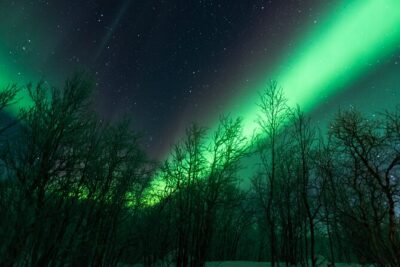
Browse the lists this tour appears in