
Reviewed · HISTORICAL TOURS
Uppsala bloody history 1h- racial biology, 18th century plague, 19th century prostitution etc.
History gets uncomfortable fast. This one-hour walk through Uppsala examines the parts of Swedish history that are easy to ignore, including plague, poverty, prostitution, slave trading, racial biology, persecution, and forced sterilization. I like the way the tour connects these subjects to ordinary streets and familiar landmarks. I also like that the guide leaves room for questions and adds lighter facts alongside the grim material.
The main drawback is the short running time. At about one hour, the tour moves quickly across several difficult subjects, and Gustavianum admission is not included in the $36.58 price. The route also requires a moderate level of fitness, so it is best for you if you are comfortable walking between stops while listening closely.
In This Review
- Key points about Uppsala’s darker side
- Why this is not a standard Uppsala city walk
- Starting at Riddartorget and finding the route
- Svartbäcksgatan and the poor Uppsala
- Linnéträdgården and the former red-light district
- St. Erik’s Square and the plague years
- Uppsala Cathedral and the punishment of dissent
- The racial biology institute, 1920 to 1958
- Gustavianum, anatomy, slave trade, and phrenology
- How the guide shapes the experience
- Walking, timing, and practical value
- Who should book Uppsala Bloody History?
- Should you book it?
- FAQ
- How long does Uppsala Bloody History last?
- What time does the tour start?
- Where does the tour begin and end?
- Is Gustavianum admission included?
- How many people can join the tour?
- Can I cancel for a full refund?
Key points about Uppsala’s darker side
- A one-hour route through real city streets: The tour links Svartbäcksgatan, Linnéträdgården, St. Erik’s Square, the Cathedral, and Gustavianum.
- The 1709 to 1712 plague: You hear how disease affected Uppsala and its poorer residents.
- Sweden’s racial biology institute: The tour addresses the institute that operated from 1920 to 1958 and the harm caused by its ideas.
- Uppsala’s former red-light district: Streets near Linnéträdgården reveal the city’s 19th-century brothels, alcohol problems, and poverty.
- Slave trade and anatomy: Gustavianum provides the setting for discussion of Sweden’s role in slave trading, phrenology, and the anatomical department.
- Small-group format: The maximum group size is 20, making it easier to hear the guide and ask questions.
Why this is not a standard Uppsala city walk
Most first walks through Uppsala focus on the Cathedral, the university, royal connections, and pleasant old streets. This tour uses those same places to ask harder questions. Who was protected by Swedish society? Who was punished? Whose body, beliefs, or poverty was treated as a public problem?
That approach gives familiar sights a different weight. A cathedral is no longer only a grand medieval building. A university museum is no longer only a collection of old objects. A quiet street can also mark a former district of brothels, drinking, and social hardship.
I appreciate the direct approach. The tour does not treat Sweden as a spotless country with only gentle traditions. It looks at the gap between Sweden’s modern image and past policies that caused real suffering. The material is serious, but the tour is not described as a grim lecture from start to finish. One account of the walk praised the mix of sober history, lighter facts, and lively answers to questions.
That balance matters. An hour filled only with shocking stories could become tiring. Here, the aim is to help you understand how old institutions and social attitudes worked, not simply to collect tales of cruelty.
More history and heritage:
- Stockholm: Ghost Walk and Historical Tour
★ 4.7 · 2,206 reviews - The Original Stockholm Ghost Walk and Historical Tour – Gamla Stan
★ 4.5 · 1,165 reviews - Stockholm: Old Town Historical Walking Tour
★ 4.9 · 344 reviews
Starting at Riddartorget and finding the route
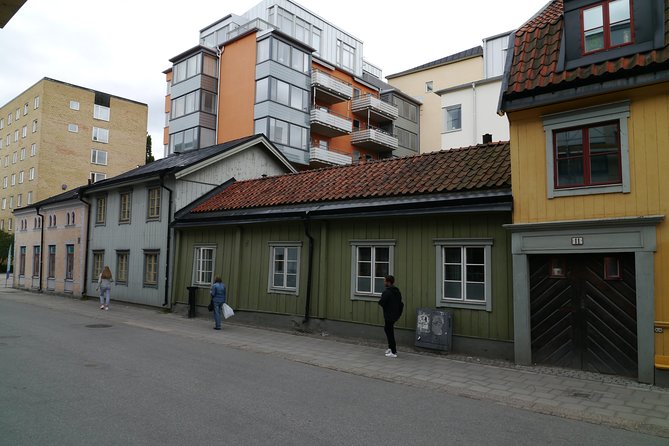
The published meeting point is Riddartorget, also called Knights’ Square, on Biskopsgatan. The listed start time is 3 p.m. Other tour information refers to an introduction outside the main entrance of Uppsala City Library, so I would confirm the exact meeting point with Sweden History Tours before setting out. The stated end point is the City Library at Svartbäcksgatan 17.
That small discrepancy is worth checking because the route is short and timing is tight. You do not want to begin at the wrong square and miss the opening explanation. A mobile ticket is provided, and confirmation arrives when you book.
The group can include up to 20 people. That is large enough to give the walk some energy but still modest compared with a big coach excursion. You should be able to hear the guide more easily than on a crowded public tour, though arriving a few minutes early is sensible.
The tour includes fees and taxes. Gratuities are not included. The stated price is $36.58 per person, which is fair if you want focused interpretation rather than a broad introduction to Uppsala. It is less attractive if you want a full city tour or prefer to spend an hour inside a museum.
Svartbäcksgatan and the poor Uppsala
The walk includes Svartbäcksgatan and the area around Svartbäcken. This section looks at poor Uppsala and the plague that struck the city from 1709 to 1712. It is listed as about 20 minutes, making it the longest named portion of the route.
The value here is the connection between disease and social conditions. Plague history can become a string of dates and death counts. A street-based explanation gives you a sense of how illness affected a real community, especially people with fewer resources and less power.
You will also hear about the poor neighborhoods of Uppsala. That helps correct the usual picture of the city as only a university center and cathedral town. The tour points toward people who lived with crowded conditions, economic pressure, and public suspicion.
This is also where the route helps you read the city in a new way. There may be no dramatic monument marking every painful event. Instead, the guide uses the streets as evidence and context. Pay attention to the transition between ordinary city life and the historical stories attached to it.
The drawback is that you should not expect an extended visit to a plague museum or a preserved epidemic site. The stop is an outdoor explanation. Its strength is context, not physical exhibits.
Linnéträdgården and the former red-light district
Near Linnéträdgården, the route follows streets connected with Uppsala’s 19th-century red-light district. The subject includes brothels, alcohol problems, and poor neighborhoods. This is one of the more unusual parts of the walk because the area is not generally presented to visitors through this lens.
The point is not to treat prostitution as a colorful scandal. The discussion places it within wider questions of poverty, gender, law, and social control. You are asked to consider why certain people became visible to authorities and respectable society, while others remained protected or ignored.
The setting makes the subject more immediate. These were not distant places in another country. They were streets within the city, close to institutions and public life. That contrast helps explain how a society can maintain a polished public image while hardship continues nearby.
Alcohol problems also add another layer. The tour shows how poverty was often described as a moral failure rather than a condition shaped by wages, housing, illness, and limited choices. That is a useful warning against easy judgments.
This section may appeal most to you if you enjoy social history rather than military battles or royal biographies. It is also a good reason to take the tour early in your Uppsala visit. You will look at the city’s central streets differently afterward.
A few more ways to spend a day in Sweden
- Malmö: Express Walk with a Local in 60 minutes
★ 5.0 · 8 reviews - Explore Gothenburg in 60 minutes with a Local
★ 3.5 · 7 reviews - Gothenburg: Express Walk with a Local in 60 minutes
★ 4.8 · 6 reviews - Explore Malmo in 60 minutes with a Local
★ 4.0 · 4 reviews
St. Erik’s Square and the plague years
St. Erik’s Square provides another point for discussing the plague in Uppsala. The route appears to revisit the subject introduced around Svartbäcksgatan, giving the epidemic a second geographical and social reference.
That repetition can be helpful in a short tour. You are not hearing about plague as an isolated event. You are building a picture of how disease, poverty, fear, and authority affected different parts of the city.
The title of the experience promises bloody history, but the most useful material is not simply the bloodshed. It is the explanation of how communities respond when fear takes over. The plague section can help you think about blame, exclusion, and the unequal cost of crisis.
Because the tour lasts only one hour, details will likely be selective. If plague history is your main interest, you may want to ask the guide for recommended books or museums after the walk. The tour works best as a sharp introduction, not a complete study of the epidemic.
Uppsala Cathedral and the punishment of dissent
At Uppsala Cathedral, the subject turns to the persecution of dissenting Christians and atheists during the 19th century. The cathedral is a powerful place for this discussion because it represents religious authority, public order, and the influence of established belief.
The tour does not treat religion as a simple villain. Instead, it examines what happened when institutions decided which beliefs were acceptable and which people were dangerous or immoral. That makes the stop relevant beyond church history.
You may find this part especially useful if you are interested in the relationship between faith and government. The discussion shows how pressure on dissenters could affect daily life, reputation, and freedom. The setting also reminds you that public buildings often carry several histories at once.
The cathedral itself is a major Uppsala sight, but this walk is not a standard interior tour. Do not book it expecting detailed architectural commentary or a long visit inside. The focus is on persecution and social control, with the building serving as historical context.
The racial biology institute, 1920 to 1958
One of the tour’s most serious subjects is the Swedish Institute of Racial Biology, which operated from 1920 to 1958. The walk explains what took place within the institute and how racial classifications were used against people labeled defective or undesirable.
This is difficult material, but it is important. Sweden is often associated with modern social welfare and equality. The institute shows that a country can develop progressive policies in some areas while supporting harmful scientific and political ideas in others.
The subject also connects Uppsala to the wider history of eugenics. The tour addresses how official institutions gave prejudice a scientific appearance. That distinction matters. These ideas were not only personal insults or private opinions. They were backed by professionals, records, policies, and public authority.
The forced sterilizations of the 1940s are included as part of this section. You should be prepared for a sober discussion of state power over people’s bodies and family lives. The material may be unsettling, but it gives the tour its strongest reason for existing.
I would not choose this walk for young children or anyone seeking light sightseeing. The provider does not give a specific age recommendation, so you must decide based on your group’s comfort with subjects involving persecution, medical abuse, and forced sterilization.
Gustavianum, anatomy, slave trade, and phrenology
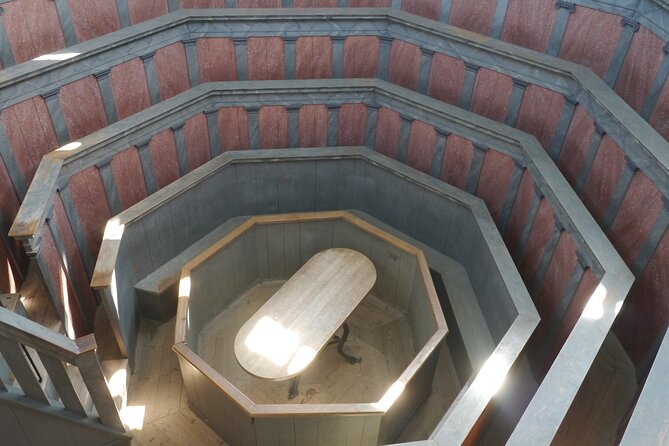
The route includes Gustavianum, Uppsala University’s museum. The discussion here covers the slave trade, the anatomical institution, and 19th-century phrenologists. It also returns to the question of which crimes could lead to a body being placed under the knife.
This is a striking combination of topics. Gustavianum represents learning and scientific inquiry, yet the tour asks how knowledge was gathered and who paid the price. Anatomy was not always based on bodies freely given for medical education. Laws and institutional rules helped decide whose remains could be used.
The section on crime is especially revealing. You hear about the anatomical department’s rules concerning which convicted people could end up on the dissection table. That detail turns a broad history of medicine into a question of class and punishment. The condemned were not treated in the same way as respected citizens.
Phrenology adds another warning. In the 19th century, some people claimed that the shape of a skull revealed character and intelligence. The tour places such claims within the history of racial thinking and false scientific certainty.
Admission to Gustavianum is not included in the tour price. The stop may therefore be partly an exterior explanation unless you separately purchase museum entry. Check the museum’s current opening arrangements before relying on an indoor visit. The tour description identifies the museum as a stop, but it does not promise a full guided museum tour.
How the guide shapes the experience
The guide’s role matters here more than on a simple sightseeing route. These subjects need careful explanation, especially when moving from plague to prostitution, then to racial biology and forced sterilization in a single hour.
The provider has used guides named Owe and Jonathan in its responses to public feedback. One description identifies the guide as an older Swedish woman, though no personal name is given. The safest assumption is that the guide may vary, so do not book expecting one specific person unless the company confirms it.
The strongest praise has focused on answers to questions, clear command of the material, and the mix of serious history with lighter facts. That tells you something useful about the tone. You can expect an interactive walk rather than a silent procession from stop to stop.
Ask questions if you want more detail. The route covers a lot, and the guide may need to keep moving to finish on time. A small group of no more than 20 makes discussion more practical, but the exact amount of conversation will depend on the group.
Walking, timing, and practical value
The experience lasts about one hour. That makes it easy to fit before dinner or alongside a longer day of sightseeing. It also means you should arrive ready to walk and listen without expecting long pauses.
A moderate level of physical fitness is required. The supplied information does not give a total distance, number of stairs, or shelter arrangements. Since the experience takes place along city streets, comfortable shoes and weather-appropriate clothing are sensible choices, but the tour does not promise any particular indoor protection.
The mobile ticket keeps the booking simple. Free cancellation is available up to 24 hours before the start time. Cancellations made later are not refunded, and changes within that final 24-hour period are not accepted. If the minimum group size is not reached and the company cancels, you will be offered another date or experience, or a full refund.
The tour is often booked 34 days ahead on average. That suggests you should reserve early if your Uppsala dates are fixed, especially since the group limit is 20 people. The advance booking pattern may also reflect limited departure times, since the listed start is 3 p.m.
At $36.58, I see the value in the guide’s interpretation and the unusual route. You are paying for a focused history lesson tied to actual places, not for major admissions or transport. If Gustavianum entry is important to you, add that cost to your budget.
Who should book Uppsala Bloody History?
I recommend this walk if you:
- Want social and political history rather than a standard sightseeing circuit
- Are interested in how institutions treated poor people, dissenters, criminals, and disabled people
- Prefer a short experience that fits into a busy Uppsala visit
- Enjoy asking questions during a guided walk
- Can handle serious material about disease, prostitution, racial theories, and forced sterilization
- Want to see a less polished side of Swedish history
I would skip it if you want a cheerful introduction to Uppsala, a detailed cathedral tour, or a museum experience with lots of time indoors. The pace is brisk, the topics are heavy, and the city’s attractive streets are used as settings for difficult stories.
Should you book it?
Book this tour if you want Uppsala explained through its uncomfortable past. Its best feature is the connection between major landmarks and people who were pushed aside, punished, studied, or forgotten. The tour also has unusually broad reach for one hour, moving from the 18th-century plague to 19th-century prostitution and dissent, then into 20th-century racial biology and sterilization.
I would confirm the meeting point and Gustavianum admission before paying. If those details suit your plans, the $36.58 price is reasonable for a small-group walk with a distinctive subject. It is a serious choice, but it can leave you with a more honest understanding of Uppsala than a postcard-perfect city tour.
FAQ
How long does Uppsala Bloody History last?
The experience lasts approximately one hour.
What time does the tour start?
The listed start time is 3 p.m.
Where does the tour begin and end?
The published meeting point is Riddartorget, or Knights’ Square, on Biskopsgatan. The stated end point is Uppsala City Library at Svartbäcksgatan 17. Some tour information also refers to an introduction outside the library, so confirm the exact starting place after booking.
Is Gustavianum admission included?
No. Admission to Gustavianum is not included in the tour price.
How many people can join the tour?
The maximum group size is 20 people.
Can I cancel for a full refund?
Yes. You can cancel at least 24 hours before the experience begins for a full refund. Cancellations or changes made less than 24 hours before the start time are not accepted for a refund.
Recently added around Sweden
- ROYAL Castle Skokloster and Viking Sigtuna (private tour)★ 4.5 · 3 reviews
- Stockholm Ghost Hunt: Self-Guided Tour and Puzzle Adventure★ 4.5 · 3 reviews
- Stockholm Port to Stockholm Arlanda Airport (ARN) – Departure Private Transfer★ 3.5 · 3 reviews
- Ghosts of Stockholm: A Guided Tour of Horror and Dark Folklore★ 4.5 · 3 reviews
- Private Photography workshop in Stockholm★ 5.0 · 3 reviews
- Private blood, ghosts and folklore Old Town 2h Stockholm tour★ 4.0 · 3 reviews
- Stockholm- Private transfer to/from Arlanda Airport and city★ 5.0 · 3 reviews
- Family Packraft tour in Sälen★ 5.0 · 3 reviews
Historical Tours, compared.
The Original Stockholm Ghost Walk and Historical Tour – Gamla Stan
Read our review →
Viking History, Runes & Countryside 9h Tour to Sigtuna & Uppsala
Read our review →
Stockholm Viking History Full Day Tour to Sigtuna + Uppsala
Read our review →
Viking History and Swedish Countryside Tour to Sigtuna & Uppsala
Read our review →
Viking History Small Group Tour from Stockholm: Half Day Including Sigtuna
Read our review →
Stockholm Old Town Gamla Stan, Historic Walking Tour, Small group
Read our review →Browse the lists this tour appears in