
Reviewed · VIKING HISTORY TOURS
From Stockholm: Viking Culture and Heritage Small Group Tour
Sweden’s Viking story begins outside the city. This three-hour trip takes you from central Stockholm into Uppland, where burial grounds, raised runestones, ancient roads, and a Viking assembly site make the past feel close at hand. I like the focus on real places rather than staged museum displays, and I like the small group size, capped at 16 people.
I also appreciate that the tour includes hotel pickup and return within five kilometers of Stockholm Central Station. The main drawback is the short duration: you get a strong introduction to Viking-era Sweden, but not a slow, detailed day in the countryside. Winter visitors should also prepare seriously for the cold. One January outing reached minus 10 degrees Celsius, with snow and a frozen lake nearby.
In This Review
- Key points to know before booking
- Leaving Stockholm for Viking-era Uppland
- Broby bro and the graves of Viking Uppland
- Reading the runestones without a museum glass case
- Jarlabanke Bridge and the causeway
- Arkils tingstad and the Viking assembly
- What the three-hour format really gives you
- Is $138 good value?
- Weather, clothing, and practical comfort
- Who should book this Viking tour?
- Should you book it?
- FAQ
- How long is the Viking Culture and Heritage tour?
- Where does the tour take place?
- Is hotel pickup included?
- Is the tour conducted in English?
- How large is the group?
- Is food included?
- Are gratuities included?
- Can I cancel the booking?
Key points to know before booking
- Broby bro burial ground offers a clear look at Viking burial customs and the shift from pagan traditions to Christianity.
- Estrid’s story adds a human face to the stones and graves, especially for anyone who thinks Viking history is only about warriors and raids.
- Jarlabanke Bridge shows how roads, causeways, and raised runestones helped powerful families mark their influence.
- Arkils tingstad reveals how Viking society handled meetings, law, and public decisions.
- Small groups of no more than 16 make it easier to hear the guide and ask questions during short stops.
- A $138 price is reasonable if you value hotel transport, a live English guide, and several countryside sites in one compact outing.
Leaving Stockholm for Viking-era Uppland
The tour begins with pickup at your hotel or accommodation, provided it is within five kilometers of Stockholm Central Station. That is useful in a city where getting from a hotel to a meeting point can take time, especially in winter or when you are still finding your way around.
Once you leave central Stockholm, the mood changes quickly. The city gives way to quieter roads and open countryside around Uppland. The drive is not just dead time between attractions. Your guide uses it to explain the area and set up the stories you will hear at each stop.
The tour is conducted in English, and the guide drives as well as leads the visit. Erik has received especially warm praise for his command of Norse and Viking-era subjects. He also helped connect the outing to everyday Stockholm by offering suggestions for Swedish food, a welcome touch if you are still deciding what to eat after the tour.
With only three hours, this is a tightly planned introduction rather than a full archaeological expedition. You will not have hours to wander at every site. In return, you can fit Viking heritage into a half-day without giving up most of your sightseeing time in Stockholm.
More Viking history:
- Stockholm: The Viking Museum Exhibition and Viking Ride
★ 4.5 · 667 reviews - Entrance ticket to The Viking Museum
★ 4.0 · 301 reviews - Viking History, Runes & Countryside 9h Tour to Sigtuna & Uppsala
★ 4.5 · 283 reviews
Broby bro and the graves of Viking Uppland
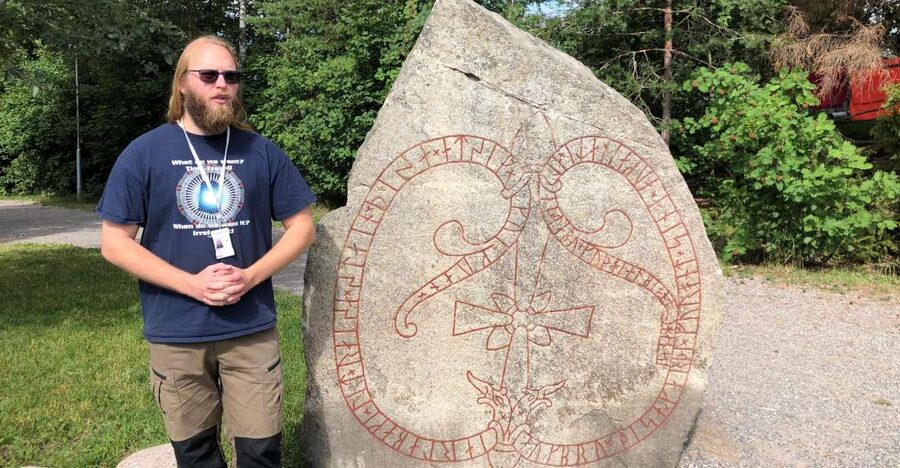
The first major stop is Broby bro, a burial ground associated with the Jarlabanke runestones. This is one of the strongest parts of the trip because the site brings together graves, stones, family memory, and changing religious practice.
Here you learn how people marked death during the Viking Age. The guide explains pagan burial customs and the later Christian influence, helping you see that the period was not a simple divide between one faith and another. Beliefs changed over time, and the stones preserve some of that change.
The story of Estrid is a particular highlight. She is remembered as a powerful Viking woman, and her connection to the site helps correct the lazy picture of Viking history as a story told only through male chiefs and raiders. At Broby bro, you get a sense of family status, remembrance, and the role women could hold within prominent clans.
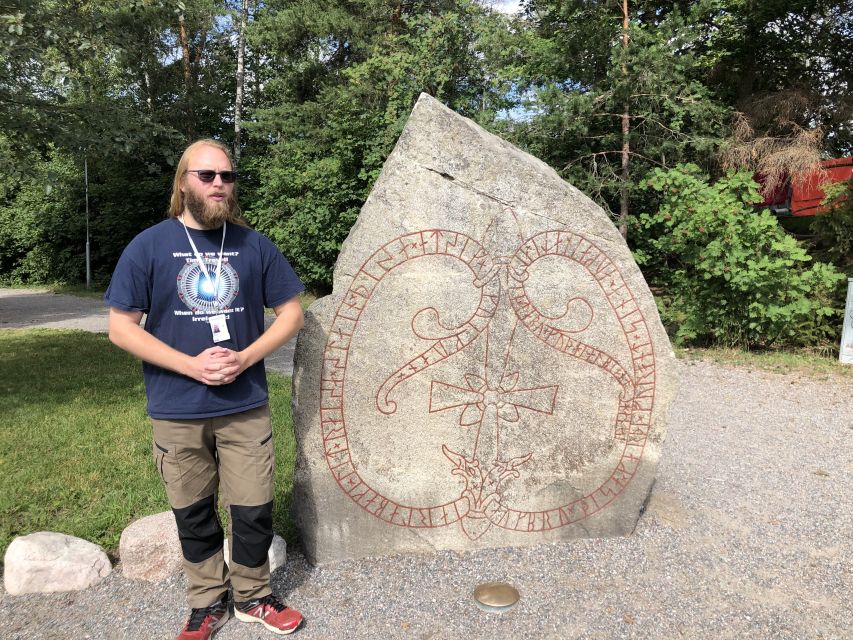
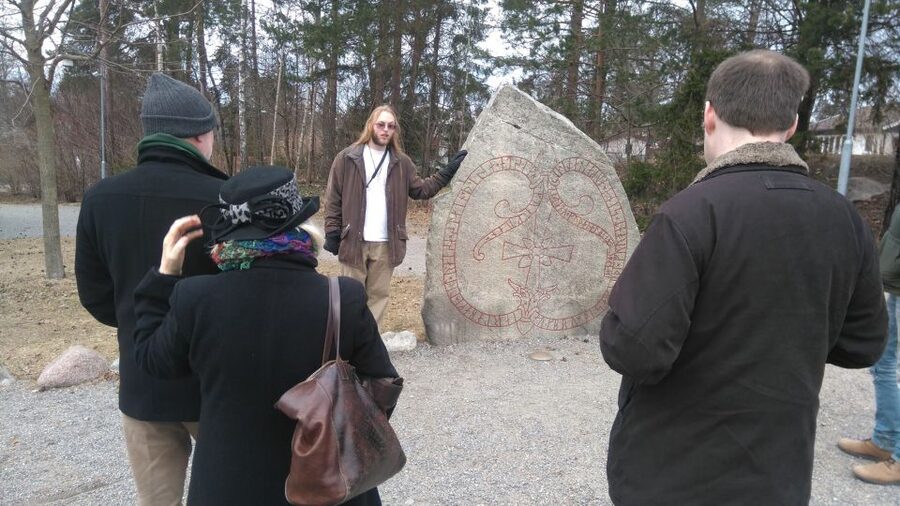
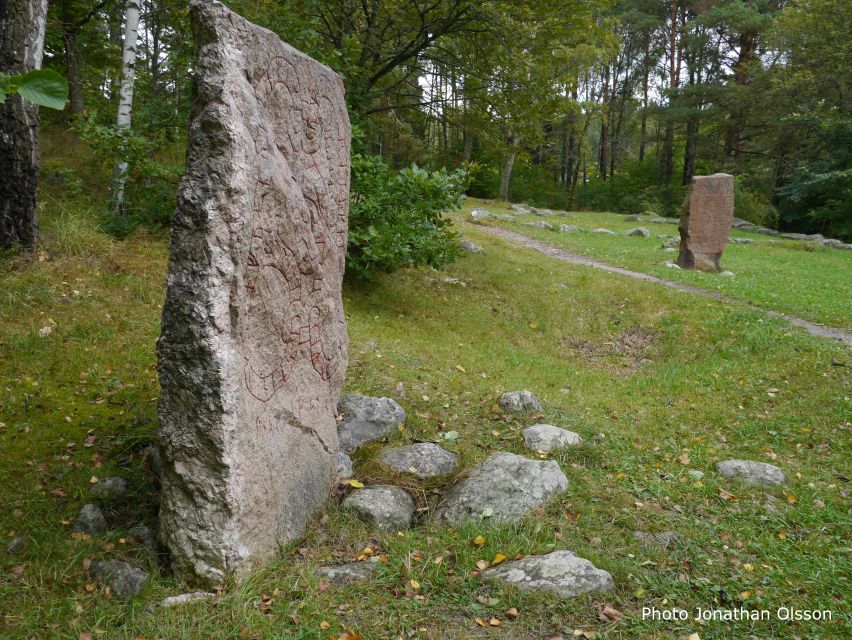
You will see several runestones that are around 1,000 years old. Their markings are not just decoration. They record names, family connections, journeys, and acts of remembrance. Since the stones remain in their original setting, you can think about why they were placed there and who was meant to read them.
The site is outdoors, so conditions matter. In summer, the countryside setting should make the visit pleasant. In winter, snow and ice can transform the stop into something striking, but the cold can also become the main thing you remember. Wear warm layers and solid winter footwear, especially if the ground is frozen or wet.
Reading the runestones without a museum glass case
Runestones are often treated as quick photo stops, but this tour gives them a purpose. You learn how the stones fit into local power structures, family identity, religion, and public memory.
The raised stones around this area are a reminder that Viking society communicated in public. A person with enough status and resources could commission a stone and place a message where others would see it. The message might honor a relative, announce a bridge, or record a journey.
I like this because it moves the Vikings away from fantasy costumes and television battles. The evidence here is quieter: names, roads, graves, and claims to family importance. One German-speaking visitor described the experience as focused on facts rather than film and television stories. That is a fair description of the tour’s approach.
The guide’s job is important at these stops. Runic writing can be difficult to understand on your own, and the meaning of a stone is often tied to its setting. A live guide can explain who commissioned it, how it relates to nearby sites, and what it suggests about local society.
Still, keep your expectations realistic. These are ancient outdoor monuments, not polished attractions with large indoor displays. You may find weathered stones, uneven ground, and limited shelter. The reward comes from seeing them in place and understanding the connections between them.
Jarlabanke Bridge and the causeway
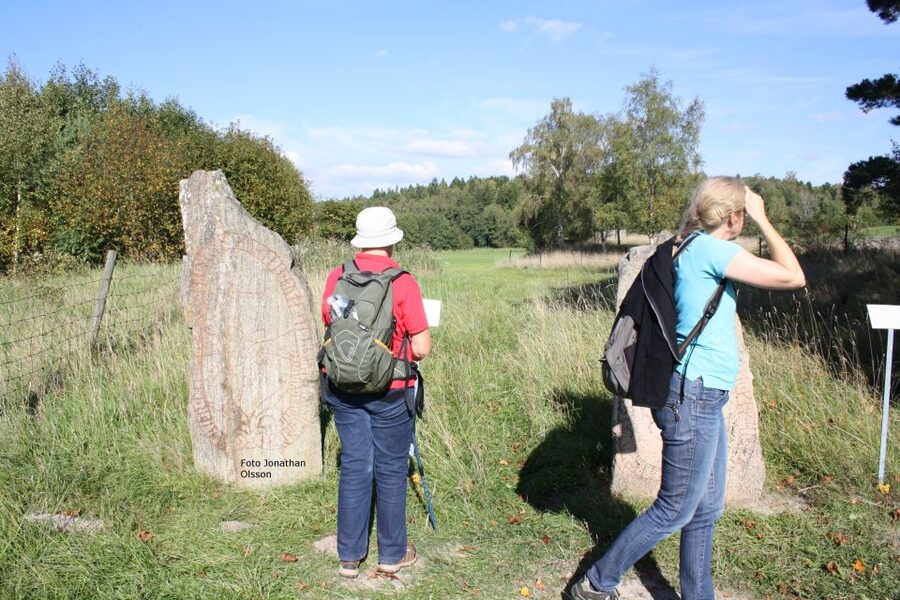
The next stop is Jarlabanke Bridge, located at the entrance to a causeway. The name points to Jarlabanke, a Viking chief whose clan left a strong mark on the area.
The bridge and road remains help explain an often-overlooked part of Viking life: construction. The popular image centers on ships and warfare, but roads and bridges were vital for movement, trade, communication, and control. Building and maintaining them required labor, planning, and authority.
Raised runestones near the bridge make the message even clearer. Jarlabanke and his family were not marking a random patch of ground. They were placing their names beside an important route, linking family reputation with public works.
Your guide explains how the Vikings built roads and bridges, and why a causeway mattered. You can then look at the site with a sharper eye. A bridge is not just an old structure. It tells you about transport, local geography, and the reach of a powerful family.
This is also a good place to think about the difference between a chief and a king. The site helps show how authority could operate locally, through families and leaders who organized people and resources. You are not simply hearing a story about one famous man. You are seeing how status was displayed.
The stop should suit visitors who enjoy history that can be read from physical evidence. If you need dramatic ruins or a large reconstructed settlement, the bridge may feel modest. Its value is in the explanation and in the way it connects the other sites.
More history and heritage:
- Stockholm: Ghost Walk and Historical Tour
★ 4.7 · 2,206 reviews - The Original Stockholm Ghost Walk and Historical Tour – Gamla Stan
★ 4.5 · 1,165 reviews - Stockholm: Old Town Historical Walking Tour
★ 4.9 · 344 reviews - Viking History and Swedish Countryside Tour to Sigtuna & Uppsala
★ 4.5 · 162 reviews
Arkils tingstad and the Viking assembly
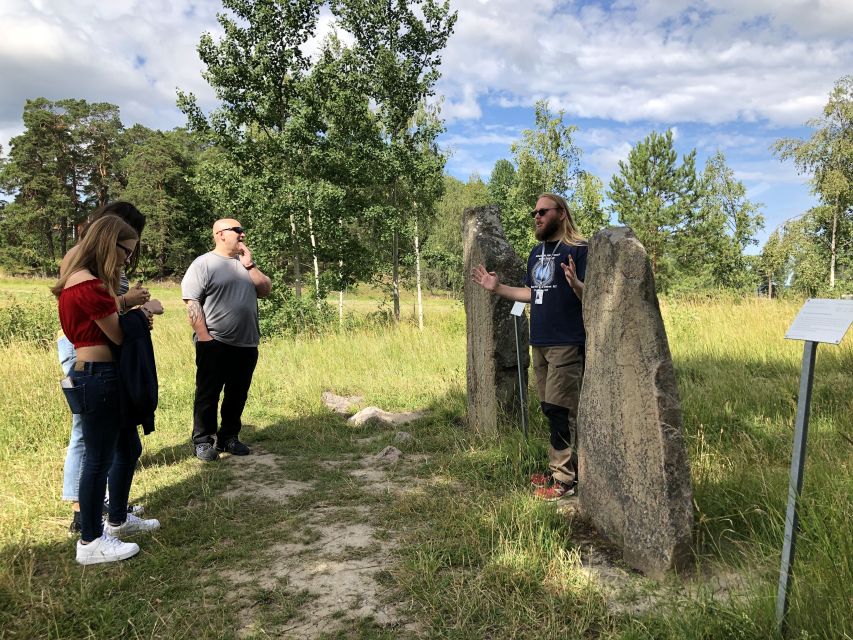
The final main site is Arkils tingstad, the remains of a Viking Age parliament or assembly place. This stop shifts the focus from burial and family memorials to public life.
The word parliament should not make you picture a modern chamber. Arkils tingstad was a place where people gathered to discuss matters, settle disputes, and organize society according to the customs of the period. Your guide explains how Viking society worked and how meetings helped communities make decisions.
This is one of the most useful stops for understanding the Vikings as a society rather than a collection of adventurers. People needed rules, agreements, leadership, and ways to handle conflict. The assembly site gives those subjects a physical setting.
The remains may be subtle, so listen closely. A first-time visitor could look around and wonder where the parliament is. The guide’s explanation turns the site from a quiet patch of countryside into evidence of public organization.
I find the progression of the tour well judged. Broby bro shows how people remembered the dead. Jarlabanke Bridge shows how a powerful family marked its role in building and movement. Arkils tingstad shows how the wider community managed shared affairs. Together, the stops create a more complete picture of Viking life.
What the three-hour format really gives you
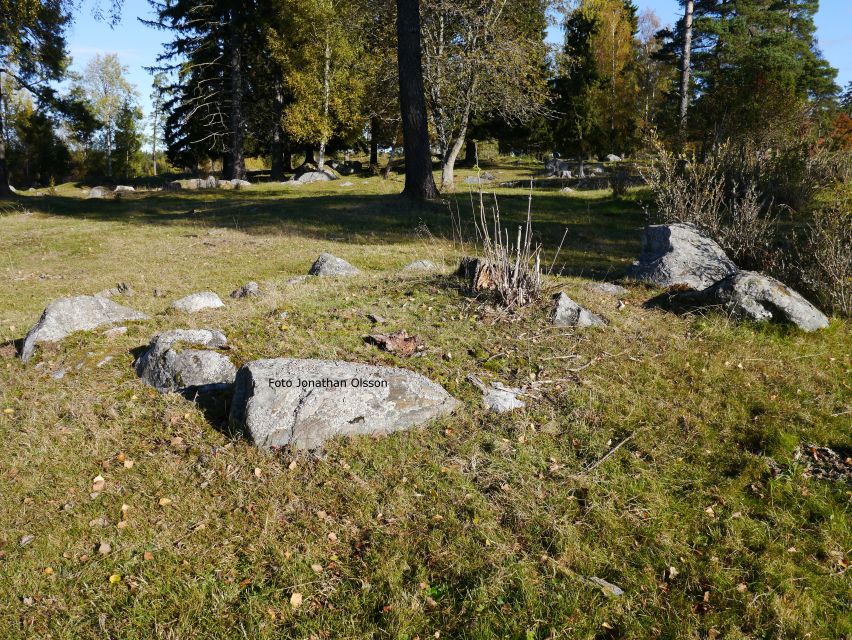
Three hours is enough to get a taste of several important sites, but it also sets a clear limit. You will spend part of the time driving between locations, and each stop needs to remain fairly focused.
That is not necessarily a weakness. If you have only a few days in Stockholm, a short countryside trip can fit neatly beside the Vasa Museum, Gamla Stan, and the city’s other major sights. You get beyond the urban center without committing an entire day.
The format is best for you if you want an informed introduction and prefer someone else to handle the route. It is less suitable if you want long walks, private time at each monument, or detailed archaeological study.
The group limit of 16 is another practical advantage. A small vehicle and a limited group make outdoor explanations easier to follow. You can ask about runes, burial rites, or the Jarlabanke clan without trying to catch a guide’s voice across a large crowd.
The experience also depends heavily on the guide. Erik’s strong reputation for Norse history is a real plus, and the tour’s value rises when the explanations are lively and well connected. Since the countryside sites are not packed with signs, the guide provides much of the context.
Is $138 good value?
At $138 per person, this is not the cheapest way to see rural Sweden. You are paying for more than entrance access, though. The price covers hotel pickup and drop-off within the stated central Stockholm area, a driver and English-speaking guide, transportation between several sites, and the small group format.
For a visitor who would otherwise need to plan public transport, arrange taxis, study maps, and research the runestones, that convenience has real value. You also avoid spending time figuring out how to connect Broby bro, Jarlabanke Bridge, and Arkils tingstad on your own.
The value is strongest if Viking history is one of your main interests. If you are only mildly curious, the price may feel high for a three-hour outing built around outdoor remains. You should also remember that food is not included, and gratuities are extra.
There is no food stop built into the experience, so eat before pickup or plan a meal afterward. Erik’s Swedish restaurant suggestions could help you continue the cultural theme once you return to Stockholm.
Weather, clothing, and practical comfort
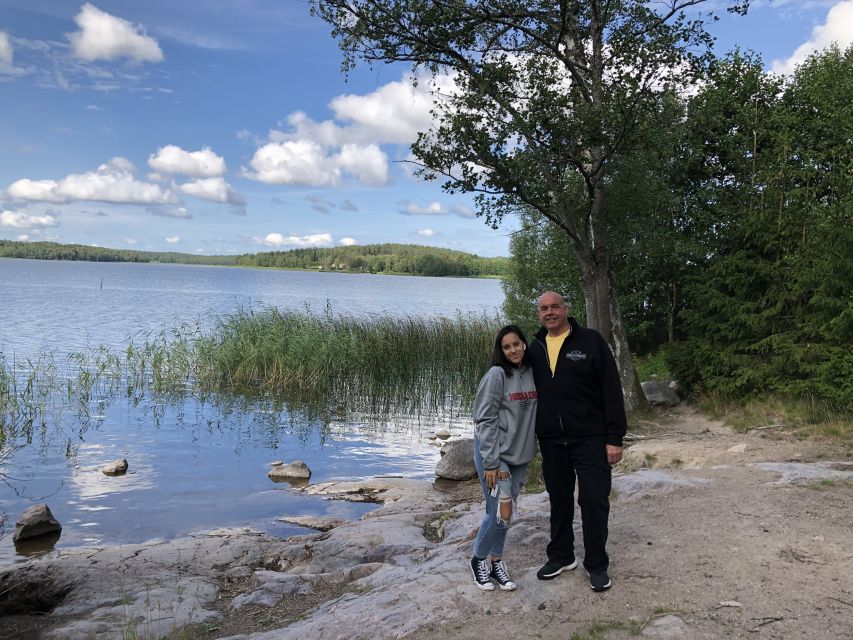
Your clothing can make or break this outing. A January visit took place in heavy snow and minus 10 degree conditions, with a frozen lake visible near the ruins. That sounds memorable, but it also shows how serious Swedish winter weather can be outside the city.
For a cold-weather departure, wear insulated layers, warm boots, gloves, and a hat. The advice to bring proper winter footwear is worth taking seriously. You may be walking over frozen or snowy ground at burial sites, bridges, and assembly remains.
In milder weather, the tour should be easier physically, but the sites remain outdoors. Comfortable shoes are still sensible. The supplied details do not promise indoor shelter, meals, or special facilities at the stops, so plan for a rural historical visit rather than a museum outing.
The countryside views are part of the appeal. You are not only moving from monument to monument. The roads, trees, fields, and quiet surroundings help explain why settlement, travel, and local power mattered in this part of Sweden.
Who should book this Viking tour?
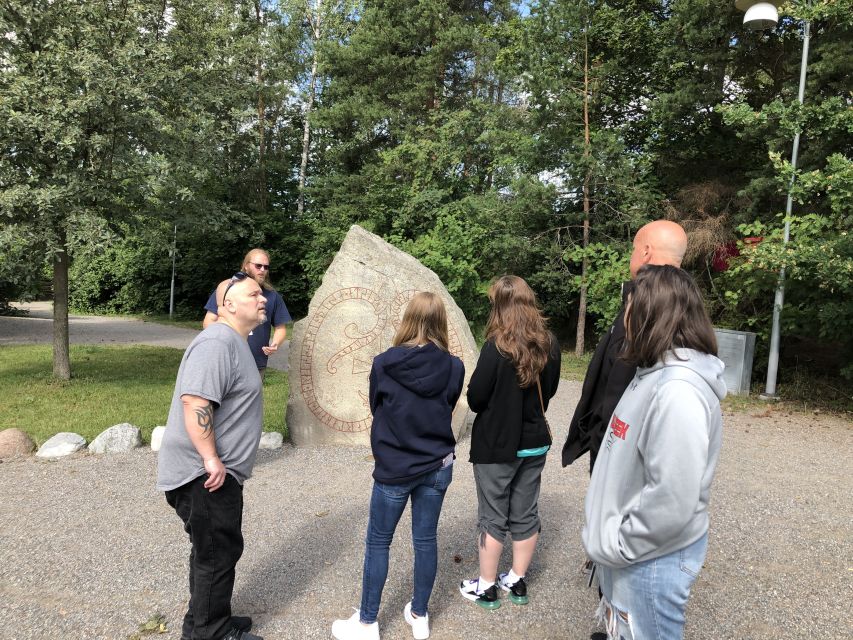
I would recommend it to first-time visitors who want to understand Swedish Viking history without giving up a full day. It should also suit history fans, families with older children, and anyone who prefers a guide to turn scattered remains into a clear story.
It is particularly good for people who want the real setting behind the history. You see old burial grounds, runestones, a bridge site, a causeway, and an assembly place instead of relying only on museum objects or popular Viking images.
You may want to skip it if you dislike outdoor stops, cold weather, short visits, or driving through the countryside. It is also not the right choice if you expect a recreated Viking village, costumed demonstrations, food, or a large collection of artifacts.
The overall rating of 4.7 from 29 bookings fits the experience’s main strengths: the guides, the runestones, the historical detail, and the efficient route. The most convincing praise centers on the depth of the explanations and the chance to see the stones in their actual setting.
Should you book it?
Book this tour if you want a focused, fact-based look at Viking Sweden and value having transport and a guide organized for you. The combination of Broby bro, Estrid’s story, Jarlabanke Bridge, and Arkils tingstad gives you more than a single monument visit.
I would be especially happy with the choice during a first Stockholm visit when time is limited. Just dress for the forecast, eat before you go, and understand that this is a short historical field trip, not a full-day archaeological adventure. At $138, it earns its price through access, context, and convenience rather than length.
FAQ
How long is the Viking Culture and Heritage tour?
The tour lasts three hours.
Where does the tour take place?
It travels from Stockholm into the countryside of Uppland in Stockholm County, visiting Viking-era sites including Broby bro, Jarlabanke Bridge, and Arkils tingstad.
Is hotel pickup included?
Yes. Pickup and drop-off are included for hotels and accommodations within five kilometers of Stockholm Central Station.
Is the tour conducted in English?
Yes. The live tour guide speaks English.
How large is the group?
The group can include no more than 16 people.
Is food included?
No. Food is not included, so you should eat before the tour or plan a meal afterward.
Are gratuities included?
No. Gratuities are not included in the price.
Can I cancel the booking?
Yes. You can cancel up to 24 hours in advance for a full refund. You can also reserve now and pay later.
Recently added around Stockholm
- ROYAL Castle Skokloster and Viking Sigtuna (private tour)★ 4.5 · 3 reviews
- Stockholm Port to Stockholm Arlanda Airport (ARN) – Departure Private Transfer★ 3.5 · 3 reviews
- Stockholm Ghost Hunt: Self-Guided Tour and Puzzle Adventure★ 4.5 · 3 reviews
- Ghosts of Stockholm: A Guided Tour of Horror and Dark Folklore★ 4.5 · 3 reviews
- Private blood, ghosts and folklore Old Town 2h Stockholm tour★ 4.0 · 3 reviews
- Private Photography workshop in Stockholm★ 5.0 · 3 reviews
- Stockholm- Private transfer to/from Arlanda Airport and city★ 5.0 · 3 reviews
- Stockholm Arlanda airport to City center of Stockholm★ 3.3 · 3 reviews
Viking History Tours, compared.

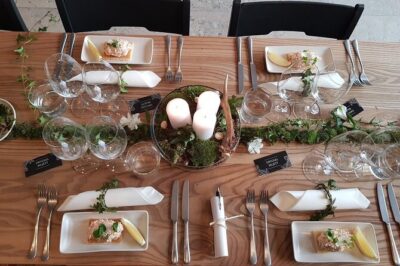
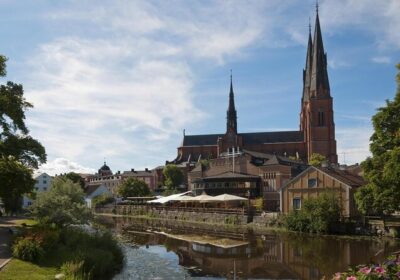
Viking History, Runes & Countryside 9h Tour to Sigtuna & Uppsala
Read our review →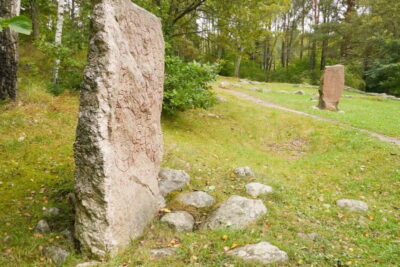
Stockholm Viking History Full Day Tour to Sigtuna + Uppsala
Read our review →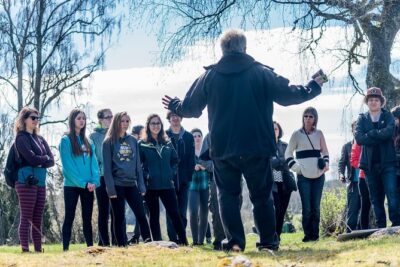
Viking History and Swedish Countryside Tour to Sigtuna & Uppsala
Read our review →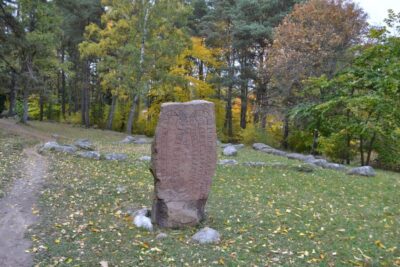
Viking History Small Group Tour from Stockholm: Half Day Including Sigtuna
Read our review →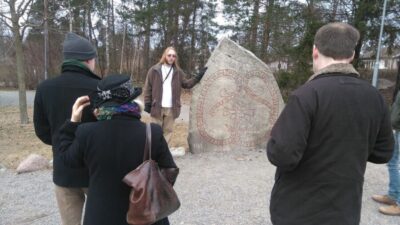
Browse the lists this tour appears in