
Reviewed · UPPSALA TOURS
Guided tour 90min at Old Uppsala mounds and old Uppsala church
Burial mounds make Sweden’s early past feel close. I like the way this 90-minute tour connects the Vendel and Viking periods to actual burial grounds, work areas, and archaeological finds, rather than treating the past as a string of legends. I also like the chance to enter Old Uppsala Church, with its medieval statues, 15th-century frescoes, and 12th-century sacrificial log, if the church is open. The main catch is that church access is not guaranteed, and one poorly delivered tour reportedly became a stationary talk instead of a walk around the mounds.
This is a small-group experience, capped at 15 people, and guide Jonathan Olsson has earned particular praise for bringing the Vendel and Viking eras to life. The $106.73 price is high for 90 minutes, so I would book it for the guide’s interpretation and archaeological context, not simply for access to a site you can visit independently.
In This Review
- Key points about the Old Uppsala tour
- Why Old Uppsala matters
- Walking the three royal mounds
- Long halls and costly craftwork
- Old Uppsala Church and its medieval layers
- The guide makes or breaks the experience
- Is $106.73 fair for 90 minutes?
- Timing, meeting point, and practical comfort
- Who will enjoy this most?
- How it fits into a Uppsala day
- Cancellation and booking notes
- Should you book the Old Uppsala tour?
- FAQ
- Where does the tour begin?
- What time does the tour start?
- How long does the tour last?
- Where does the tour finish?
- What does the first part of the tour cover?
- Is entry to Old Uppsala Church guaranteed?
- What can I see inside Old Uppsala Church if it is open?
- How many people can join the tour?
- What happens if I need to cancel?
Key points about the Old Uppsala tour
- The 90-minute route covers both the royal mounds and Old Uppsala Church, giving you outdoor archaeology and medieval history in one visit.
- The burial grounds are tied to the Vendel Period and Viking Age, with discussion of dates, finds, farms, halls, and daily life.
- Recent excavations have changed the picture of Old Uppsala, especially around the longhouse plateaus and craft areas.
- Gold, silver, precious stones, and garnets from Sri Lanka help show the site’s far-reaching contacts.
- Church entry depends on opening hours, so the mounds are the dependable part of the experience.
- At least two people must book for the tour to operate, and the group size cannot exceed 15.
Why Old Uppsala matters
Old Uppsala is not just a collection of grassy humps outside the modern city. It was a major center during the Vendel Period, the era before the Viking Age, and remained important into the centuries when Sweden’s early political and religious power was taking shape.
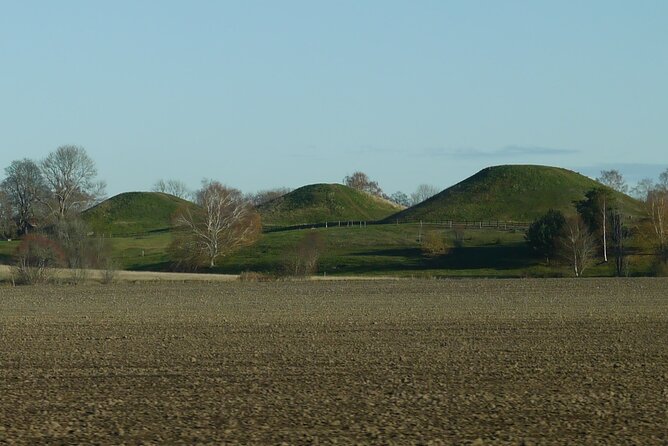
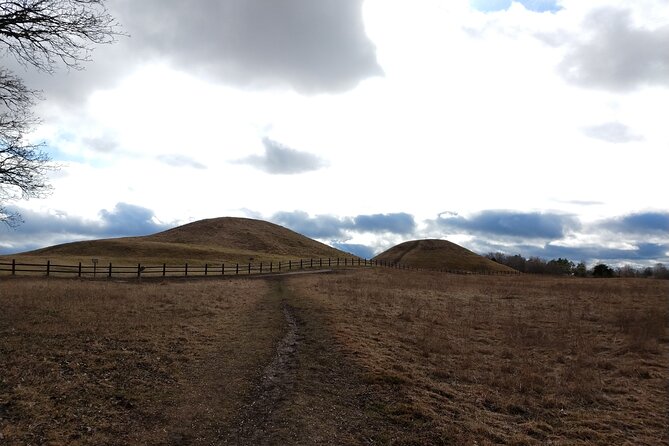
The three large royal burial mounds, known as Gamla Uppsala kungshögar, are the visual heart of the site. Their size suggests high status, but the real interest lies in what has been found around them. The area included farms, long halls, workspaces, and other features that point to a functioning center rather than an isolated cemetery.
I find this kind of place easier to understand with a guide. Without context, a mound can look like a mound. With dates, excavation results, and stories about the people connected to the site, the ground becomes evidence of power, trade, craft, and ritual.
The tour is especially useful if you want to know how archaeologists work out what happened here. You hear about the dating of finds, where objects were discovered, and how those discoveries help explain the lives of people who left no written account of their own.
A few more ways to spend a day in Sweden
- Stockholm Viking History Full Day Tour to Sigtuna + Uppsala
★ 4.6 · 218 reviews - Cube of Art Uppsala Museum of Interactive Art
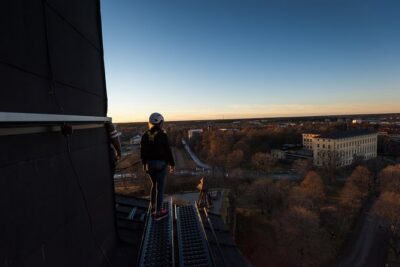
★ 4.5 · 69 reviews - Roofwalking on the worlds greatest pink castle!
★ 5.0 · 15 reviews
Walking the three royal mounds
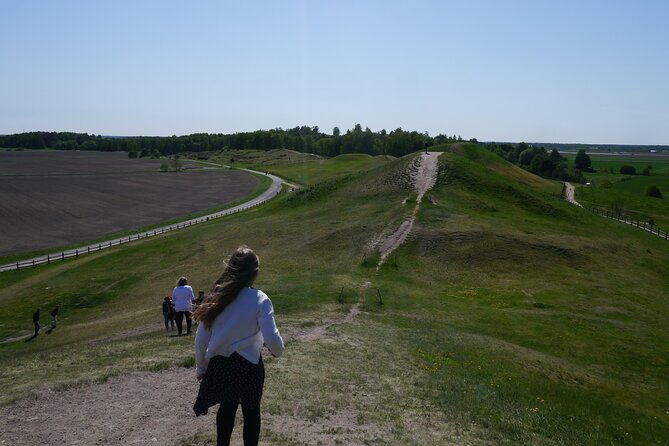
The first part lasts about 50 minutes and centers on the burial mounds and their surroundings. Admission to the site itself is included, and the outdoor setting gives the guide room to explain the area while you look directly at the features being discussed.
The mounds are traditionally linked with kings, though the tour’s value is not limited to repeating royal stories. You should expect discussion of the burial ground, the nearby farms, and the way Old Uppsala functioned as a larger settlement.
I like that the focus extends beyond the most obvious monuments. Recent excavations have produced new information, and the guide can point out how the accepted picture of Old Uppsala has changed. Archaeology is rarely a finished story. New trenches, new dating methods, and newly understood objects can alter what experts think a site was used for.
The walking portion also gives you a sense of scale. You are not only hearing about people buried in impressive mounds. You are considering the workers, farmers, craftspeople, and households that supported the center around them.
That broader view is important. A royal burial ground needs food, labor, buildings, and skilled hands. The tour’s discussion of surrounding farms helps connect ceremonial power with everyday life.
Long halls and costly craftwork
Near the church are plateaus where large long halls once stood between the 500s and 800s. These are among the most interesting features of the visit because they suggest spaces used for gatherings, authority, or important household activity.
The tour also covers exclusive work areas where gold, silver, and precious stones were found. Garnets traced to Sri Lanka are a striking detail. They offer a concrete reminder that Old Uppsala was tied to trade routes and contacts reaching far beyond present-day Sweden.
You do not need to be an archaeology specialist to appreciate this. A small stone from a distant part of the world can say as much about a society as a large monument. It raises practical questions: Who handled it? How did it travel? Who had the authority or wealth to use it?
This is where the tour can provide more value than a quick walk around the site. You get help linking individual finds to the people and institutions that made Old Uppsala important.
The quality of that explanation depends heavily on the guide. Jonathan Olsson is singled out for his command of the Vendel and Viking periods, and this is the part of the tour where an enthusiastic guide can make a real difference. You should expect the strongest experience when the guide walks you among the relevant features and explains each one in place.
Old Uppsala Church and its medieval layers
The second stop lasts about 40 minutes and focuses on Old Uppsala Church. If it is open, you go inside to see medieval statues, 15th-century frescoes, and a 12th-century sacrificial log.
The church also carries an important national role. It was Sweden’s earliest cathedral, apart from Lund in what is now Denmark, and one of the country’s earliest episcopal seats after Sigtuna. The seat was established in the 1130s.
That history adds another layer to the visit. The mounds belong to a pre-Christian and early Christian setting, while the church shows how the site continued to matter after Sweden’s religious and political structures changed.
The guide also discusses finds beneath the old cathedral and the church’s history. This helps you see the building as part of a much older place, not as an isolated medieval monument.
Church access is the biggest uncertainty in the tour. The visit happens only if the building is open, so you should not book solely for the interior. If the doors are closed, the outdoor portion near the church still includes the longhouse plateaus and the archaeological discoveries, but you will miss the statues, frescoes, and sacrificial log.
A completely different kind of day out around Sweden:
- Stockholm: City Archipelago Sightseeing Cruise with Guide
★ 4.3 · 10,798 reviews - Stockholm: Skansen Open-Air Museum Admission Ticket
★ 4.5 · 3,427 reviews - Stockholm: Archipelago Boat Tour
★ 4.4 · 3,110 reviews - Stockholm: Highlights Boat Tour
★ 4.3 · 2,542 reviews
The guide makes or breaks the experience
This tour is built around interpretation. You are not paying for a large museum collection or a complicated attraction with many facilities. You are paying for 90 minutes of guided explanation at an important archaeological site.
That makes the guide unusually important. Jonathan Olsson receives strong praise for his ability to explain the Vendel and Viking periods, and other feedback describes his tours as inspiring and memorable. I would look for a guide who keeps the group moving around the site, points out the different features, and connects objects to their dates and uses.
There is also a useful warning here. One experience fell short because the group did not walk around the mounds, and the church was closed. The result was described as a stationary historical talk, with little information beyond what could be found at the nearby museum.
That criticism is worth taking seriously. If your guide remains in one spot, the tour loses much of its purpose. You can get general background from a museum display. The benefit of booking a guided walk should be seeing where the halls, burial mounds, farms, and work areas fit together.
The provider responded that the guide involved was new and that the expected route should include walking around the site. That response is encouraging, but it also confirms how much the experience depends on proper delivery.
Is $106.73 fair for 90 minutes?
At $106.73 per person, this is not a budget sightseeing stop. The fee includes all taxes and fees, but not gratuities. The tour also requires at least two bookings to run.
The price makes more sense for people who place a high value on a specialist guide. If you already know the site, have read about Vendel archaeology, or want to ask questions about recent excavations, a private or small-group explanation may feel worthwhile.
For a casual visitor simply hoping to see the mounds, the cost is harder to justify. The site can be visited without paying for this tour, and the church may not be open. In that case, you are paying mainly for interpretation and structure.
The group limit of 15 helps. This is not an enormous coach excursion where you struggle to hear. A group of that size should allow the guide to speak clearly and answer some questions, though the experience may feel less personal if the group reaches its maximum.
I would compare the price with your wider Uppsala plans. If you are already spending a day in the city, perhaps visiting the university, cathedral, and museum, this tour can add a focused archaeological session. One visitor who came from Stockholm found the train journey easy and enjoyed combining Old Uppsala with the city’s other sights.
Timing, meeting point, and practical comfort
The tour begins at 5:30 pm at Disavägen 13, 754 40 Uppsala, and finishes back at the same meeting point. The late start can work well if you want to spend the earlier part of the day in central Uppsala.
You should allow enough time to reach the meeting point without rushing. The location is near public transportation, which makes the tour easier to fit into a day without a car.
The route involves walking around the mounds and nearby church area. A moderate level of physical fitness is recommended, so wear shoes suitable for an outdoor walk. The tour data does not promise a fully paved route or indoor shelter throughout, so check the day’s conditions before setting out.
A mobile ticket is provided, which keeps arrival simple. Service animals are allowed.
The tour lasts approximately 1 hour and 30 minutes. The first part takes about 50 minutes, followed by about 40 minutes at the church and nearby plateaus. Since the church visit depends on opening hours, the exact balance between outdoor and indoor time can change.
Who will enjoy this most?
I would recommend this tour to anyone with a real interest in archaeology, early Swedish history, or the transition from pre-Christian traditions to medieval Christianity.
It suits you especially well if:
- You want to understand what the mounds and plateaus represent.
- You enjoy learning how excavation finds are dated and interpreted.
- You prefer a small-group walk to a large bus tour.
- You are already planning to visit Uppsala and can spare 90 minutes.
- You appreciate a guide who can explain objects, buildings, and settlement patterns together.
Families with older children may also find the objects and burial customs engaging, though the supplied information does not describe a children’s program.
I would be more cautious if you want guaranteed church access, a long museum visit, or a tour packed with multiple attractions. This is a focused outdoor history walk with a possible church visit, not a full-day Uppsala sightseeing package.
How it fits into a Uppsala day
Old Uppsala works well as part of a wider day in the city. You can spend earlier hours seeing central Uppsala, then use the 5:30 pm start for a more focused look at the ancient site.
The tour does not end in central Uppsala. It returns to Disavägen 13, so plan your onward transport from the meeting point rather than assuming you will finish near the cathedral or station.
The site also rewards a second look after the guide finishes. If you have time, you may want to revisit the mounds and church area on your own, especially if the first visit was shaped by a closed church or a rushed explanation.
Do not expect the tour to replace the adjacent museum. Instead, think of the guide as a way to connect the museum’s objects with the ground where the people, halls, farms, and burial practices once existed.
Cancellation and booking notes
You can cancel up to 24 hours before the 5:30 pm start for a full refund. Changes or cancellations made less than 24 hours before the start are not accepted for a refund.
Because the tour needs a minimum of two people, it may be canceled if that number is not reached. In that case, you are offered another date or experience, or a full refund.
Should you book the Old Uppsala tour?
Book it if you want the site explained properly and can accept some uncertainty about church entry. The strongest reason to go is the chance to connect the royal mounds with the wider settlement, long halls, craft areas, and remarkable finds such as garnets from Sri Lanka.
I would not book it just to stand beside the mounds. You can do that independently for less money. Book when you want a guide who will walk the site with you, explain the recent excavations, and make sense of the transition from Vendel-era power to medieval Christianity.
If possible, confirm that the tour will include a full walk around the mounds and that the church is expected to be open. With a strong guide such as Jonathan Olsson, this can be a memorable 90-minute lesson in Sweden’s earliest power centers. With limited movement and a closed church, the value drops sharply.
FAQ
Where does the tour begin?
It begins at Disavägen 13, 754 40 Uppsala, Sweden.
What time does the tour start?
The tour starts at 5:30 pm.
How long does the tour last?
It lasts approximately 1 hour and 30 minutes.
Where does the tour finish?
The tour ends back at the meeting point on Disavägen 13.
What does the first part of the tour cover?
The first section lasts about 50 minutes and covers the Old Uppsala mounds, Vendel and Viking periods, excavations, burial finds, surrounding farms, and how people lived during the period.
Is entry to Old Uppsala Church guaranteed?
No. The church is visited only if it is open.
What can I see inside Old Uppsala Church if it is open?
You can see medieval statues, 15th-century frescoes, and a 12th-century sacrificial log.
How many people can join the tour?
The group can include a maximum of 15 people.
What happens if I need to cancel?
You receive a full refund if you cancel at least 24 hours before the experience start time. Cancellations or changes made less than 24 hours before the start are not accepted for a refund.
Recently added around Sweden
- ROYAL Castle Skokloster and Viking Sigtuna (private tour)★ 4.5 · 3 reviews
- Stockholm Ghost Hunt: Self-Guided Tour and Puzzle Adventure★ 4.5 · 3 reviews
- Stockholm Port to Stockholm Arlanda Airport (ARN) – Departure Private Transfer★ 3.5 · 3 reviews
- Ghosts of Stockholm: A Guided Tour of Horror and Dark Folklore★ 4.5 · 3 reviews
- Private Photography workshop in Stockholm★ 5.0 · 3 reviews
- Private blood, ghosts and folklore Old Town 2h Stockholm tour★ 4.0 · 3 reviews
- Family Packraft tour in Sälen★ 5.0 · 3 reviews
- Stockholm- Private transfer to/from Arlanda Airport and city★ 5.0 · 3 reviews
Uppsala Tours, compared.
Stockholm Viking History Full Day Tour to Sigtuna + Uppsala
Read our review →
Best of Uppsala: Private Walking Tour with a Local
Read our review →
Uppsala bloody history 1h- racial biology, 18th century plague, 19th century prostitution etc.
Read our review →
Uppsala Must See 2h city walk – 2h tour of all big attractions!
Read our review →
Browse the lists this tour appears in