
Reviewed · MUSEUMS
Millesgården Museum: sculpture park and art galllery
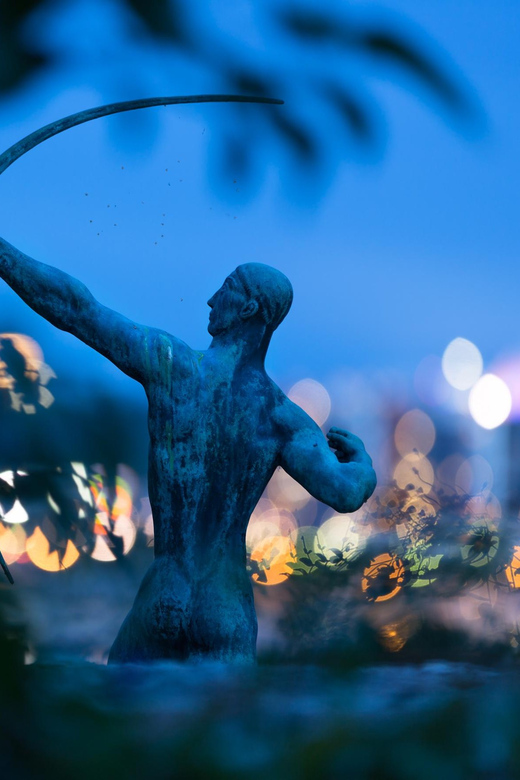
A peaceful art escape sits just outside Stockholm. Millesgården combines Carl Milles’ sculpture park with his former home, working studios, fountains, terraces, and views across the city. I like the way art here feels part of the garden rather than locked indoors, and I also like the chance to see Anne’s House, decorated by Estrid Ericson and Josef Frank of Svenskt Tenn. The main consideration is timing: the art gallery may be between exhibitions, and the audio guide is not always obvious at first.
The setting is the star. Around one hundred sculptures fill the terraces, including about ten large fountain groups, while the house adds a personal look at Carl and Olga Milles’ lives. Allow several hours for a proper visit, especially if you want lunch or coffee at Millesgården Lanthandel.
In This Review
- Key points to know before you go
- Why Millesgården feels different from a normal museum
- The sculpture terraces and fountains
- Carl and Olga Milles’ artist’s home
- Anne’s House and the Svenskt Tenn interiors
- The art gallery and museum shop
- Lunch and coffee at Millesgården Lanthandel
- Getting there from central Stockholm
- Timing, access, and the audio guide
- Is the $19 admission good value?
- Who should visit Millesgården?
- Should you book Millesgården Museum?
- FAQ
- How much does admission to Millesgården cost?
- How long does a visit to Millesgården take?
- How do I get to Millesgården from central Stockholm?
- Is Millesgården wheelchair accessible?
- Is there an audio guide?
- Can I bring luggage and pay with cash?
Key points to know before you go
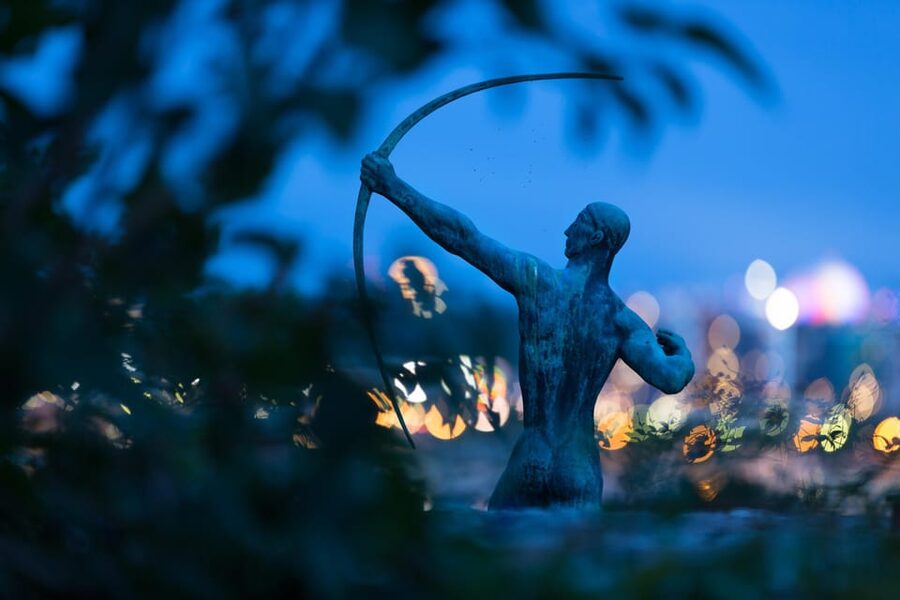
- A sculpture garden with real scale and drama: Around one hundred works by Carl Milles are placed among flowers, terraces, fountains, and open views toward Stockholm.
- The Large Studio shows where big sculptures were made: This gives the indoor visit a useful link to the works outside.
- Anne’s House is a design stop of its own: Its interiors by Estrid Ericson and Josef Frank offer a different mood from Carl Milles’ classical sculpture collection.
- The museum is only about 20 minutes from T-Centralen: Take the subway to Ropsten, then a bus or the Lidingöbanan tram.
- The audio guide needs a little attention: Swedish and English audio are included, but the link may be posted in the atelier rather than clearly explained at reception.
- The $19 admission covers a full cultural outing: The ticket includes the park, artist’s home, antiques collection, Anne’s House, and art gallery.
Why Millesgården feels different from a normal museum
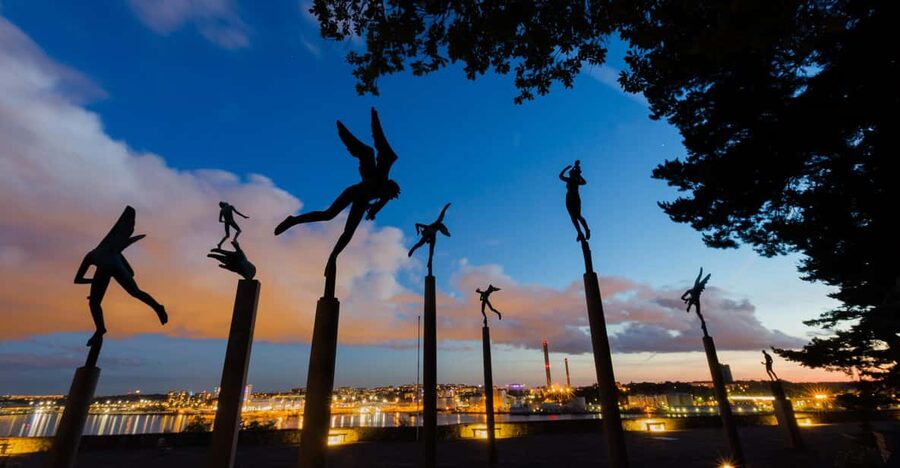
Many sculpture museums ask you to move from room to room and study one work at a time. Millesgården gives you a wider experience. You walk through a garden where the sculptures share space with flowers, stone terraces, water, and broad views.
That setting changes how you see Carl Milles’ work. A fountain group can be watched from several angles. A figure may appear against the sky, beside a pool, or at the end of a terrace. The art does not feel separated from daily life here. It forms the place.
I especially like the contrast between the outdoor park and the interiors. Outside, the mood is open and theatrical. Inside, you find the more private world of Carl and Olga Milles, including studios, domestic rooms, antiques, and classical objects. Together, the two parts tell you more than either one could alone.
The park is also a good choice if you want culture without a full day in central Stockholm. Millesgården is in Lidingö, but the journey from T-Centralen takes about 20 minutes. That makes it a practical half-day stop, although the museum is open from 11:00 to 17:00 and you can easily use much of that window.
More museums:
- Stockholm: Skansen Open-Air Museum Admission Ticket
★ 4.5 · 3,427 reviews - Stockholm Pass: Save up to 50% – Includes Vasa Museum Ticket
★ 4.1 · 2,392 reviews - Stockholm: Nobel Prize Museum and Exhibition Entry Ticket
★ 4.3 · 994 reviews
The sculpture terraces and fountains
Start with the garden. This is where Millesgården earns its reputation as a special place.
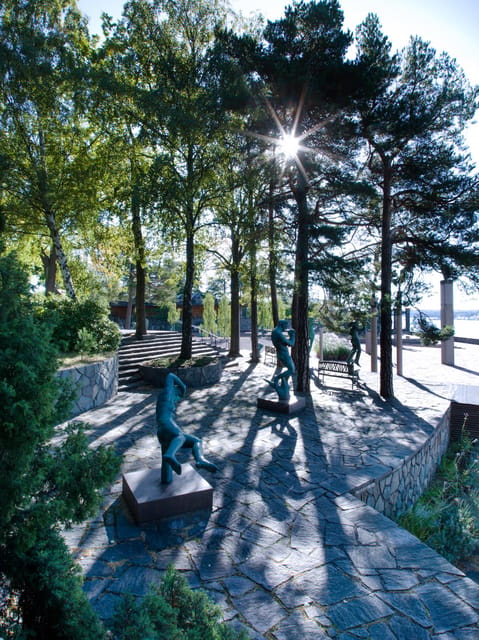
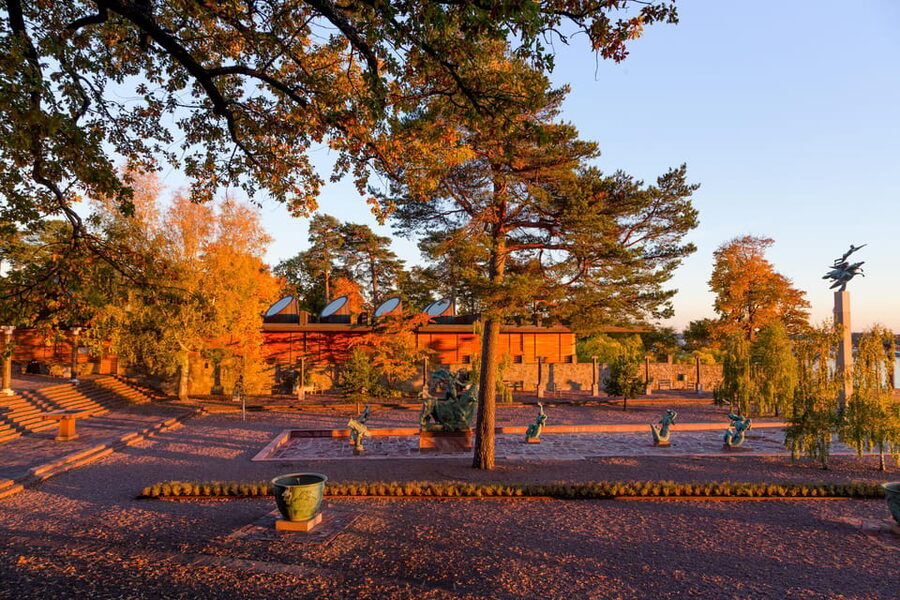
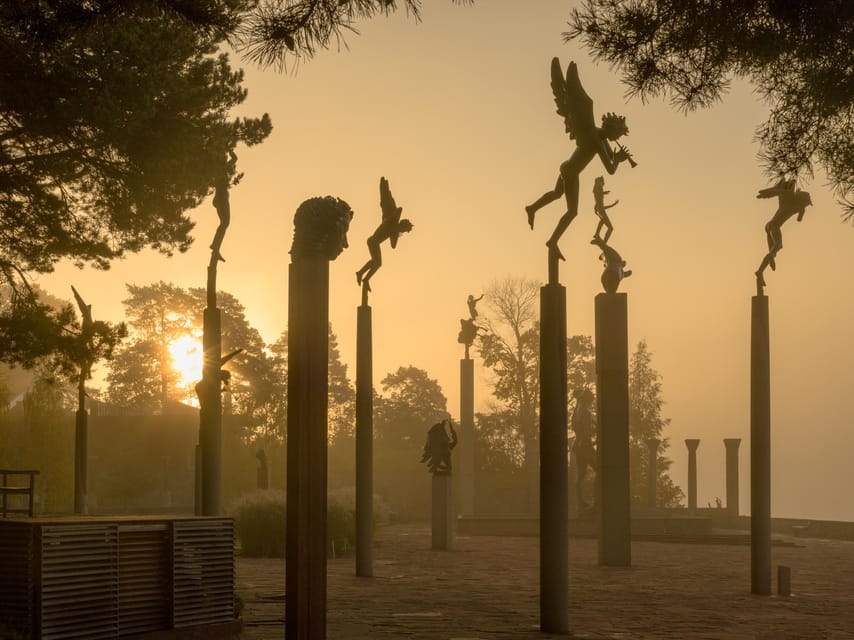
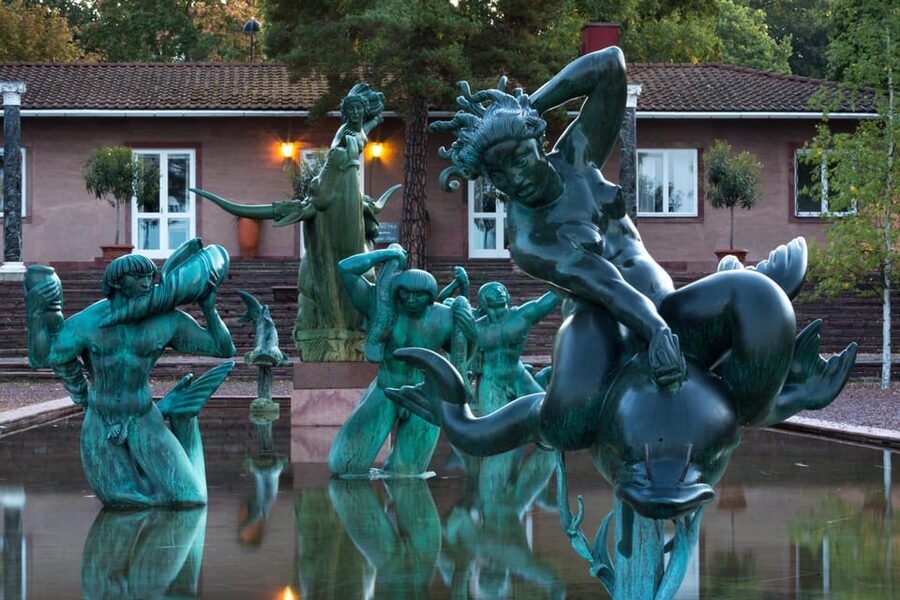
The exact route through the grounds can vary with your pace, but the main pleasure is moving from terrace to terrace and letting the sculptures reveal themselves gradually. Around one hundred sculptures are displayed outdoors, all by Carl Milles. About ten are larger fountain groups, so water is not a minor decoration. It is part of the art.
The fountains give the park movement and sound. Flowers soften the stone and bronze, while the terraces create different levels for looking back at a work or across the grounds. You are not simply checking sculptures off a list. You are seeing how Milles arranged art in relation to space.
The views toward Stockholm add another layer. From the park, the city appears beyond the garden, giving you a sense of distance from the center without making the museum feel remote. Bring your camera if you like wide views, but give yourself time to watch the fountains and notice smaller details too.
This section is best in good weather, since much of the pleasure comes from being outside. Still, the museum has enough indoor material to make the visit worthwhile in less friendly conditions. If rain is likely, give priority to the artist’s home, studios, Anne’s House, and gallery, then see as much of the garden as the weather allows.
Carl and Olga Milles’ artist’s home
The Artist’s Home gives Millesgården its personal heart. You are not only looking at Carl Milles’ finished public works. You are seeing the domestic and creative surroundings connected with him and his wife, Olga Milles.
The Large Studio is one of the most important rooms. Carl created his large sculptures there, so the studio helps you picture the practical work behind pieces that now occupy public squares and grand gardens. It also gives the outdoor park more meaning. After seeing the sculptures outside, you can return to the question of how such large works were planned and made.
The breakfast room has blue Dutch tiles, a detail that makes the house feel distinct from a standard artist museum. The color and decoration offer a domestic counterpoint to the scale of the studio and the formal character of the sculptures.
You will also find the Pompeii-inspired Gallery. That room adds another visual note to the house, linking the interiors with the classical subjects and objects in Carl’s collection. The house is not plain or purely functional. It reflects an artist with strong ideas about decoration, display, and the relationship between art and architecture.
Carl’s collection of classical sculptures and objects is another reason to take your time. These pieces help explain the artistic world that shaped his work, though the appeal will vary depending on how much you enjoy antiques and classical art. If you prefer only modern exhibitions, the house may feel more detailed than expected. If you like seeing how artists lived and collected, it is one of the strongest parts of the visit.
Anne’s House and the Svenskt Tenn interiors
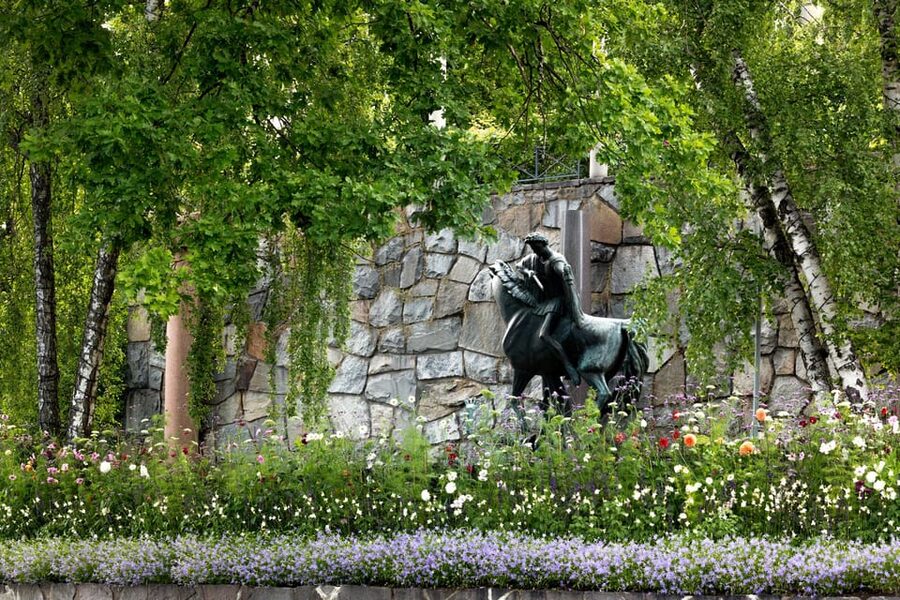
Anne’s House offers a change of pace. It is decorated by Estrid Ericson and Josef Frank from Svenskt Tenn, the Swedish design company known for its distinctive interiors and furnishings.
This is not simply another room in the Milles home. Anne’s House gives the visit a design focus, with an interior shaped by two important Swedish designers. The house is worth visiting even if your main reason for coming is sculpture, because it shows a different side of Swedish cultural life.
I would keep the contrast in mind as you move through the museum. Carl Milles’ outdoor works can feel grand, mythic, and architectural. Anne’s House brings attention to interior style and the way furniture, color, and decoration shape a home. You get two different forms of artistic expression within one site.
The provided information does not specify how long you will spend inside Anne’s House, so treat it as a focused stop rather than a separate long tour. It works well after the artist’s home and before the gallery, especially if you want to break up the sculpture and antiques displays.
A few more ways to spend a day in Stockholm
- Stockholm: City Archipelago Sightseeing Cruise with Guide
★ 4.3 · 10,798 reviews - Stockholm: Archipelago Boat Tour
★ 4.4 · 3,110 reviews - Stockholm: Highlights Boat Tour
★ 4.3 · 2,542 reviews - Stockholm: Ghost Walk and Historical Tour
★ 4.7 · 2,206 reviews
The art gallery and museum shop

The Art Gallery hosts changing exhibitions. This means the gallery can add something new to your visit, but it also means the experience depends on what is showing during your chosen date.
One practical warning comes from a recent visit: the exhibition space was undergoing a change, which made the overall experience feel incomplete. If the gallery is between exhibitions, the sculpture park and historic rooms remain the core reasons to come, but you should not assume the gallery will always offer a full temporary show.
After the gallery, stop at the museum shop. It is a natural final point, especially if you want a small design item, art book, or souvenir connected with Millesgården. The shop and restaurant accept credit and debit cards because the museum is cash-free.
Lunch and coffee at Millesgården Lanthandel
Millesgården Lanthandel gives you a place to pause without leaving the site. You can have lunch or an afternoon coffee before continuing to Anne’s House or the gallery.
That matters because the grounds invite a slower visit. A quick walk through the sculpture park is possible, but it would miss much of the point. A meal or coffee lets you turn the museum into a relaxed outing rather than a rushed stop between other Stockholm sights.
Food details and prices are not provided, so I would not plan the day around a specific menu. Think of the restaurant as a useful break, especially since the museum’s 11:00 to 17:00 opening hours allow plenty of room for a midday visit and a later coffee.
Getting there from central Stockholm
Public transport is straightforward. Take the subway to Ropsten, then continue by bus 201, 202, 204, 206, 211, 212, or 221 to Torsviks Torg. From the square, Millesgården is about a seven-minute walk. Follow the signs.
You can also take the Lidingöbanan local tram from Ropsten to Torsvik or Baggeby. Millesgården sits between those two stations, and the walk from either station takes about seven minutes.
The stated travel time from T-Centralen is about 20 minutes, which makes this a sensible addition to a Stockholm schedule. Check current departures at SL before setting out, since exact connections and departure times can change.
Drivers get free parking at Herserudsvägen 32, just outside the main entrance. Cyclists can use the cycle path across the Lidingö Bridge. These options make the museum easy to reach without treating it as a complicated day trip.
Timing, access, and the audio guide
Millesgården is open Tuesday through Sunday from 11:00 to 17:00 all year. It is closed on Mondays according to the stated opening schedule, so check the day before you go.
The experience is valid for one day, and the audio guide is available in Swedish and English. If you want a guide arranged in person, ask at reception when you arrive. The meeting point for a booked guide is also reception.
Pay attention to the audio instructions before walking far into the grounds. One visitor found the audio link only after reaching the studio, where it was posted on the wall. The problem was not the language choice, but the lack of clear information at the start. Ask at reception where to access it so you do not miss the opening context.
The museum is wheelchair accessible, though the supplied information does not describe which routes or areas may have specific limits. Oversize luggage, luggage, and large bags are not allowed, so arrive with a small day bag rather than a suitcase.
Is the $19 admission good value?
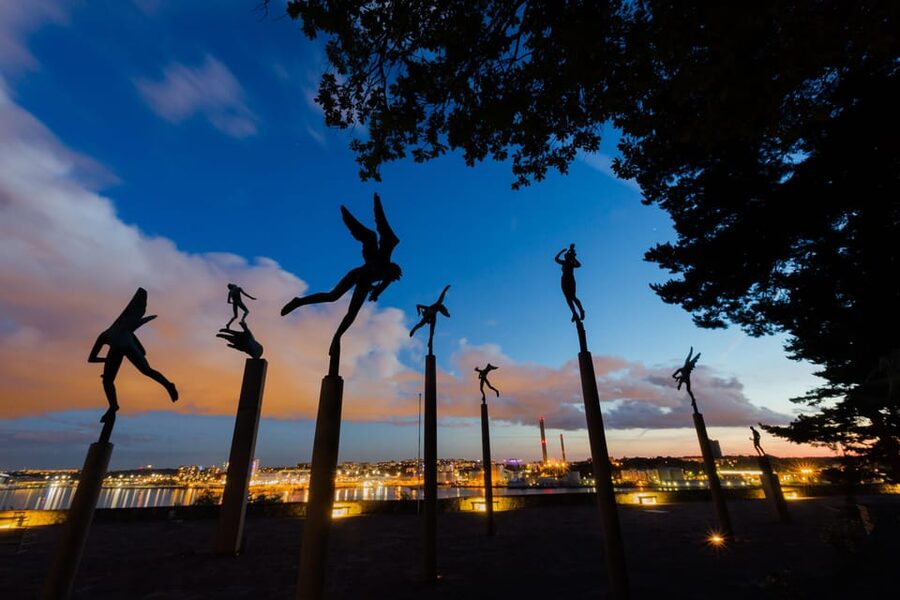
At $19 per person, Millesgården is not the cheapest quick museum stop in Stockholm. It is good value if you use the ticket as a complete outing rather than paying to see only one room.
Your admission includes the sculpture park, Artist’s Home, antiques collection, Anne’s House, and Art Gallery. You also get the outdoor terraces, fountains, and Stockholm views, which are a major part of the appeal. The variety helps justify the price: sculpture, design, domestic history, classical objects, changing exhibitions, and a garden walk all come together.
The value is strongest for people who enjoy taking their time. If you spend only 45 minutes in the park and skip the house, gallery, and Anne’s House, the price may feel less convincing. Plan on several hours, with lunch or coffee if that suits your schedule.
The high rating of 4.8 from 20 verified bookings matches the main strengths of the place: the garden setting, the sculptures, and the peaceful atmosphere. The most useful criticism is also specific. The audio guide needs clearer directions, and the temporary gallery may be unavailable during an exhibition change. Those are manageable concerns, but they are worth knowing before you arrive.
Who should visit Millesgården?
I would recommend Millesgården to anyone who likes sculpture, gardens, architecture, or Swedish design. It also suits couples, families with older children, and anyone looking for a calmer cultural stop outside central Stockholm.
It is especially good for you if:
- You want art in an outdoor setting rather than a standard indoor museum.
- You enjoy fountains, terraces, flowers, and city views.
- You are curious about how an artist lived and worked.
- You like Scandinavian interiors and the work of Svenskt Tenn.
- You want a destination that is easy to reach by public transport.
- You can spare several hours instead of rushing through one attraction.
It may be less suitable if your only goal is a large temporary exhibition. The gallery program changes, and it may be between shows. It is also not the best choice if you are carrying large luggage, since bags and oversize luggage are not allowed.
For the fullest visit, arrive near opening time, walk the sculpture terraces first, then explore the Artist’s Home and Large Studio. Take a break at Millesgården Lanthandel, visit Anne’s House, and finish at the Art Gallery and shop. That order gives the outdoor works your freshest attention and leaves indoor rooms for later.
Should you book Millesgården Museum?
Book it if you want a peaceful, art-filled break from central Stockholm and you value a place where sculpture, gardens, fountains, and historic interiors work together. The short journey, free parking, audio guide, and broad $19 admission make it an easy choice for a half-day or full afternoon.
Go with realistic expectations about the gallery. The main experience is Carl Milles’ sculpture park and home, not a guaranteed blockbuster exhibition. Ask about the audio guide as soon as you arrive, carry only a small bag, and allow enough time to sit with the views.
For a quiet setting and a strong mix of outdoor art, personal history, and Swedish design, Millesgården is worth the trip to Lidingö.
FAQ
How much does admission to Millesgården cost?
Admission is $19 per person. It includes the Art Gallery, Artist’s Home, antiques collection, sculpture park, and Anne’s House.
How long does a visit to Millesgården take?
The ticket is valid for one day. The museum is open from 11:00 to 17:00, and several hours are useful if you want to see the park, home, studios, Anne’s House, gallery, and restaurant.
How do I get to Millesgården from central Stockholm?
Take the subway to Ropsten, then bus 201, 202, 204, 206, 211, 212, or 221 to Torsviks Torg. Walk about seven minutes from the square. You can also take the Lidingöbanan tram from Ropsten to Torsvik or Baggeby, followed by a walk of about seven minutes.
Is Millesgården wheelchair accessible?
Yes, the museum is wheelchair accessible. The provided information does not give further details about specific routes or rooms.
Is there an audio guide?
Yes. An audio guide is included in Swedish and English. Ask at reception for directions to the audio guide before starting, since the access link may not be clearly explained at the entrance.
Can I bring luggage and pay with cash?
Large bags, luggage, and oversize luggage are not allowed. Millesgården is cash-free, so use a credit or debit card at the museum shop and restaurant.
Recently added around Stockholm
- ROYAL Castle Skokloster and Viking Sigtuna (private tour)★ 4.5 · 3 reviews
- Stockholm Ghost Hunt: Self-Guided Tour and Puzzle Adventure★ 4.5 · 3 reviews
- Stockholm Port to Stockholm Arlanda Airport (ARN) – Departure Private Transfer★ 3.5 · 3 reviews
- Private Photography workshop in Stockholm★ 5.0 · 3 reviews
- Ghosts of Stockholm: A Guided Tour of Horror and Dark Folklore★ 4.5 · 3 reviews
- Private blood, ghosts and folklore Old Town 2h Stockholm tour★ 4.0 · 3 reviews
- Stockholm- Private transfer to/from Arlanda Airport and city★ 5.0 · 3 reviews
- Stockholm Arlanda airport to City center of Stockholm★ 3.3 · 3 reviews
Museums, compared.




Skip the Line: Disgusting Food Museum Entrance Ticket
Read our review →
Vasa Museum Guided Tour, Including Ticket & Guide
Read our review →
Browse the lists this tour appears in