
Reviewed · VIKING HISTORY TOURS
Private Tour: 3h Viking History from Stockholm to Runic Kingdom
Old stones tell surprisingly personal stories. This private excursion leaves central Stockholm for the Viking-era sites around Täby and Vallentuna, where rune stones, grave fields, a causeway, an assembly ground, and a medieval church connect Sweden’s early history with real people. I like the private vehicle and guide, which make a short three-hour outing easy to manage, especially from a hotel or cruise port. I also like the focus on original outdoor sites rather than a museum-only presentation.
The main consideration is time. About an hour is spent driving to and from Stockholm, leaving roughly two hours for four stops. At $431.94 per person, with a minimum of two people, this is a serious expense for a brief tour. You are paying for private transport, personal attention, and a carefully chosen route, not a full-day archaeological trip.
In This Review
- Key details before you book
- Leaving Stockholm for Viking country
- Broby and the story of Estrid
- Jarlabanke’s bridge and its bold inscriptions
- Arkils tingstad, where local law took shape
- Vallentuna church and a later Sweden
- What the private format adds
- Is $431.94 per person fair?
- Pickup details for hotels and cruise ships
- Who should book this Stockholm Viking tour?
- Should you book it?
- FAQ
- How long does the Viking tour last?
- What time does the tour begin?
- Is the tour private?
- Where can pickup be arranged?
- Is pickup available at Nynäshamn?
- What sites are visited?
- Is admission included?
- How many people are needed to book?
- Is the tour offered in English?
- Can I cancel for a full refund?
Key details before you book
- Estrid’s grave field: See a Viking-age burial ground with more than 20 early Christian skeletons and hear about Estrid, one of the area’s most important Viking women.
- Jarlabanke’s 150-meter bridge: Walk along the old causeway and read the messages preserved on its rune stones.
- Arkils tingstad assembly ground: Learn how Viking communities handled law, authority, divorce, insults, and violence.
- Vallentuna church: See a 13th-century church, rune stones, medieval building marks, and what is described as the first written Swedish ending rhyme.
- Private pickup and transport: Hotel and cruise-port pickup is available within five kilometers of Stockholm Central Station, with clear exceptions for Nynäshamn.
- Guide quality matters: Past outings have been led by guides including Olof, Charlotte, Karl, Erik, Angus, Quentin, and Jonathan. Most praise centers on their warmth, flexibility, and ability to explain the stones.
Leaving Stockholm for Viking country
Pickup begins at 9:30 a.m. The tour collects you from a central Stockholm hotel, accommodation, or eligible cruise port, then heads north toward Täby and Vallentuna in a private vehicle.
That drive is part of the experience. You leave the city behind and see the suburbs and countryside where these monuments still sit in their original settings. A guide can use the ride to explain how people moved through the region, why rune stones were placed beside roads and bridges, and how local power worked during the Viking Age.
The timing is practical for a short visit. You are not spending a full day away from Stockholm, yet you still reach four distinct sites. The tradeoff is that the drive takes about 30 minutes each way, depending on traffic. If you want long walks, extensive ruins, or several hours at each monument, this outing will feel compressed.
The private format helps here. Your group has the vehicle and guide to itself, with time to ask questions and adjust the conversation to your interests. Past guides have also offered suggestions for the rest of the afternoon. Charlotte, for example, dropped one group at Stockholm History Museum, while another guide took guests to City Hall after the excursion. Those extras are not guaranteed, but they show the useful local help a private guide can provide.
More Viking history:
- Stockholm: The Viking Museum Exhibition and Viking Ride
★ 4.5 · 667 reviews - Entrance ticket to The Viking Museum
★ 4.0 · 301 reviews - Viking History, Runes & Countryside 9h Tour to Sigtuna & Uppsala
★ 4.5 · 283 reviews
Broby and the story of Estrid
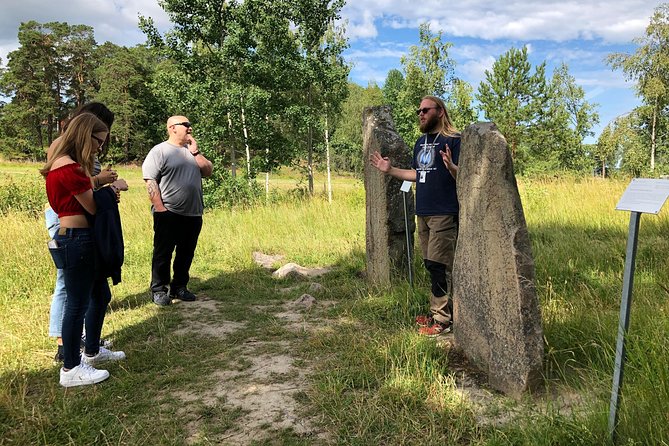
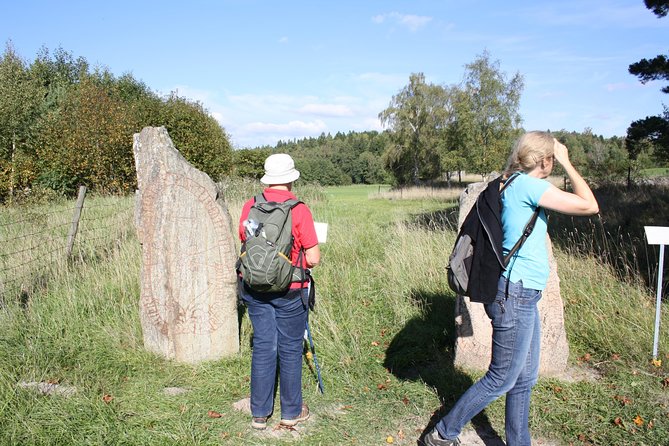
The first stop in Täby is a Viking grave field and monument area known for its rune stones. You spend about 40 minutes here, walking among the stones and hearing about Estrid, a powerful Viking woman whose family memorials remain in the area.
Estrid gives the tour a welcome human focus. Viking history is often reduced to raiders, ships, and famous male rulers. Here, the guide explains a woman who appears through the monuments she commissioned and the family she remembered. That makes the runes feel less like museum labels and more like public statements about family, faith, property, and status.
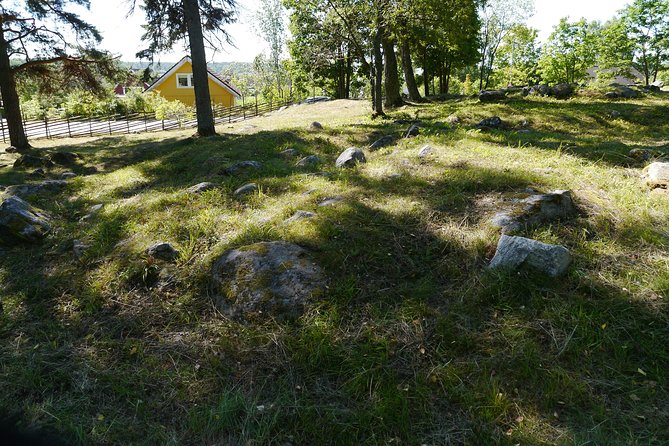
The site also includes an early Viking-age Christian grave field with more than 20 skeletons. That detail helps explain a period of change. Old customs and Christianity overlapped, and burial grounds can show that transition more clearly than a dramatic legend can.
You may also hear about Estrid’s possible farm and the nearby stones associated with her family. The tour does not present every interpretation as certain, which is useful. Archaeology often gives us fragments, and rune stones tell us what people wanted remembered, not every detail of how they lived.
The guide also covers ordinary Viking-age life, including clothing and daily routines. That broader context is important because the site itself is made up largely of stones and open ground. If you prefer vivid storytelling and questions about people, this stop should work well. If you expect reconstructed buildings or a large excavation, you may find it modest.
Jarlabanke’s bridge and its bold inscriptions
From the grave field, the route continues to Jarlabanke’s bridge. The name is slightly misleading to modern ears, since the feature is now a roughly 150-meter causeway rather than a dramatic wooden bridge spanning a river.
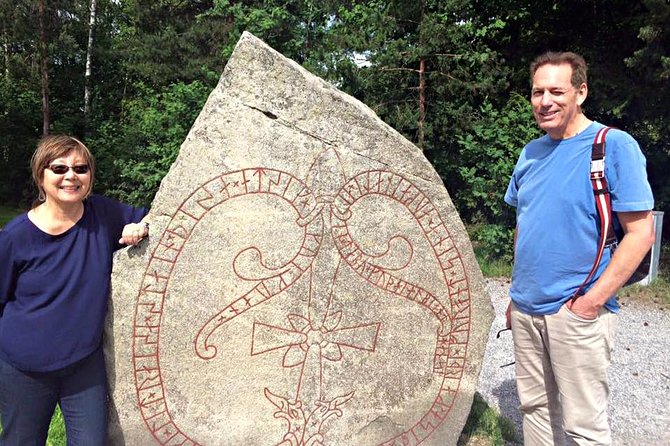
Jarlabanke was a powerful local lord who commissioned the causeway and placed rune stones to announce his influence. You can walk over and along the feature, then examine the stones that preserve messages about him and the dead.
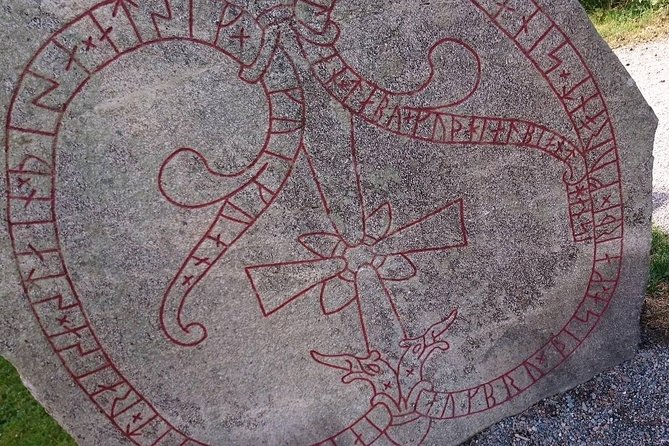
This is one of the clearest places to understand how runestones worked. They were memorials, but they were also public signs. Their location beside a route meant that other people would see them. A guide who can read the inscriptions aloud and explain their wording adds real value, since the marks otherwise look like an unfamiliar alphabet carved into stone.
The stop lasts about 20 minutes. That is enough for an explanation and a short walk, but not enough for a slow archaeological study. Wear shoes that are comfortable outdoors, and expect the experience to be about interpretation rather than a long hike.
Jarlabanke himself comes across as self-confident and politically strong. The stones associated with him show how local leaders used public works and memorials to shape their reputation. This is a good place to ask your guide how much of the message is historical evidence and how much is careful self-promotion.
Arkils tingstad, where local law took shape
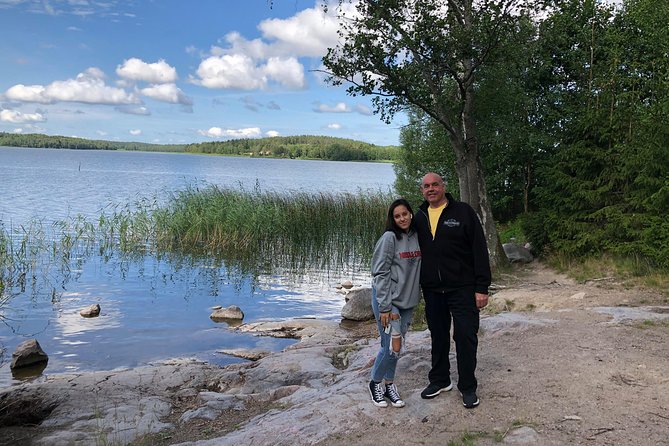
The third stop is Arkils tingstad, a preserved Viking assembly place beside a lake. The visit lasts about 30 minutes and shifts the focus from family memorials to government and law.
A thing, or assembly, was a place where local leaders and communities met to settle disputes and make decisions. Here you hear how Viking society was organized through tribes, local authority, and rules that were enforced by the community.
The subject matter can be especially engaging because it moves beyond the familiar image of Viking warfare. The guide discusses laws concerning divorce, insults, and killing. These examples show a society with formal expectations, even when the penalties and customs feel severe by modern standards.
The runestones at Arkils tingstad add another layer. They connect the place of lawmaking with the people who built, used, and remembered it. The lakeside setting also gives this stop a calmer rhythm after the roadside monuments.
This is likely the most idea-heavy part of the tour. You will get more from it if you ask questions. How did a person bring a dispute before the assembly? Who had the authority to enforce a decision? What happened when family honor and law collided? A private guide can shape the discussion around your interests.
More history and heritage:
- Stockholm: Ghost Walk and Historical Tour
★ 4.7 · 2,206 reviews - The Original Stockholm Ghost Walk and Historical Tour – Gamla Stan
★ 4.5 · 1,165 reviews - Stockholm: Old Town Historical Walking Tour
★ 4.9 · 344 reviews - Viking History and Swedish Countryside Tour to Sigtuna & Uppsala
★ 4.5 · 162 reviews
Vallentuna church and a later Sweden
The final stop is Vallentuna church, a 13th-century building visited for about 30 minutes. It adds a medieval and Christian layer to the morning rather than ending with another open-air runestone site.
Inside, the church is described as spare and Reformation-era in appearance, contrasting with the vivid painted interiors associated with its earlier Catholic period. That change gives you a quick lesson in how Swedish religious life shifted over time.
You can also look for marks left by the stone masons who built the church. These signatures are small details, but they help connect a large historic building with the individual workers who shaped it.
The church also contains a locally important Jarlabanke rune stone and what is described as the first known written Swedish ending rhyme. Your guide can explain why a short piece of language matters. Written Swedish developed gradually, and even a brief rhyme can offer a valuable glimpse into how people recorded speech and identity.
This stop also supplies useful variety. One criticism of the route is that several locations involve rune stones and outdoor monuments, so the church breaks up the pattern. Still, the tour remains tightly focused on early Swedish history, and the church is not a separate sightseeing detour.
What the private format adds
The strongest reason to choose this outing is the guide. A good guide can make a small stone legible, explain a name that appears again and again, and connect a burial ground to a wider story about family, authority, and belief.
Past guides have included Olof, Charlotte, Karl, Erik, Angus, Quentin, Jonathan, and Calle. Their strengths have varied, but the most praised qualities are clear: friendly communication, strong command of Viking culture, safe driving, and a willingness to answer questions.
Quentin was described as an archaeologist with broad knowledge of Viking life and leaders. Angus impressed guests by reading the runestones and explaining them in their original settings. Erik was praised for his enthusiasm, while Charlotte was appreciated for her preparation, kindness, and help with afternoon plans.
The private arrangement also suits mixed-interest groups. One family with two 11-year-old boys enjoyed the dramatic stories, while the adults appreciated the fuller explanation. Another guest cared deeply about visiting sites connected to family heritage, and the guide made space for that personal purpose.
There is one important caveat: guide performance can vary. One outing received a poor assessment because the guide was quiet and did not provide enough information. On a private tour, the guide has a large effect on the value, so ask questions early and say what you want from the experience.
Is $431.94 per person fair?
The listed price is $431.94 per person, and at least two people are required. For two people, that means $863.88 in total before any optional spending later in the day.
That is expensive for three hours, especially since admission to the listed sites is free. The price covers the private guide, driver, vehicle, taxes, and pickup and drop-off. You are also paying for a route that would be awkward to organize independently in a short morning.
For a couple, family, or small group that values door-to-door transport and a flexible guide, the cost may make sense. Cruise passengers may find the convenience particularly useful, since the tour can meet at several Stockholm ports and return you to the city after the sites.
For a solo visitor, this is not an option because the booking minimum is two people. For budget-minded visitors, public transport and independent visits may cost less, but they would require more planning and would not provide the same interpretation of the inscriptions.
The 4.7 rating from 23 assessments and 91 percent recommendation rate point to a generally strong experience, while the lower ratings are useful warnings about expectations. This is a focused historical outing, not an all-purpose Stockholm tour.
Pickup details for hotels and cruise ships
Pickup is offered from central hotels, ports, and other accommodations within five kilometers of Stockholm Central Station. The exact hotel pickup time is confirmed later, and an alternate meeting point may be provided if your accommodation is outside the central area.
Cruise pickup depends on the pier. At Stadsgården S165 or S167, walk beyond the fences and guards and look for a guide holding an A4 sign marked Viking Tours. At Frihamnen F638, go through the terminal and meet the guide outside the sliding doors. At Värtahamnen V523, walk toward the tourist buses, where the guide waits near the bus area.
Check your ship’s pier before booking or reconfirming. If the ship arrives at another berth within those port areas, the instructions say to go outside the fences and guards.
There is no pickup at Nynäshamn, which is about 50 kilometers from central Stockholm. You can arrange a meeting point in central Stockholm and receive directions by train or cruise bus, but that adds planning and travel time. This is the biggest transport limitation in the tour description.
The vehicle transfer time is approximate and depends on traffic. Service animals are allowed, the route is near public transportation, and most people can participate. Confirmation is provided when you book, and changes or cancellations receive a full refund only when made at least 24 hours before the start time.
Who should book this Stockholm Viking tour?
I would choose this tour if you want original sites, a private guide, and a short escape from the city. It suits history fans, families with older children, cruise passengers, and people who want to ask many questions without keeping up with a large group.
It is also a good match if you care about the difference between Viking legend and archaeological evidence. Estrid, Jarlabanke, the assembly ground, and the church create a useful sequence: family memory, political power, law, and religious change.
I would hesitate if you want a large museum collection, reconstructed Viking houses, or a full day of ruins. Several stops involve stones and open-air monuments, and one past assessment found too little variety. The tour’s appeal comes from place, explanation, and atmosphere, not spectacle.
Should you book it?
Book it if the idea of reading Viking messages where they were originally placed excites you. The most valuable parts are the guide’s interpretation, the private transport, and the chance to see monuments in the countryside rather than only behind museum glass.
Skip it if $431.94 per person feels too high for a three-hour outing or if you need a more varied, activity-heavy day. Before paying, confirm your pickup point, especially if you arrive at Nynäshamn, and tell the guide whether you want more mythology, archaeology, family history, or practical background.
For the right audience, this is a compact and personal way to meet Sweden’s Viking past. Just remember that you are buying access and expert context, not a large attraction with endless things to see.
FAQ
How long does the Viking tour last?
The tour lasts approximately three hours, including pickup, travel, site visits, and return drop-off.
What time does the tour begin?
The stated start time is 9:30 a.m.
Is the tour private?
Yes. Only your group participates, and the tour includes a private guide and private transportation.
Where can pickup be arranged?
Pickup is available from central hotels, ports, and other accommodations within five kilometers of Stockholm Central Station.
Is pickup available at Nynäshamn?
No. Pickup is not included at Nynäshamn harbour. You can arrange to meet in central Stockholm and receive directions by train or cruise bus.
What sites are visited?
The route includes the Viking grave field at Broby in Täby, Jarlabanke’s runestones and bridge, Arkils tingstad, and Vallentuna church.
Is admission included?
There are no admission charges listed for the four stops. The price includes the guide, driver, vehicle, taxes, and hotel or eligible cruise-port pickup and drop-off.
How many people are needed to book?
At least two people are required to book the tour.
Is the tour offered in English?
Yes. The tour is offered in English and includes a mobile ticket.
Can I cancel for a full refund?
Yes, if you cancel at least 24 hours before the experience start time. Cancellations or changes made less than 24 hours in advance are not accepted for a refund.
More 3-Hour Experiences
- Best of Stockholm Walking Tour-3 Hours, Small Group max 10 people
★ 5.0 · 645 reviews - Classic Stockholm Small Group Walking Tour | 3 Hours
★ 5.0 · 96 reviews - Stockholm Must See – Old Town, boat + Vasa Museum 3h small group
★ 4.5 · 34 reviews - 3-Hour Private Walking Tour in Stockholm
★ 5.0 · 26 reviews
Recently added around Stockholm
- ROYAL Castle Skokloster and Viking Sigtuna (private tour)★ 4.5 · 3 reviews
- Stockholm Ghost Hunt: Self-Guided Tour and Puzzle Adventure★ 4.5 · 3 reviews
- Stockholm Port to Stockholm Arlanda Airport (ARN) – Departure Private Transfer★ 3.5 · 3 reviews
- Private Photography workshop in Stockholm★ 5.0 · 3 reviews
- Ghosts of Stockholm: A Guided Tour of Horror and Dark Folklore★ 4.5 · 3 reviews
- Private blood, ghosts and folklore Old Town 2h Stockholm tour★ 4.0 · 3 reviews
- Stockholm- Private transfer to/from Arlanda Airport and city★ 5.0 · 3 reviews
- Stockholm Arlanda airport to City center of Stockholm★ 3.3 · 3 reviews
Viking History Tours, compared.

Viking History, Runes & Countryside 9h Tour to Sigtuna & Uppsala
Read our review →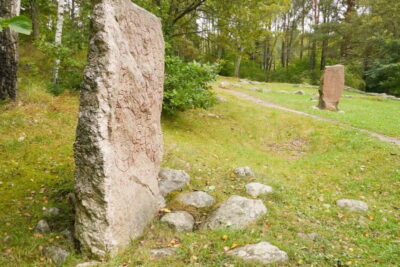
Stockholm Viking History Full Day Tour to Sigtuna + Uppsala
Read our review →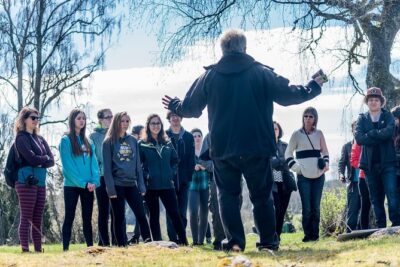
Viking History and Swedish Countryside Tour to Sigtuna & Uppsala
Read our review →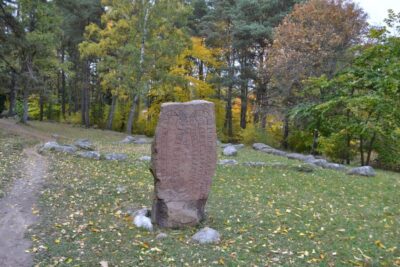
Viking History Small Group Tour from Stockholm: Half Day Including Sigtuna
Read our review →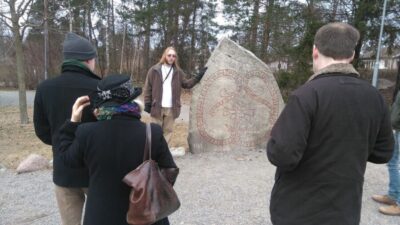
Browse the lists this tour appears in